
Hey there, bargain hunter. For the past three years, the AI trade has been a semiconductor story. Nvidia. AMD. Custom silicon. Whoever makes the fastest chips wins.
That framing is now incomplete.
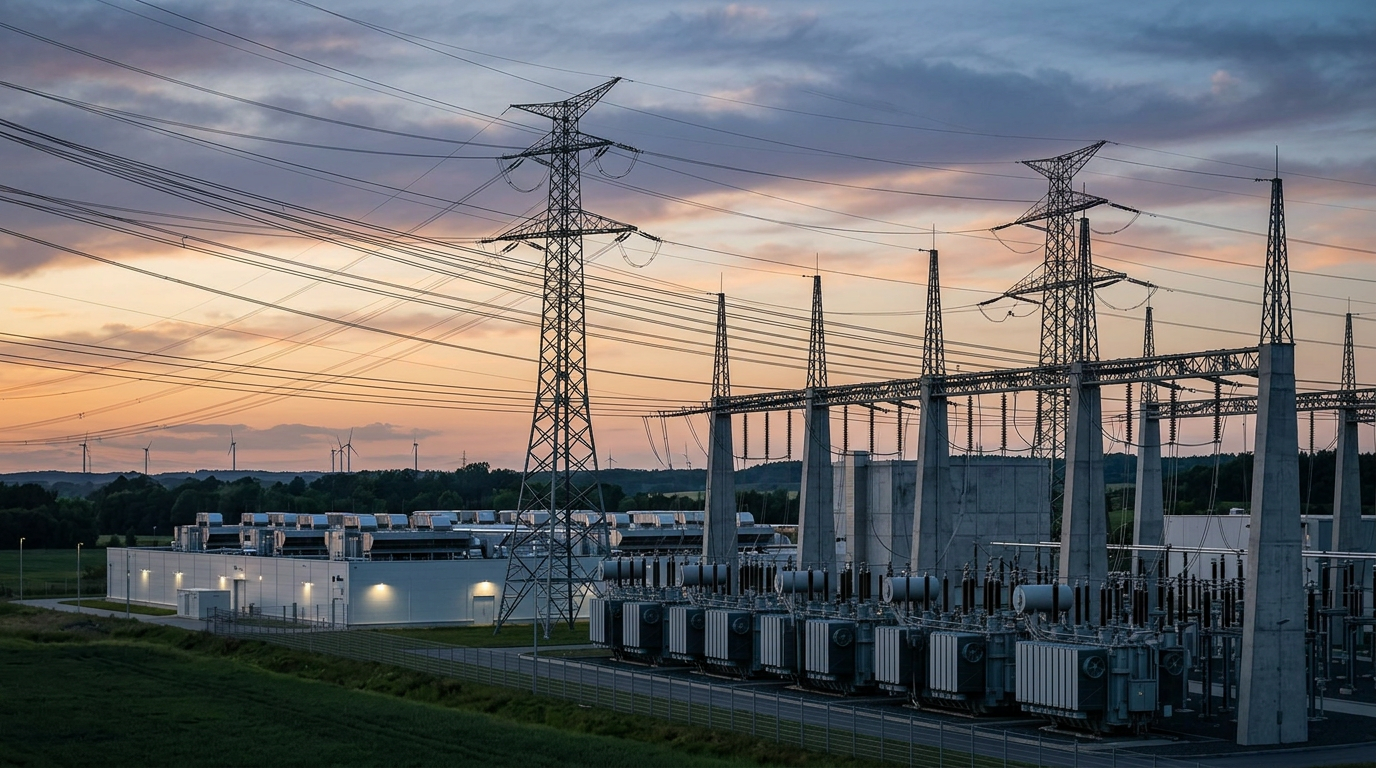
The constraint is shifting. Chips can scale faster than power grids. And when compute demand outpaces electricity supply, the companies that solve the energy problem — not just the compute problem — become the next phase of the infrastructure trade.
What the Data Actually Says
According to the International Energy Agency, global electricity demand from data centers could more than double by 2030, reaching approximately 945 TWh. In the United States alone, data centers may account for nearly half of all electricity demand growth through the end of the decade. The EIA forecast in January 2026 projected U.S. power demand posting its strongest four-year growth streak since 2000, with large computing facilities as the primary driver.
Morgan Stanley Research puts it more precisely: U.S. data center demand could reach 74 GW by 2028, with a projected shortfall of about 49 GW in available power access. The Magnificent Seven alone are expected to deploy $527 billion in AI and data center capital expenditures in fiscal 2026. Large technology companies are likely to commit more than $1 trillion in energy infrastructure spending across 2025 and 2026 combined.
To put the energy scale in context — one estimate suggests data center energy consumption could approach 1,050 TWh by 2026. If data centers were a country, they would rank as the fifth largest energy consumer in the world, between Japan and Russia.
This Isn’t the Old Utilities Trade
Utilities have historically traded like long-duration bonds — steady income, rate-sensitive, boring. That’s the part people skip when they dismiss the sector. What’s changed is the demand structure. AI data centers need fast, reliable, always-on power. Grid connections in many regions take years to complete. That mismatch is creating pricing power that regulated utilities haven’t seen in decades.
The clean pure-plays right now are Constellation Energy (CEG) and Vistra (VST) — both independent power producers with direct data center power purchase agreements. CEG’s nuclear baseload story is anchored by long-term contracts with major technology companies, not speculation. NextEra Energy (NEE) combines Florida Power & Light’s rate-base stability with the largest renewables and storage development pipeline in the country — 33 GW of backlog, plus 9.5 GW of new gas-fired generation contracted in Texas and Pennsylvania. Management has guided for 8%+ annual earnings growth and a 10% dividend increase in 2026. Shares are up roughly 22% over the past year.
GE Vernova (GEV) is the one that keeps coming up in conversations that aren’t about traditional utilities at all. The company — spun from General Electric in 2024 — makes gas turbines, wind turbines, grid systems, and power software. The stock has climbed more than 200% over the past year. That’s not a utility multiple. That’s what happens when the world suddenly realizes it needs every transformer, turbine, and grid modernization tool it can find, and one company makes most of them.
The Investment Phases Matter Here
The bottleneck doesn’t sit in one place permanently. From 2023 to 2025, compute scarcity drove market leadership — GPU and cloud capex led. The next phase, roughly 2026 to 2028, is about interconnection and cooling constraints becoming visible — which is where utilities and electrical equipment rerate. After that, transmission and firm-power contracts become the decisive factor.
That sequencing matters for position sizing. You’re not buying this all at once and holding forever. You’re recognizing which bottleneck gets priced first.
Three Risks Worth Naming
- Permitting: New transmission lines, gas pipelines, and small modular reactors all face multi-year regulatory review cycles. Roughly 70% of the U.S. grid is approaching end of life. Delays compress contract margins.
- Capex cycle: NEE, SO, and DUK are funding over $1 trillion in collective spend through 2030. If rates stay elevated or power purchase agreement pricing softens, returns on that capital get squeezed.
- Rate sensitivity: Utilities still trade like long-duration bonds at the margin. A renewed inflation scare caps upside even when the AI demand thesis is intact.
The Cheap Investor Take
The XLU ETF — which holds NEE, SO, CEG, DUK, and AEP as top positions — is up roughly 20% over the past year and still yields approximately 2.69%. That’s the diversified version if you don’t want single-name concentration. CEG and VST are the cleanest pure plays for those who want direct data center exposure in their power names. GEV sits in its own category — not a utility, but the company building the equipment everyone needs to run this thing.
Most AI investors still haven’t looked at their electricity bill. The ones who do first tend to find the next leg of the trade before it becomes obvious.