September 9, 2026
Bonus Content: Qualcomm’s $40 Billion Bet Beyond the Smartphone
The AI Boom Is Creating A Copper Wake-Up Call

Critical metals are having a 2026 moment. And copper may be one of the biggest reasons why.
AI data centers need it. Power grids need it. Electrification needs it. So as demand rises, investors are starting to ask a much simpler question:
Where will the next supply come from?
In a world where critical mineral supply chains are getting more complicated, friendly copper stories are starting to matter more.
Future copper supply is not just about price. It is about location, access, permitting, funding, and whether a project can move forward in a world where new mines are getting harder to build.
That is where this small copper story comes in. It sits in one of North America’s most popular copper-gold regions. Plus, it has historical drilling and fresh exploration funding.
Copper is no longer just a commodity story. It is becoming a supply story.
Qualcomm’s $40 Billion Bet Beyond the Smartphone
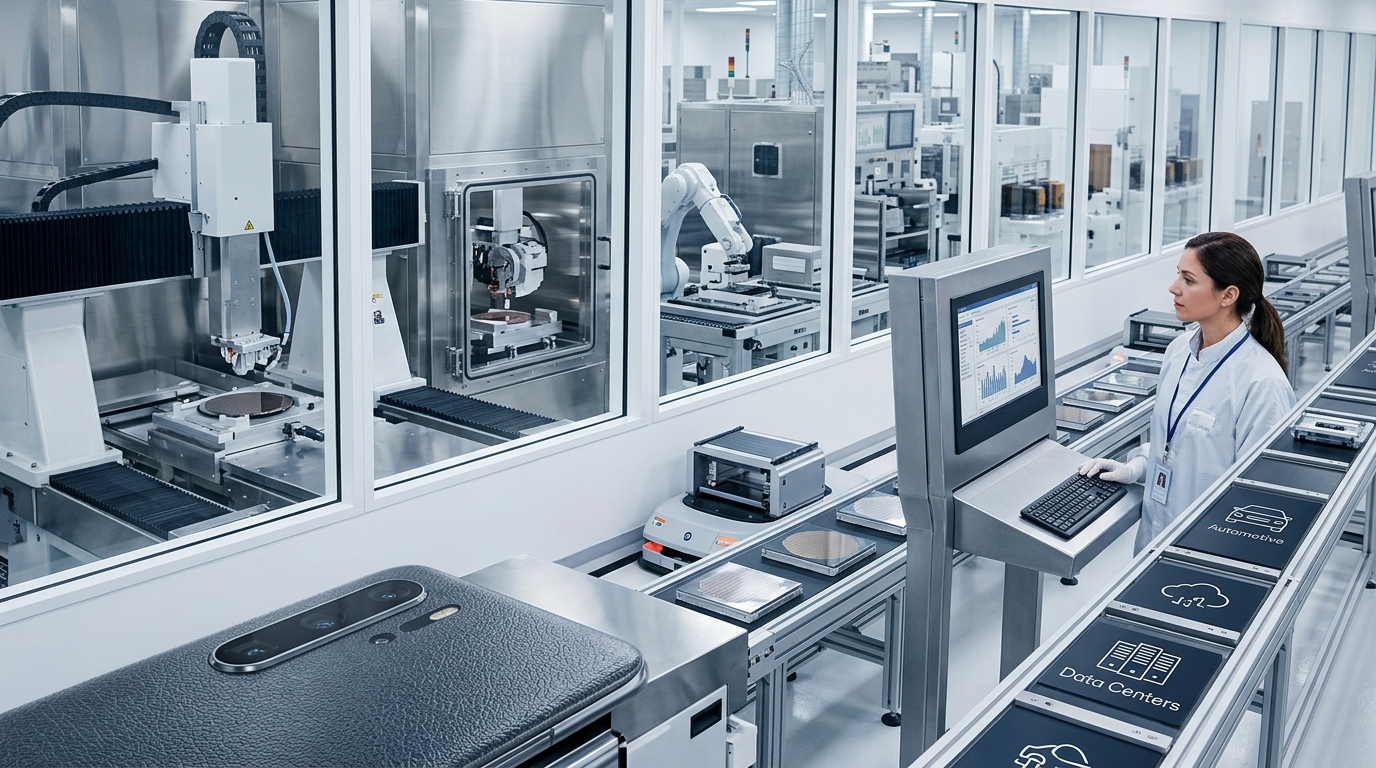
Qualcomm’s Q3 fiscal 2026 results landed with an uncomfortable headline buried inside an otherwise decent quarter. Handset chip sales came in at $5.1 billion, down 20% year over year. The stock slipped in after-hours trading. Yet CEO Cristiano Amon’s response was not to defend the smartphone business. It was to confirm chip price increases starting September 1 and accelerate the pivot that has been building for three years.
The Bull Case
At its June 2026 Investor Day, Qualcomm said non-handset revenue in fiscal 2029 will reach $40 billion, nearly double a prior target of $22 billion, and added a target of more than $15 billion in data center revenue for that same year. That revision is the number that matters. It is not a rounding error on an old model; it is a fundamental restatement of what kind of company Qualcomm intends to be.
The automotive segment is already producing. Automotive revenue grew 38% year over year in Q2 fiscal 2026, with management guiding for roughly 50% growth in Q3. Qualcomm has also cited an automotive design-win pipeline of about $45 billion, and at its June Investor Day it said $10 billion of its fiscal 2029 non-handset revenue target is expected to come from automotive. Those are not projections pinned on optimism. They reflect contracts already signed with automakers including BMW, Volkswagen, and Toyota.
On PCs, Qualcomm has said it has 58 Snapdragon X design wins across leading OEMs. And in data centers, Qualcomm revealed the Dragonfly C1000 CPU and said production is expected to begin in the second half of 2028, with Meta planning to deploy the chip in its next-generation server fleet.
The Bear Case
The timeline is the problem. Every major new segment either peaks in 2028 or beyond or carries execution risk that a four-year design-win pipeline cannot eliminate. Meanwhile the core business faces structural pressure that is not only cyclical.
Apple’s in-house modem rollout still puts billions of dollars of annual Qualcomm revenue at risk as the transition progresses. In smartphone chipsets broadly, Counterpoint Research data for Q1 2026 put MediaTek at 32% share, while Qualcomm sat second at 23%. That gap has widened. On PCs, Nvidia’s RTX Spark superchip launch at Computex 2026 directly targets the Windows-on-Arm AI PC segment, meaning Qualcomm faces a fresh competitor in the one market where it had momentum and limited pushback.
In data centers, Qualcomm is now trying to compete for AI infrastructure budgets against Nvidia, AMD, and Intel in a market where those rivals are already well established. Entering an inference market where the incumbent has a head start and customer inertia on its side is not a small ask.
Where the Evidence Leads
The bull case rests on a credible set of signed contracts and a power-efficiency advantage that hyperscalers, under electricity constraints, have real incentive to reward. The bear case rests on a gap between when the new revenue fully arrives and when the old revenue fully erodes. That gap is 2026 and 2027, and it is where the stock gets tested.
Qualcomm’s Q3 outlook disappointed on profitability versus analyst expectations, with management pointing to broad cost pressures that include memory. That is a solvable, cyclical problem. The Apple modem transition and MediaTek’s smartphone share gains are not. The bull case is better supported by the evidence on a three-year horizon. The bear case owns the next six months.