Below is an important message from one of our highly valued sponsors. Please read it carefully as they have some special information to share with you.
** If you’re within miles of one of these dots you could see your electric bill increase. **
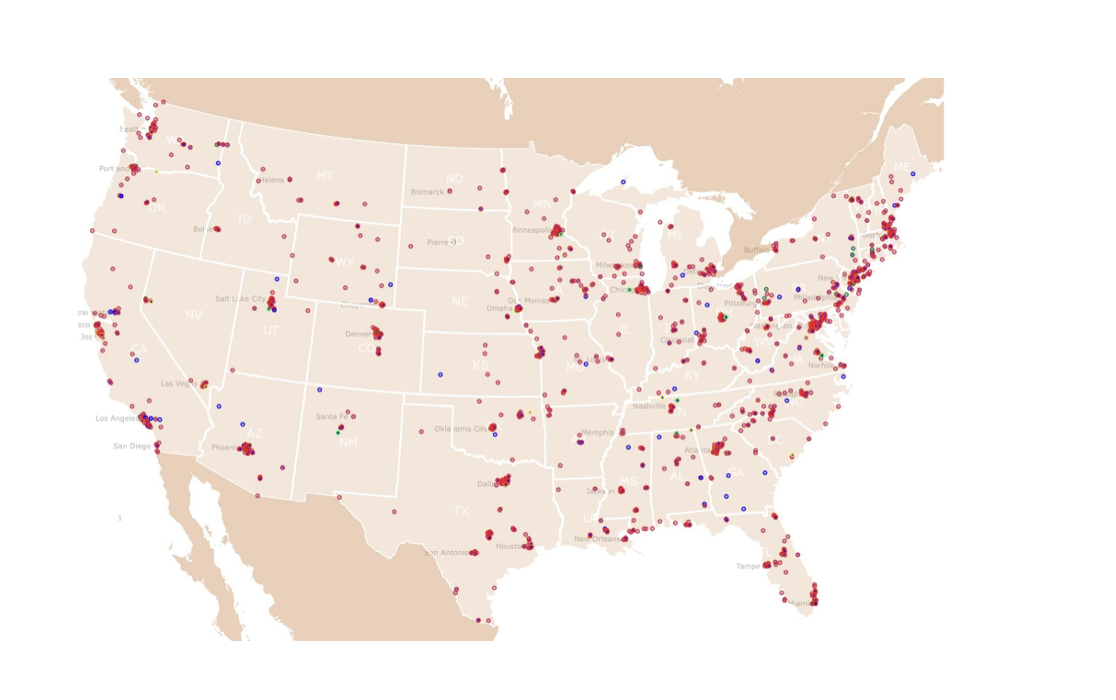
These are data centers. Warehouses full of computers, built to run AI.
There’s about 1,300 operating in America right now.
A single one can draw as much electricity as 100,000 homes.
In Manassas, Virginia, a man who’s lived in the same house for 40 years opened a $281 electric bill in January.
The month before, he paid about $100.
And this is just the beginning.
Another 2,500 data centers are set to be built in the coming years.
It’s only a matter of time before all of us feel this. If you haven’t already.
So who’s going to stop it?
I can tell you it isn’t your congress man. It isn’t your senator.
There’s exactly one person who can. And he’s not in government. Elon Musk. His new “hidden” project would take data centers out of our cities entirely
He’s already filed his plan to do this with the FCC.
And Trump has been in full support of this,, so that you don’t get hit with rising electric bills in the coming years.
And this goes one step further.
Which is the real reason I’m writing to you today.
We’re at the ground floor of a problem only Elon can solve.
And there’s one company I believe is sitting at the center of his solution.
It’s a company 99% of people have no idea exists, let alone has Elon’s name attached to it.
It’s publicly traded, and it costs less than $100 a share.
Imagine getting in on the ground floor of PayPal. Tesla. SpaceX.
That’s exactly where we are right now with his next project.
And this one could not only be his last… but it could be BIGGER than all of his past projects combined.
Learn how to get positioned before December 8th.
> GET POSITIONED BEFORE DEC 8 <
Sincerely,
James Altucher
NextEra’s Grid Brain Starts at the Substation
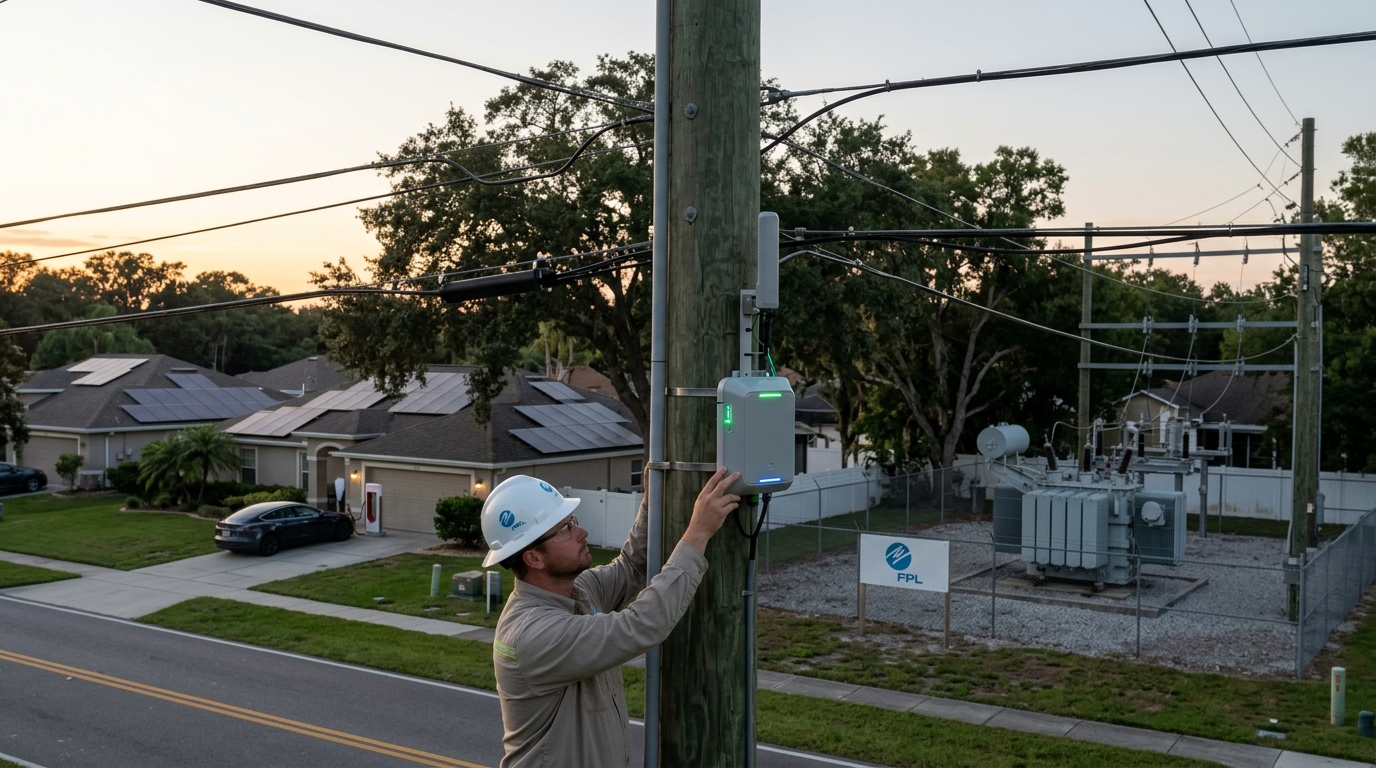
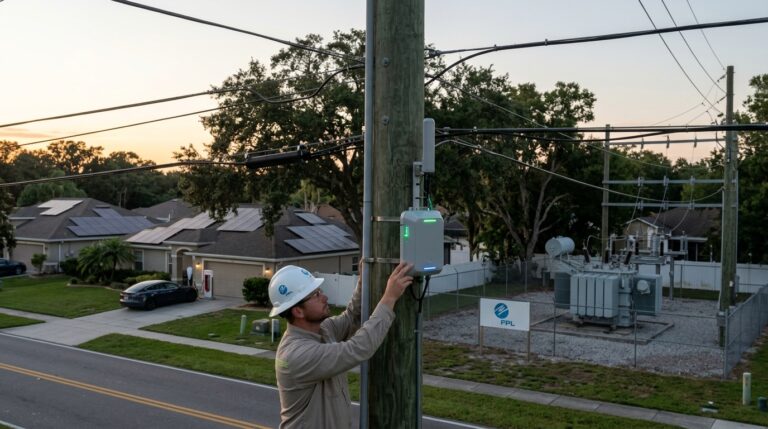
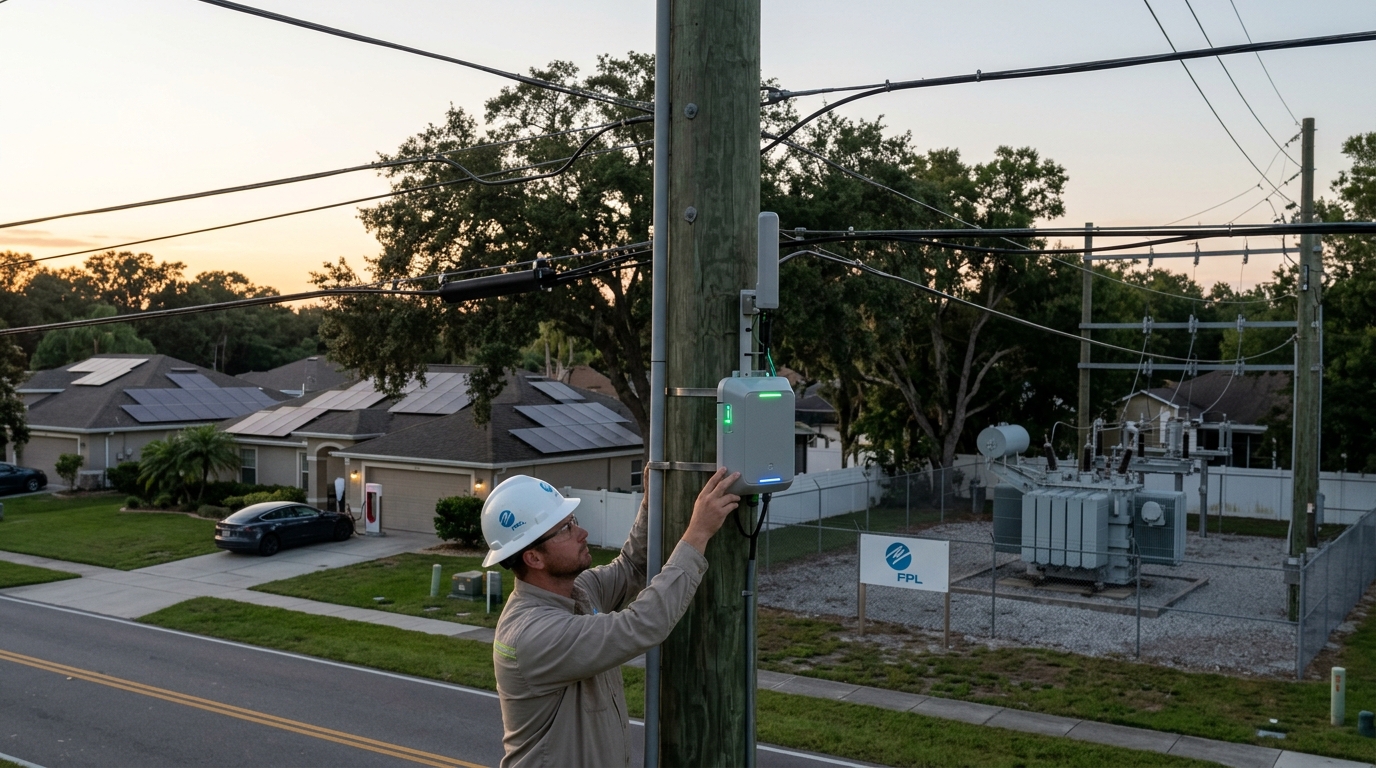
The headline story around NextEra Energy has been gigawatts: record Q1 contracting of 4 GW, a 33 GW development backlog, hyperscaler campuses reaching 2 to 5 GW apiece. But the investment question that deserves more attention sits much closer to the ground, at the distribution node where a neighborhood’s rooftop solar abruptly floods the line at noon and a block of EV chargers pulls it dry at 6 p.m.
That two-sided voltage swing is not theoretical. It is already happening across FPL’s 91,000 circuit miles and 921 substations in Florida. The physics are unforgiving: intermittent generation and concentrated EV charging create millisecond-scale imbalances that centralized control centers, operating on second- or minute-scale polling, cannot catch in time. The damage compounds when multiple neighborhoods experience the same spike simultaneously, which is increasingly common as solar penetration densifies and EV adoption clusters geographically.
NextEra’s answer is to move the intelligence to the edge. FPL has been embedding smart-grid sensors at distribution nodes capable of sub-second fault detection. In its third-quarter 2026 materials, the company said Florida Power & Light’s backlog of renewables and storage contracting had moved higher since the spring. At the utility level, the capital program is not just poles and wire. It funds the sensor layer, the local compute, and the micro-automation that can isolate a faulted segment before a ripple becomes a regional event.
The commercial validation came quietly. An earlier deployment of smart-grid technology across FPL’s hardened network helped avoid more than 140,000 outages during Tropical Storm Eta in 2020, according to company filings. Scaled across routine daily volatility rather than storm scenarios, the outage-prevention math grows considerably larger.
The bear case is legitimate. FPL expects to invest $90 to $100 billion through 2032, and regulators, not management, ultimately decide how much of that earns a return. The 2026-2029 rate agreement locked in a framework, but non-signatories were still seeking reconsideration in early February 2026, and the case later moved into an appeal track that could reach the Florida Supreme Court. If the recovery mechanism is narrowed on appeal, the economics of edge-node capital soften.
There is also a technology execution risk the bulls underweight. Embedding compute at thousands of distribution points creates a software maintenance and cybersecurity surface that a centralized grid does not have. NextEra’s partnership with Google Cloud, whose first commercial product from the collaboration was expected to be available in the Google Cloud Marketplace by mid-2026, helps address the analytics layer. But distributed hardware aging unevenly across a hurricane-prone service territory is a harder problem than any cloud tool solves cleanly.
The pressure on grid infrastructure is also reshaping how power equipment suppliers position themselves. GE Vernova is now building behind-the-meter power island networks designed to bypass grid constraints entirely, a sign of how acute the reliability problem has become.
Still, the direction of evidence favors the bull side here. The grid instability that edge-node sensors are designed to prevent is worsening, not improving. Customer growth keeps rising, solar penetration keeps rising, and EV charging loads are concentrating faster than transmission can be built. The micro-transformer network is not a speculative future product. It is a capital program already in the rate base, already producing measurable outage reductions, and already growing. That combination is rare enough in infrastructure investing to warrant the premium.