October 19, 2026
Bonus Content: Nvidia’s $10 Billion European Bet Runs Into a Grid That Cannot Keep Up
If you still haven’t downloaded my “Simple Options Trading For Beginners” book…
…please take a few seconds and download it right now before your new temporary download link expires.
I eventually plan to charge for this book, so do yourself a favor and download it now…
That way, no matter how much it is in the future, you’ll have a copy on your computer already.
Make sense?
FREE: Simple Options Trading For Beginners << Download Now
Good Trading,
Bill Poulos
P.S. Go here to save a copy of my “Simple Options Trading For Beginners” book to your computer before I start charging for it.
Nvidia’s $10 Billion European Bet Runs Into a Grid That Cannot Keep Up
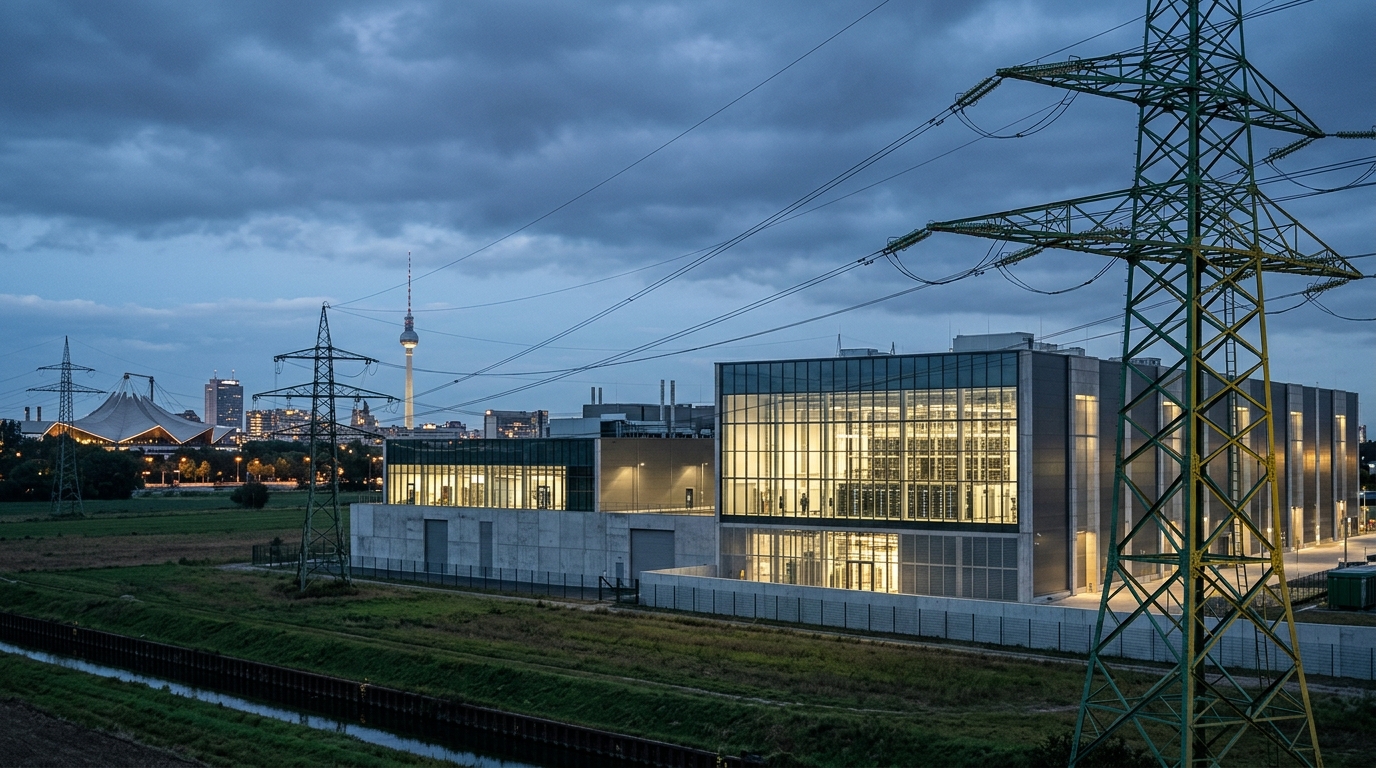
Jensen Huang takes the stage at Berlin’s Tempodrom on Wednesday, and the timing could hardly be more pointed. Nvidia’s GTC conference runs in Berlin from October 20 to 22, with CEO Jensen Huang speaking on October 21, with the program highlighting themes including AI infrastructure and sovereign AI. That is the pitch. The problem landed 48 hours earlier, when Microsoft walked away from a UK data centre deal for a reason that has nothing to do with chips.
Microsoft cancelled its planned data centre agreement with UK startup Nscale for its Loughton, Essex site after power-connection timelines slipped deep into the 2030s, according to reporting that cited the Telegraph and Reuters. The project had been billed as a flagship UK AI campus, with an initial build described publicly as 50MW scalable to 90MW, and Nscale has said grid constraints would not affect its other Microsoft contracts. Grid officials had given Nscale the news directly: power supply to the data centre is not expected to be available until the 2030s. For a facility that was supposed to be live this year, that is a terminal problem regardless of how many Nvidia GPUs you have on order.
The Bull Case: Sovereign Demand Is Structural
The most compelling argument for Nvidia’s European push is that sovereign AI spending is categorically different from hyperscaler capex. Governments do not cancel because of inflation or earnings pressure. They build because they have to. Nvidia’s sovereign AI business is already growing, more than tripling to over $30 billion last fiscal year. That is not a speculative number.
Sovereign demand is only half the equation. Broadcom’s custom silicon business shows how hyperscaler AI capex is being allocated across multiple chip architectures, not just Nvidia GPUs.
Jensen Huang said in Paris on October 13 that Nvidia expects to announce about $2 billion in new European AI investments or deals within about a week, on top of roughly $8 billion invested over the prior year, putting total commitments near $10 billion. Germany is already moving. German media reported plans for an AI cooperation announcement involving Nvidia and Chancellor Friedrich Merz in Berlin, with an emphasis on industrial and physical AI applications.
The grid constraint also hands pricing power to the companies that solve it. Schneider Electric has been positioning itself as an end-to-end partner for AI data centre power, cooling, and infrastructure orchestration. Siemens is in a similar position. The energy grid needs transformers to connect new generation and replace aging infrastructure, while AI data centres need the same transformers to connect 100 to 300 MW campuses. Scarcity creates winners, not just victims.
The Bear Case: You Cannot Deploy What You Cannot Plug In
The bear argument is blunt: Nvidia is selling multi-gigawatt ambitions into a continent whose grid cannot support them on any near-term timeline. Europe currently hosts less than 5% of global advanced AI model output by some estimates, and the reason is not lack of demand. European data centre vacancy is forecast to reach an all-time low of 6.5% by the close of 2026, due to surging demand compounded by bottlenecks in the electrical grid that limit the volume of new capacity that can be brought to market.
The Nscale situation is a case study in the gap between announced capacity and deliverable capacity. Nscale’s Glomfjord, Norway site runs at only 6.4 of a planned 30 megawatts, while Bloomberg reported it is six months behind schedule. The Microsoft cancellation is a setback for Nvidia-backed Nscale as the company targets a New York IPO at a valuation reported as high as $35 billion. Nvidia holds a stake in Nscale, but the specific size of Nvidia’s investment in Nscale has not been publicly quantified in a way that supports the “$2 billion” figure. When a flagship customer walks over power delays at a site Nvidia has helped promote, the feedback loop is uncomfortable to ignore.
The broader chip market is already expressing doubt. The Philadelphia Semiconductor Index posted its longest losing streak since the 2008 global financial crisis, falling 3.83% to 11,137.29, extending its decline to eight consecutive sessions. Cracks have widened as debt-financing concerns around AI cloud companies like CoreWeave have collided with hotter-than-expected US inflation data.
The chip supply chain has its own hard ceiling. ASML’s EUV output constraint sets a physical limit on how fast any announced AI fab capacity can actually come online.
Where the Evidence Leads
The bear case on grid delays is real and near-term. The bull case on sovereign demand is also real, but it runs on a longer clock. The pattern across both sides of the Atlantic is the same: data centre announcements are outrunning the physical capacity of the grids meant to power them. That is not a reason to abandon Nvidia, but it is a reason to ask whether announced European deployments convert to revenue in 2027 or 2031.
What Wednesday’s keynote needs to answer is not how large the sovereign AI opportunity is. Everyone already agrees it is large. The credible question is which European markets have grid capacity available now, and whether Nvidia’s actual revenue recognition is tied to chip shipments or to sites that are genuinely online. Nvidia has been urging customers to think in terms of “AI factories,” not traditional data centres. Factories require electricity. Investors who follow the site-by-site power availability data, rather than the headline commitment figures, will have the cleaner read on when this revenue actually arrives.