Isar Aerospace crossed a threshold that matters on Saturday. On September 5, the Munich-based company became the first fully commercial space company from Europe to successfully deliver satellites into orbit, on what was only its second flight. No excuses, no third attempt. The “Onward and Upward” mission lifted off from the company’s dedicated launch complex at Andøya at 10:12 p.m. CEST.
The commercial ambition behind it is substantial. Chief Commercial Officer Stella Guillen told CNBC on Monday that the space industry was “desperate” for additional launch capacity and that Isar had a pipeline worth more than €10 billion ($11.6 billion). The company has not said how much of that figure represents firm contracts. That distinction matters, but the direction of demand is real regardless of how much of it is signed today.
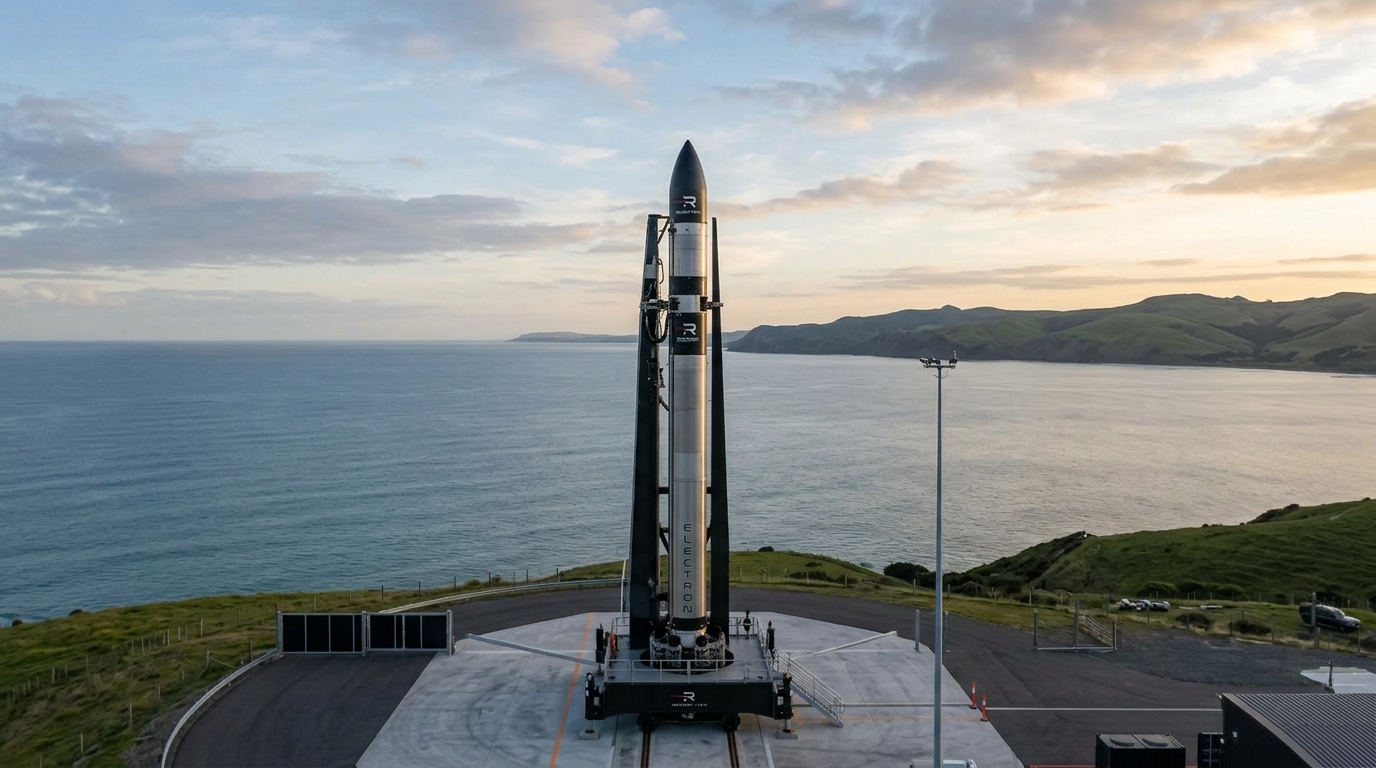
The technical comparison with Rocket Lab is direct. Spectrum can carry up to 700 kg to sun-synchronous orbit, compared to Rocket Lab’s Electron, which carries up to 200 kg to sun-synchronous orbit. Isar has targeted a launch cost of €10,000 per kilogram. That is a bigger vehicle at a competitive price point, and it operates from European soil, which matters to customers seeking political sovereignty over their launch provider.
Isar is already building its next five Spectrum rockets and has opened a new production facility near Munich with capacity to manufacture as many as 40 launch vehicles annually. The privately held company has attracted backing from investors including Porsche SE, venture capital firms Lakestar and HV Capital, and raised a €270 million Series D funding round in June to help scale production.
So does this threaten Rocket Lab (RKLB)?
The honest answer is: less than it would have 18 months ago. Rocket Lab has been busy repositioning itself well above the small-launch price war. Revenue reached $234.1 million in Q2 2026, up about 62% year over year, with Space Systems revenue growing to $189.5 million. Total backlog rose to about $2.36 billion as of June 30, 2026, compared to about $1.85 billion at year-end 2025. Launch is becoming the smaller part of Rocket Lab’s business, not the whole of it.
The Iridium acquisition, announced June 29, cements that pivot. The deal would combine Rocket Lab’s launch and satellite manufacturing with Iridium’s global satellite communications network, spectrum, and partner ecosystem to create a more vertically integrated space company that designs, builds, launches, and operates space systems. That is a fundamentally different competitive surface than anything Isar Aerospace is targeting today.
The risk on RKLB is not Isar. The stock is down roughly 58% from its May 27 high of $151, and it has been under pressure for reasons that trace back to the Iridium deal’s complexity and the financing load it places on the company. NASA awarded Blue Origin a contract worth up to $700 million on September 1, 2026, to develop the Mars Telecommunications Network, beating out competing bidder Rocket Lab. Losing that contract was a tangible reminder that even a company with Rocket Lab’s momentum faces lumpy outcomes in government competitions.
Isar represents a credible threat to Electron’s European customer base over time, but not to the larger platform Rocket Lab is building. A company that has flown once successfully, carries an unverified pipeline, and has zero reusability in its current vehicle does not displace a company with 90-plus launches in its launch backlog, a roughly $2.36 billion backlog, and a pending acquisition that extends its business into satellite communications.
The more important question for RKLB investors this week is whether the stock’s pullback from its May high of $151 has created an entry into a company whose transformation is underappreciated, or whether the Iridium financing load will continue to weigh on sentiment into year-end. Isar’s milestone is worth watching. The better trade remains the stock that is already much further down the road.