There are two ways to read Chevron’s $7 billion commitment to Venezuela, announced September 2, 2026. The first is straightforward: a supermajor locking up low-cost barrels in the world’s largest proven reserve base, with sub-$20 production costs and a Washington that is newly supportive of expanded U.S. access, finally removing some of the geopolitical obstacles that kept everyone else away. The second is harder to dismiss: this is exactly the kind of resource thesis that has destroyed capital before, and the conditions that made it destructive have not fully changed.
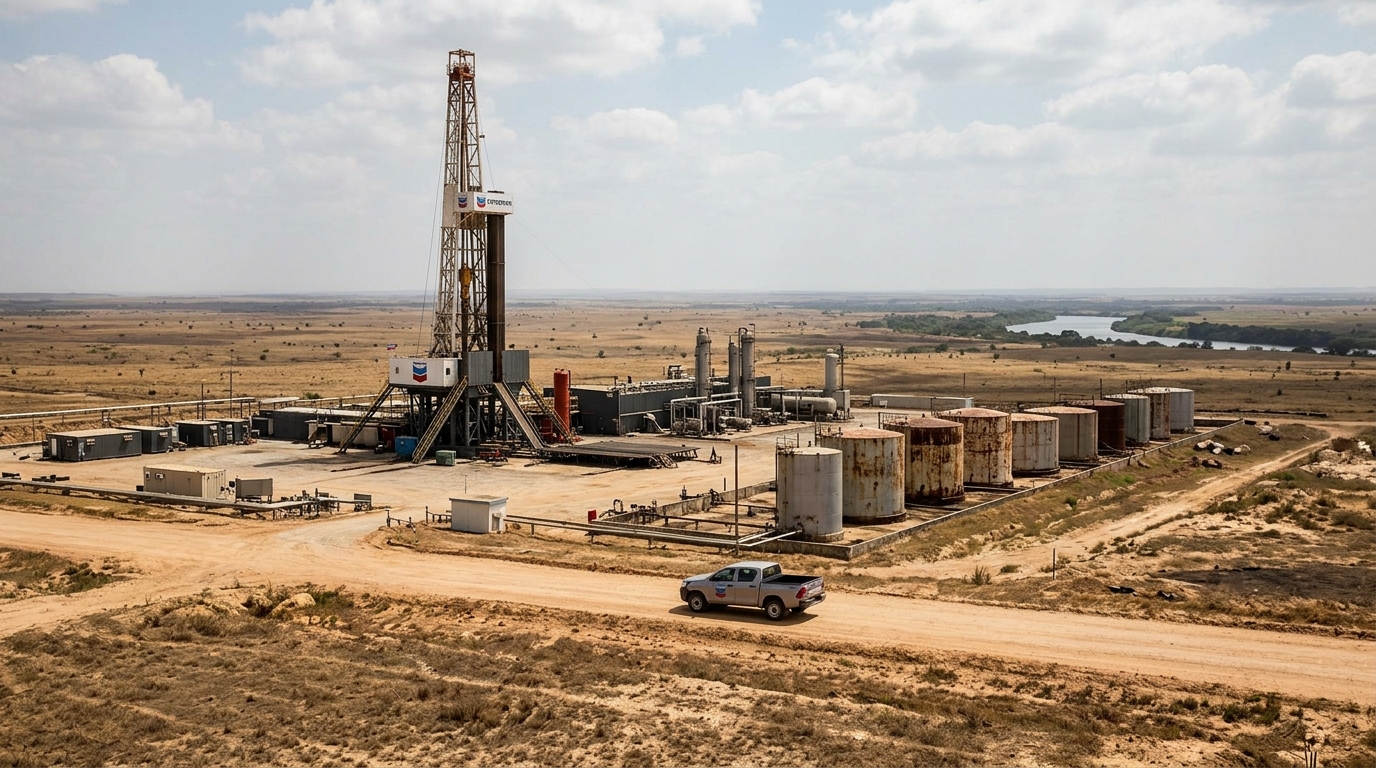
Start with what Chevron actually secured. The company announced updated terms for its Venezuelan joint ventures, including enhanced fiscal, commercial, and legal provisions, along with additional acreage in the Orinoco Belt. Those terms underpin plans to invest over $7 billion over five years, more than doubling production to approximately 600,000 barrels a day compared to 2026 levels. The Petroindependencia joint venture, in which a Chevron subsidiary holds a 49% interest, has been assigned rights to develop the adjacent Carabobo 1 and Carabobo-2-South-A areas. Energy Secretary Chris Wright traveled to Caracas for the announcement.
The company estimates total production costs of less than $20 per barrel. Against a Hormuz-constrained market already rattled by the U.S.-Iran conflict, incremental heavy crude from a non-Middle East source at that cost level is genuinely attractive. Venezuela holds the world’s largest proven reserves, totaling more than 303 billion barrels of crude oil according to OPEC’s 2025 Annual Statistical Bulletin. That is the resource case in a sentence.
The context surrounding the deal adds political complexity. A U.S. official told CBS News that Venezuela’s acting President Delcy Rodriguez granted a private joint venture a 100-year concession covering oil fields said to contain about 65 billion barrels, as the Trump administration angled to get oil companies to return to the country after a U.S. military operation captured the country’s leader earlier this year. Chevron’s $7 billion commitment is separate from that broader framework but sits squarely within the same diplomatic opening.
Now consider what that opening rests on. The deal followed the January 3, 2026 U.S. military operation that culminated in the capture and arrest of Nicolás Maduro, making the concession a product of political leverage rather than commercial negotiation, which directly raises the risk of future repudiation by a successor government. The history here is not abstract. Venezuelan crude production rose to roughly 3.4 million barrels per day by 1998, then declined to about 2.6 million barrels per day by 2005 and never recovered to pre-Chávez levels. Foreign operators were forced into minority positions or saw assets seized outright. Major U.S. firms, including ExxonMobil and ConocoPhillips, ultimately exited the country and pursued international arbitration over uncompensated takings. International tribunals later awarded billions of dollars in compensation, and collection has been difficult and protracted.
Chevron survived that era precisely by refusing to leave. It is the only major U.S. oil company actively operating in Venezuela, after other oil giants pulled out in 2007 when Hugo Chávez completed the nationalization of the industry. By continuing to operate as a minority partner under the state oil company’s terms, Chevron preserved its infrastructure, personnel, and legal foothold. That patience is now being rewarded with expanded acreage and improved fiscal terms. The question is whether the reward is durable.
The company is increasing its exposure to a market with a history of instability, sanctions, and heavy government intervention, and while the current leadership is signaling support for foreign investment, the country’s legal and political framework remains largely untested. Maintaining production of heavy oil requires constant reinvestment, reliable power, and uninterrupted access to diluents. Without these inputs and high enough oil prices to support them, production systems fail quickly.
None of that invalidates the Chevron thesis. CEO Mike Wirth’s assertion that Venezuela can compete for investment within the company’s portfolio for decades reflects genuine conviction from a management team that knows the country better than anyone. Chevron shares have risen in 2026, but the exact year-to-date gain depends on the measurement date and market close used.
The mogul question is sharper: at what terms does the optimism become an assumption rather than a judgment? Extraordinary reserves at low cost, inside a U.S.-backed political arrangement with no tested legal framework, operated through a state company with a multi-decade record of destroying value. This is a contrarian bet on institutional change in one of the world’s most institutionally fragile countries. That bet has occasionally paid off enormously. More often, it has paid off until it didn’t.