
September 8, 2026
Exports jump while imports miss, weeks before a Trump-Xi meeting
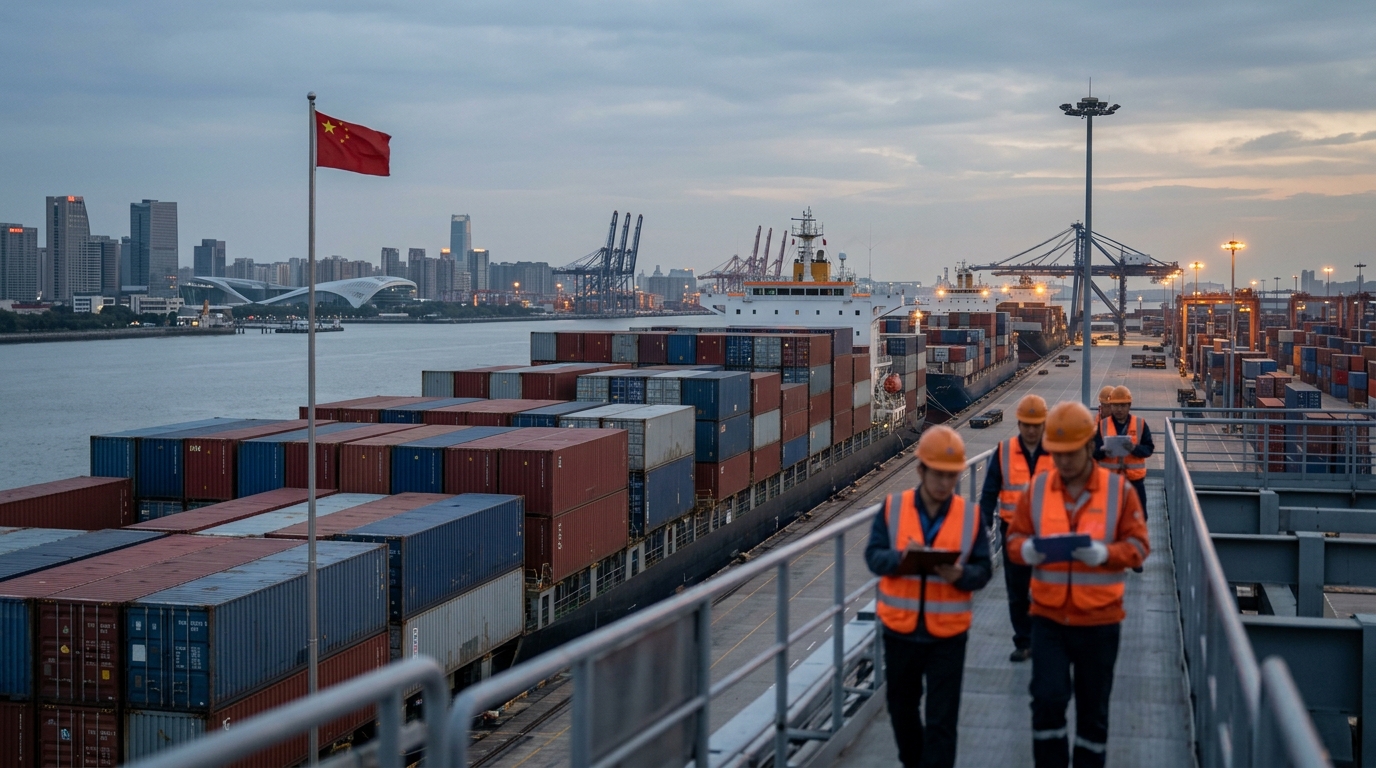
The headline number from Beijing’s customs agency this morning is hard to argue with on its face. China’s exports grew 25% in August from a year earlier, quickening from July’s 23.9%, while imports rose 28.2%, missing economists’ estimates of 30%, pushing the trade surplus to $119.09 billion. Through the first eight months of 2026, the cumulative surplus has reached $805.5 billion. That puts the annual figure on track to top $1 trillion for the second year running.
You’re Being LIED To About The Iran War
Forget EVERYTHING you’ve heard about the Iran war.
Especially the reasons why we’re bombing the country.
Bulls will read this as industrial dominance. Bears will read the import miss and see something more troubling. Both are partly right, and the gap between them matters enormously heading into the expected September 24 Trump-Xi meeting in Washington.
The Bull Case
Exports have become the primary growth driver for China’s economy, as surging demand for high-tech components amid a global build-out of AI infrastructure has helped cushion the drag from geopolitical shocks, sluggish domestic demand, and a slump in investment. The composition of those exports reinforces the argument. From January through August, the value of China’s exports of computers and related parts surged 49.4%.
In August, China’s exports to the United States totaled $42.5 billion, up 34.4% year-on-year, in part due to a base effect after higher U.S. tariffs caused exports to fall last year. The geographic diversification story is also intact. Exports to Southeast Asia and Latin America rose 30.2% and 17.5%, respectively. A manufacturing base that is simultaneously winning in AI supply chains and rerouting around tariff pressure is not one that is running out of competitive road.
Musk Signs MASSIVE Six-Year Deal with Tiny Company
Musk is buying 75,000 metric tons of one “magical” element from a completely unknown company.
On commodities, the aluminium picture is more nuanced but not alarming. China’s exports of unwrought aluminium and aluminium products fell to 626,000 metric tons in August from 643,000 tons in July, though exports in the first eight months rose 16.7% from a year earlier to 4.67 million tons. That is a modest month-on-month pullback inside a structurally elevated export run rate, not a reversal.
The Bear Case
The import miss is where the bull case develops cracks. Imports missing expectations is a sign that domestic demand remains tepid as China faces mounting pressure to rebalance trade. Trade growth remained robust in August, but import momentum weakened in seasonally adjusted terms, reflecting still-subdued domestic demand, according to Capital Economics economist Nguyen Hoang Nam.
Policymakers have set ambitious GDP growth targets, but the second quarter saw growth slowing to a more-than-three-year low, indicating the economy is not firing on all cylinders. An economy genuinely rebalancing toward domestic consumption would not keep missing import estimates month after month.
While the AI boom lifted the profits of advanced manufacturers, industries relying on the domestic market have been grappling with producer price inflation and soft demand. Relying on outbound shipments to absorb industrial capacity also exposes China to risks of curbs from trading partners, as both the U.S. and the European Union have demanded Beijing lower its surpluses. China’s imports of unwrought copper and copper products fell to 382,000 tons in August from 425,000 tons in July, and copper imports in January through August are down 6.7% from a year earlier, a direct signal of constrained domestic industrial appetite.
5 Little-Known Stocks Behind Today’s Defense Tech Shift
Behind the headlines, a major transformation is underway.
Modern warfare is being driven by AI, autonomous systems, and next generation technology. A handful of lesser known companies are helping power this shift.
This report uncovers five stocks quietly playing a critical role in the future of defense.
Where the Evidence Leads
The bull and bear cases are not symmetric here. Export strength is real and well-sourced in AI demand and route diversification. But as Pinpoint Asset Management president Zhiwei Zhang put it, “China continues to rely on exporters to support the economy,” which is precisely the point: an economy this dependent on its export engine, with copper imports falling and consumer demand stubbornly soft, is running a structural vulnerability dressed up as a strength.
The $119.1 billion monthly surplus is the last major data point before Trump and Xi are expected to meet on September 24. Trade is expected to be among the key topics of discussion. A surplus of this scale, widening every month, arrives in Washington as exhibit one for every tariff hawk in the room.
Final Verdict
The bear case carries more weight today, not because the export numbers are fabricated, but because the import miss reveals the mechanism behind them. China is exporting its overcapacity because domestic buyers will not absorb it. That is a weakness, not a strategy. FXI and KWEB investors should watch September 24 closely: a meeting that produces credible rebalancing commitments shifts this debate. One that simply freezes current tariff levels leaves the structural problem fully intact, and the surplus keeps growing.