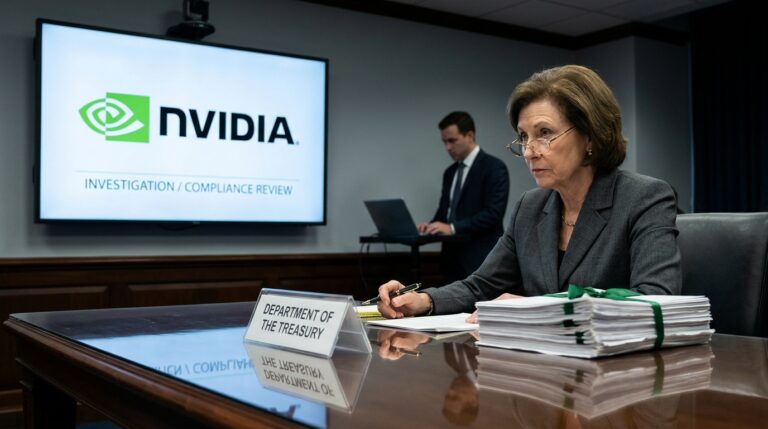
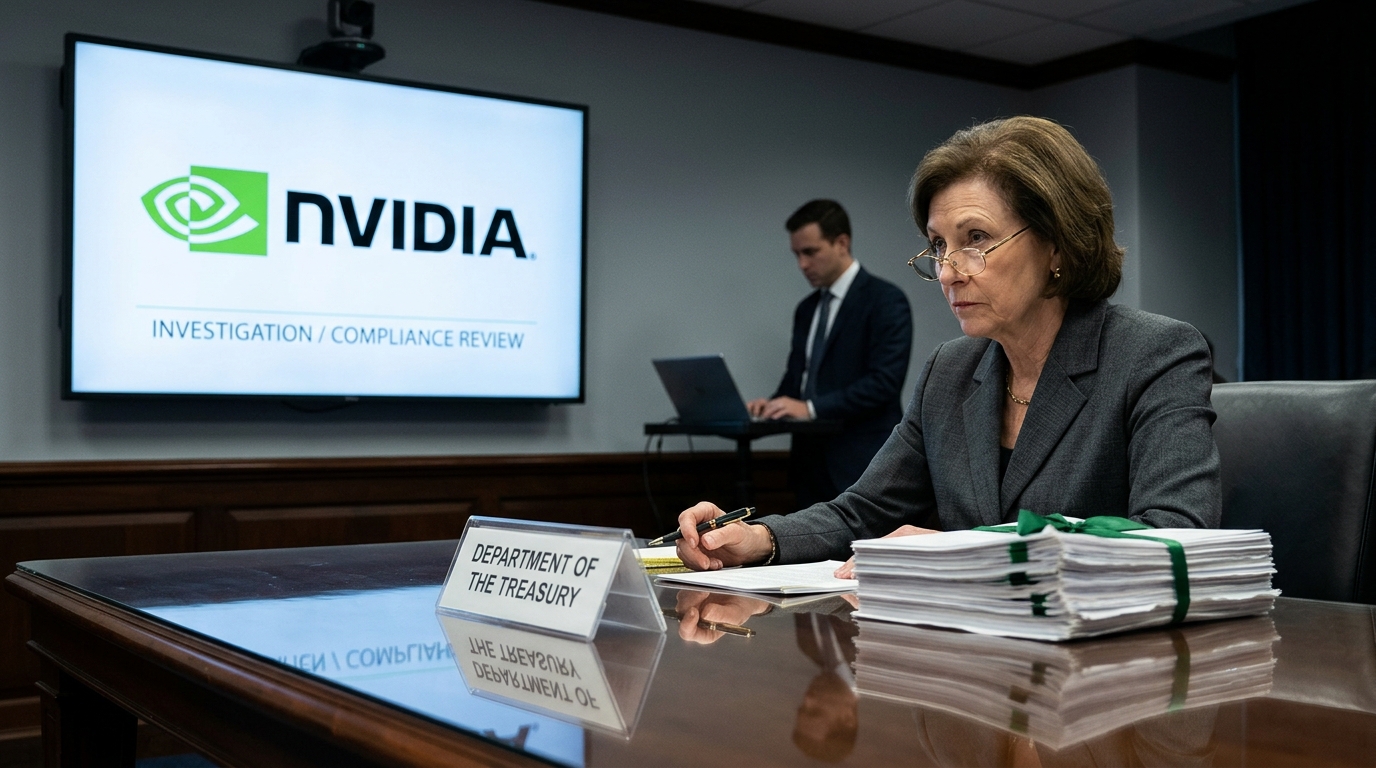
The same week Treasury Secretary Scott Bessent gave Nvidia ten days to explain its China-related compliance and raised questions about whether chips reached China via intermediaries, the Trump administration announced plans to designate Nvidia as an American AI ‘national champion.’ That is not a contradiction in Washington’s eyes. For investors, it probably should be.
The Bull Case: A Federal Sales Arm Against Huawei
The Trump administration plans to designate more than two dozen US artificial intelligence companies as ‘national champions,’ including Nvidia, Amazon, Microsoft, OpenAI and Anthropic, the Wall Street Journal reported Sunday, citing people familiar with the plans. The carrot is substantial. Companies obtaining national champion status would receive expedited processing of export license applications for chips and other advanced technologies, government assistance in expanding overseas business, and access to federal financing channels.
The administration wants to bundle US chips, AI models and technologies into packages US vendors can sell to foreign governments and businesses, positioning the group against Chinese suppliers like Huawei. For Nvidia, Microsoft and Amazon, this is close to a government-funded business development operation. No Chinese competitor gets that subsidy. The purported national champion designations are part of the Trump administration’s broader push to expand American AI technology exports, with the president having signed an executive order in July 2025 establishing the American AI Exports Program to promote the export of ‘full-stack’ American AI technology packages.
Anthropic’s timing adds further momentum. In IPO filings dated November 10, 2026, Anthropic said it expects to sell 825 million shares priced between $70 and $78, implying an expected valuation of roughly $1.4 trillion at the midpoint. A federal endorsement landing two days before that filing is not an incidental coincidence, it signals that Washington views these companies as sovereign assets worth protecting, not just regulating.
The Bear Case: Champion Status With Strings Attached
The bull argument assumes that designation is a gift. The more uncomfortable reading is that it is a leash.
Nvidia’s situation makes the tension explicit. Treasury Secretary Scott Bessent urged Nvidia to look for an external CEO after the resignation of Jensen Huang, and in a Fox News interview said the company owed the market answers amid allegations involving China-linked sales and intermediaries.
The report remains unconfirmed, and it is unclear what benefits the designation would provide in practice. It is also unclear how the reported list of more than two dozen AI ‘national champions’ relates to the 78 applications Commerce said were submitted under the American AI Exports Program. The legal environment compounds the ambiguity. Separately, the Justice Department is investigating whether Nvidia structured its $20 billion licensing agreement with AI chip startup Groq to avoid antitrust review. Being a national champion does not make a company immune from the same government’s prosecutors.
Nvidia’s stock fell sharply after Huang’s departure and then recovered somewhat, but it still finished the week down about 13%, its sixth straight weekly decline and its longest such streak since 2012. A title granted by Commerce Secretary Howard Lutnick, who has faced criticism over whether Commerce moved fast enough to close loopholes that could allow Chinese companies to access advanced Nvidia chips, carries its own credibility discount.
Where the Evidence Leads
The bull case rests on the program’s upside being real and the scrutiny being temporary. The bear case argues the opposite: that the scrutiny is structural and the upside is conditional on conduct that the same administration is now questioning.
For Microsoft and Amazon, the risk calculus is cleaner. Neither faces the specific China compliance exposure Nvidia does, and both would benefit directly from government facilitation of overseas AI infrastructure deals. For OpenAI and Anthropic, the designation arrives at a moment of maximum public attention, one that elevates brand credibility just as Anthropic approaches its Nasdaq debut.
Amazon’s position in the national champion group is stronger than it looks on paper. AWS has been quietly building the software layer that makes its own AI chips competitive with Nvidia’s ecosystem — and government facilitation of overseas infrastructure deals would accelerate exactly that effort.
Nvidia is the harder call. The company is simultaneously a named beneficiary and a named subject of enforcement pressure from two cabinet departments. That is not a stable position.
The enforcement pressure compounds a hardware demand question that was already in motion. Nvidia’s 2027 chip order forecasts shifted materially when OpenAI’s revenue figures were revised, resetting the demand math behind the entire AI accelerator cycle.
Final Verdict
On balance, the national champion designation is a net positive for the group, with one exception. For Microsoft, Amazon, OpenAI and Anthropic, the program offers tangible commercial support with manageable strings. For Nvidia, the designation is real but secondary to a governance crisis that no federal title resolves. Watch Tuesday’s earnings call under interim CEO Colette Kress for the first read on whether the company can stabilize without its founder. That matters more to NVDA shareholders this week than any label Commerce bestows.