Exposed: The Millionaire Lifestyle You Could Have (Without Millions)
A luxury villa, private driver, housekeeper, and Mediterranean views – without a millionaire’s budget?
Discover how Americans are unlocking an incredible lifestyle overseas for less.
Apple’s Record Price Rests on a Memory Cost Relief That May Not Arrive
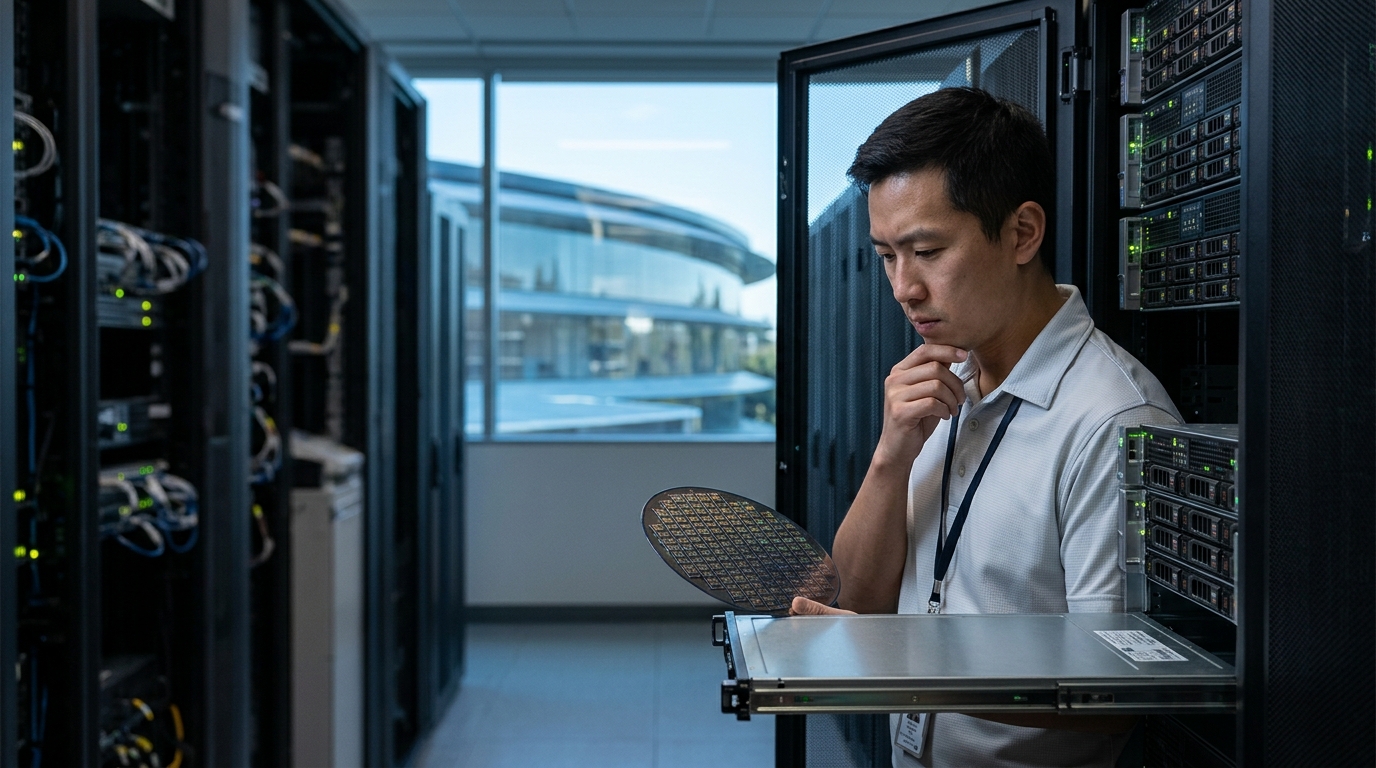
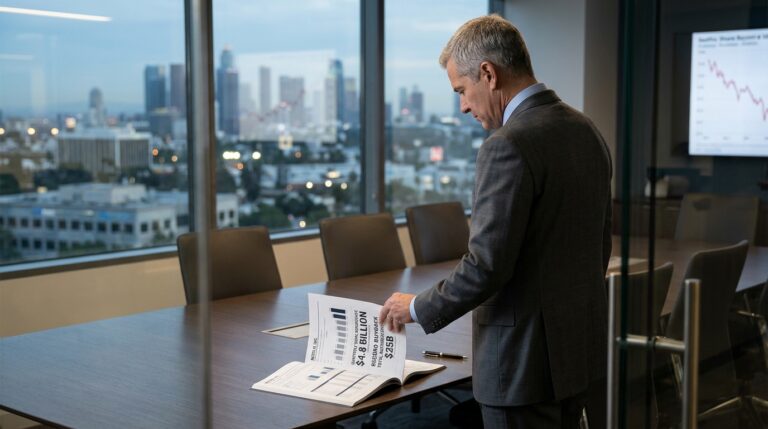
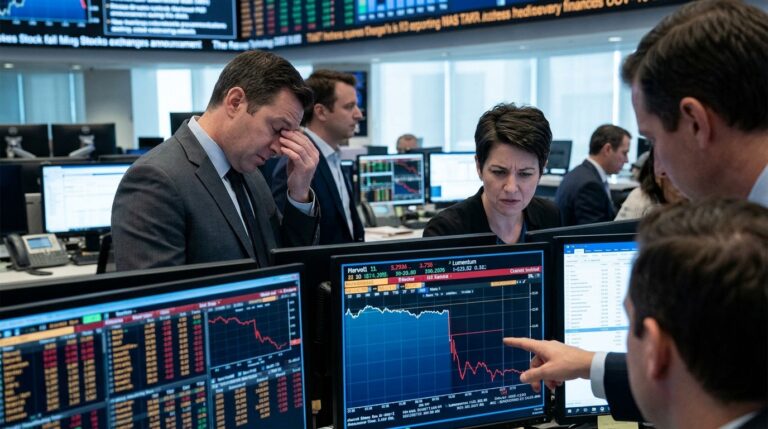
Apple closed at $349.51 on November 4, its highest price ever, pushing its market value to roughly $5.07 trillion. The catalyst, as market commentary described it, was surprisingly counterintuitive: a slower AI data-center build-out should cool the memory prices that have been compressing Apple’s margins. If hyperscalers spend less, Korean producers ease up, and Apple’s bill of materials gets cheaper. Clean logic. The question is whether it is true.
The Bull Case
The underlying business gave investors real things to cheer. Apple posted quarterly revenue of $114.5 billion, up 12 percent year over year. Following the earnings report, Apple’s stock did not follow its usual pattern of a brief pullback followed by a rebound, but instead strengthened rapidly, indicating increased investor confidence in the company’s revenue resilience, iPhone demand, and profitability.
The midterm-driven logic added a second layer. Election-driven talk of tighter AI data-center construction restrictions should strengthen hyperscalers’ existing moat, and if industry capex slows, free-cash-flow pressure eases because incumbents can monetize existing infrastructure instead of racing to build more. For Apple specifically, the argument runs that reduced hyperscaler demand for high-bandwidth memory frees up capacity for the DRAM and NAND that go into iPhones and Macs, pushing contract prices lower.
Services also insulate the margin picture. Services gross margin percentage reached 76.2% in fiscal 2026, up from 75.4% the prior year, and that revenue stream is entirely immune to memory inflation.
The Bear Case
Apple’s own management contradicted the cheaper-memory thesis two days before the stock hit its record. CEO John Ternus described memory pricing as “unprecedented,” while CFO Kevan Parekh said rising memory costs accounted for the entire underlying gross margin decline between the June and September quarters. For the December quarter, management guided for a gross margin of 45% to 46%. That is a step down even from a September figure already inflated by tariff refunds.
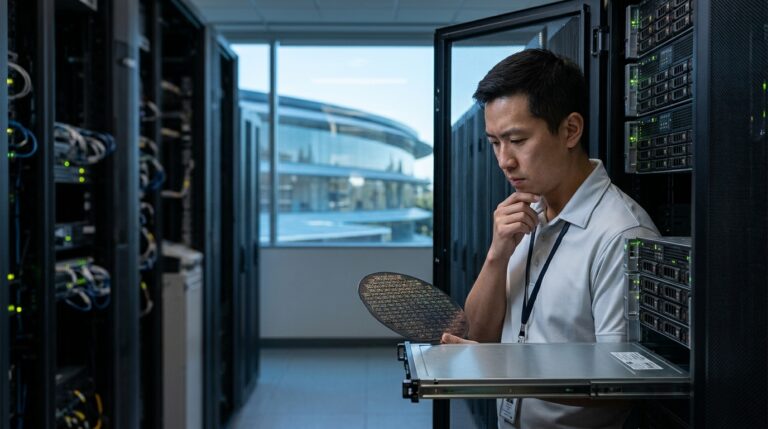
The structural reason relief is unlikely to come quickly: memory producers have already locked in their revenue. Micron has signed 16 strategic customer agreements covering approximately 20% of DRAM and one-third of NAND output, with 14 of those contracts carrying minimum committed revenue totaling approximately $100 billion. In a major shift from past cycles, memory companies are increasingly locking in multi-year supply agreements with hyperscalers. SK hynix has said it secured long-term agreements covering more than half of its production capacity for 2027 and 2028. Micron has also said it has sold out its 2026 HBM capacity and has pricing agreements already in place. A one-quarter moderation in data-center construction does not unwind those commitments.
Meanwhile, Apple’s components inventory jumped to $10.4 billion from $2.1 billion in a year, and it owes suppliers $82.7 billion within the next 12 months. Apple has already raised prices on its iPhones, Macs, and iPads, but it’s also benefiting from memory purchased earlier at lower prices. As those inventories are depleted, higher costs will increasingly affect profitability.
Then there is the valuation. When Apple first hit a $5 trillion market capitalization in intraday trading, it was trading at a P/E above 41, more than double Apple’s highest P/E of about 20 between 2013 and 2020. Apple’s forward P/E multiple is roughly in the low 30s, still well above Microsoft’s mid-20s and above Alphabet’s level by many widely followed screens. The stock is not cheap for a company whose own CFO just guided margins lower.
Where the Evidence Leads
The midterm capex-slowdown narrative gave the market a reason to buy Apple on a day when Microsoft surged 6.68% and Amazon climbed alongside it. The logic is elegant but premature. Micron has said its strategic customer agreements typically have a five-year term, running from calendar 2026 through calendar 2030. A political shift that slows new data-center permitting does not reset contracts signed through 2030.
The bull case that holds weight is simpler: revenue growing 12%, services margins near 76%, and a December-quarter revenue guide that beat estimates. That is a real business. The memory squeeze is a cost problem, not a demand problem, and Apple has demonstrated it can partially pass those costs along.
What Could Change the Debate
Watch the December-quarter gross margin print against the 45% to 46% guide. If Apple posts above 46% without tariff-refund help, it means memory costs are easing faster than management indicated, and the market’s optimistic read was correct. If margin comes in at the low end of the range, the valuation becomes much harder to defend at any price above $340.
Final Verdict
The bear case is better supported today. Apple’s own filings and management commentary tell a consistent story of rising memory costs running into 2027, underpinned by multi-year supply contracts that a slower build-out cycle cannot quickly dissolve. The stock deserves credit for strong fundamentals, but a roughly $5.07 trillion valuation built partly on the hope of cost relief that management itself is not forecasting asks for a leap the evidence does not yet support. Moderate conviction: revisit after the December-quarter gross margin is confirmed.