
Dear Friend,
Google is paying Elon $920 million a month.
Anthropic is paying him $1.25 billion a month.
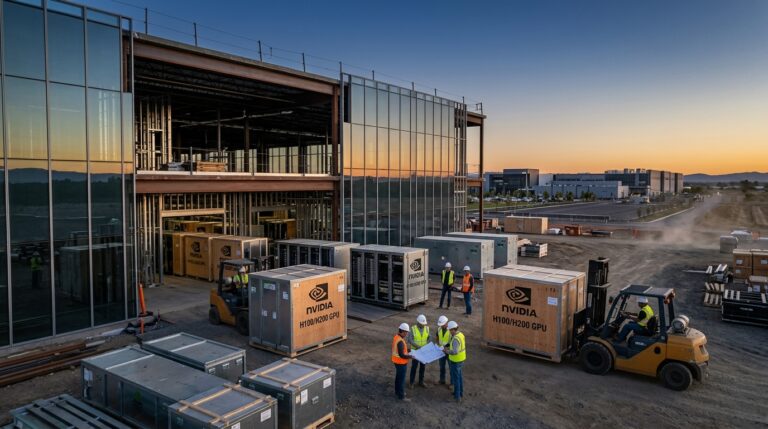
The richest companies on Earth are renting his computer because they can’t build what he has.
Together, about $26 billion a year.
Now the Pentagon, the biggest buyer on Earth, wants its own.
Every dollar of it rides on one tiny company Elon couldn’t build around.
I call it the X-Grid stock.
I expect it to be the biggest winner of the entire AI buildout.
Get the name of the company collecting underneath Elon >>
The Buck Stops Here,
Dylan Jovine
Founder, Behind the Markets
Netflix Is Buying Back Stock Faster Than Growth Can Justify
Netflix spent more money buying back its own stock in a single quarter than most S&P 500 companies return to shareholders in a full year. In Q3 2026, Netflix repurchased 63.9 million shares for $4.8 billion, its largest quarterly buyback on record. The company’s board responded to the pace by reloading its authorization: on April 22, 2026, it approved an additional $25 billion in repurchase capacity. That is a remarkable statement of confidence. The question is whether the confidence is warranted.
The Bull Case: Margins Are Real, the Multiple Has Collapsed
Strip away the buyback mechanics and the fundamental picture is genuinely strong. Q3 operating income reached $4.5 billion, up 37% year over year, with an operating margin of 34.6% versus 28.2% in the same period a year earlier. Free cash flow for the nine-month period is running well ahead of prior years. Full-year 2026 revenue guidance of $51.1 billion implies roughly 12% to 13% growth, and free cash flow is expected to reach about $12.0 billion.
The valuation reset is striking. The trailing P/E has contracted from 48.84x in Q3 2025 to 19.62x in Q3 2026. Forward valuation is also far lower than it was during the stock’s high-growth era: Netflix now trades at about 17.5x forward earnings. The company has also reduced its share count by roughly 3% year over year, giving remaining shareholders a steadily growing claim on those expanding earnings.
The Bear Case: Growth Is Softening Where It Matters Most
The bear case is not about the income statement. It is about what comes next. Netflix trimmed its 2026 advertising revenue target to approximately $2.7 billion from roughly $3 billion, citing slower-than-expected rollout of ad product capabilities. That is a $300 million miss on the business line the market had priced as the next earnings engine. Management has also flagged that engagement needs to improve, because view hours growth matters to sustaining the content flywheel.
The stock has absorbed that reset, and now trades at roughly $62 as of November 3, 2026, after a year-to-date decline of about 34% and a one-year total return of about negative 45%. A company buying back stock at a record pace while the share price falls nearly half in a year is not a neutral signal. It raises a pointed question: is management pricing genuine undervaluation, or deploying cash because organic reinvestment opportunities have narrowed?
Where the Evidence Leads
The tension here is real. For a company that pays no dividend, buybacks are the primary mechanism for returning cash to shareholders, making their pace the closest equivalent to a dividend increase at a traditional income stock. Netflix’s transition from a high-growth stock to a high-margin cash-generating business provides the ingredients for a sustainable capital return program. But the ad engine delays and engagement softness are not cosmetic problems. They are the linchpin of the next leg of revenue diversification.
Final Verdict
The bull case rests on a multiple that has already re-rated dramatically lower and cash flow that remains robust. Netflix now trades below where many analysts have pegged fair value. That gap deserves attention. The bear case rests on engagement trends that management itself flagged, and an ad business running behind schedule. Watch ad revenue execution closely: if results track toward the revised $2.7 billion 2026 target, the buyback reads as disciplined capital allocation at a trough. If ad momentum and engagement continue to lag, the repurchases start to look like a substitute for a growth story that has not yet arrived.