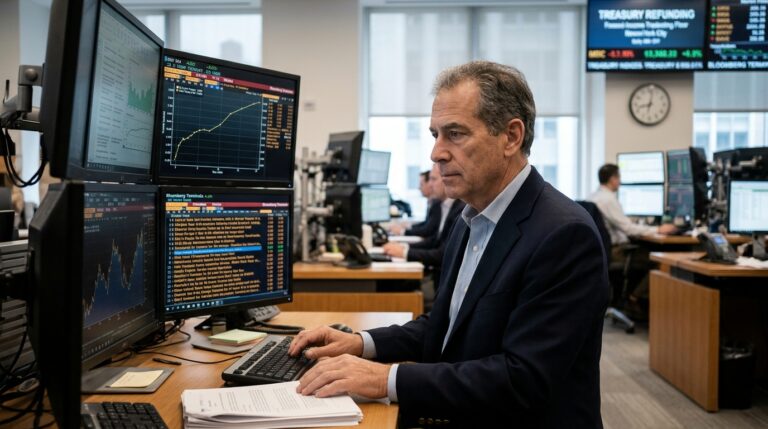

Brent crude settled near $94.62 on Wednesday and was quoted around $95.04 on Thursday morning, down about 8.7% in a single session after the Democratic sweep of Congress raised expectations of de-escalation in the U.S.-Iran war. Brent crude slid on hopes of an Iran peace deal, hitting a two-month low. WTI followed, trading around $87.86 on Thursday morning. That is a combined drop of more than $20 from the late-October peak near $108.
Airlines moved violently in the opposite direction. JetBlue surged 14% while American Airlines and Delta each gained 7% as oil dropped sharply below $90 a barrel. The logic is straightforward: fuel is the largest variable cost any carrier carries, and a sudden reprieve from triple-digit Brent reads directly into margin. But the trade is not symmetric, and the entry point matters enormously.
JetBlue carries no fuel hedge and approximately $8.4 billion in debt, making it both the biggest beneficiary and the most exposed carrier if oil rebounds. JetBlue paid $3.91 a gallon for fuel in the third quarter and guides to an adjusted operating margin of (4.5)% to (6.5)% for full-year 2026. At $94 Brent, the airline is still losing money. The rally reflects relief, not profitability. If Brent stabilizes here or slides further toward $85, the math starts improving for JBLU in a meaningful way. If it bounces back above $100, Wednesday’s gains evaporate faster than they arrived.
United and Delta are a different calculus. United’s fourth-quarter guidance calls for adjusted earnings per share of $0.50 to $1.50, based on an average fuel price of $4.80 per gallon. Delta owns an oil refinery that supplies part of its jet fuel, which dampens both its downside exposure and its upside sensitivity to crude. For DAL and UAL, the sweet spot is Brent in the $85-$95 range. Below $80 brings its own demand questions; above $100 compresses margins again. Right now they sit squarely in the comfort zone, which is why both stocks posted strong but not explosive moves compared with JBLU.
On the other side of the rotation, the integrated producers absorbed the damage. ExxonMobil fell about 4.6% to roughly $169.49 on November 4. Chevron slid 3.46% to roughly $215.10, stripping roughly $15 billion from its market cap in a single session. Energy stocks including APA, COP, CVX, HAL, SLB, OXY, and XOM all stumbled as oil prices fell sharply. XOM’s key technical support sits near $164, based on its 20-day moving average. A further leg down in crude toward $80 threatens that level and could trigger institutional de-risking in the sector.
The Federal Reserve connection is the part most traders are underpricing. The rise in oil prices following the onset of war in the Middle East put rate cuts on pause. The Fed hiked 25 basis points in September to 3.75%-4.00% and held in October. Before this week’s oil drop, futures markets were pricing a high likelihood of a quarter-point hike at the December FOMC meeting. A sustained move lower in energy removes one of the most inflation-stubborn components of CPI. The Cleveland Fed’s nowcast puts November CPI at 4.25% year-over-year and core CPI at 2.77% if energy keeps falling, those numbers move in a direction that makes December a live debate rather than a foregone conclusion.
The key levels to monitor: Brent $90 is the first meaningful support; a close below that opens a run toward $85 and would sustain the airline trade. Brent reclaiming $100 ends it. For XOM and CVX, watch whether crude stabilizes here or continues lower into the mid-$80s, which would force earnings estimate cuts heading into the fourth quarter. The Iran diplomacy risk is binary and fast-moving. Traders are watching whether Washington and Tehran can translate diplomatic contacts into a concrete agreement, since renewed military escalation could quickly restore the geopolitical risk premium. Position sizing accordingly.