October 14, 2026
Zuckerberg’s spending confession arrives one week before earnings, and the depreciation math is only now coming into focus.
On a podcast posted Monday, Mark Zuckerberg said out loud what Meta’s cash flow statement had already been saying for months. He confirmed that Meta is prepared to spend roughly $100 billion to $200 billion on AI infrastructure before it has proof points that the technology will succeed. The candor was striking. “We’re going to write this check for like, I don’t know, like $100 billion or $200 billion,” he told Stripe co-founder John Collison on the Cheeky Pint podcast. Third-quarter earnings land October 21. Investors have seven days to decide what to do with that information.
After “33X” call, Hall of Fame Trader Jon Najarian reveals NEW Tesla prediction…
Jon Najarian put his neck out on national TV for Tesla in 2014… Before Tesla stock flew to peak gains of 3,392% today! But this “33X” call on Tesla might pale in comparison to Jon’s newest prediction about Elon Musk… That a potential $44 TRILLION plan could be coming next.
The Bull Case
The bull argument begins with the ad machine that is funding all of this. Second-quarter revenue grew 28% year over year, ad impressions rose 14%, average price per ad rose 12%, and Meta said its AI-driven ad improvements drove an 8.3% increase in ad clicks and a 15.7% uplift in conversions on Facebook. The infrastructure bet is already paying a dividend inside the core business.
Now Zuckerberg is trying to build revenue beyond ads entirely. To access Muse Wonder, users of the Muse personal agent app must sign up for a monthly subscription of $20 or $100, underscoring Meta’s effort to create new AI-derived revenue sources outside its core online ad business. The addressable pool is enormous. Oppenheimer analyst Jason Helfstein has said that 115 million subscribers at $20 monthly would imply roughly $28 billion annually. TD Cowen is more aggressive still: it models Muse revenue rising from $55 million in 2026 to $1.8 billion in 2027 and $27 billion by 2031.
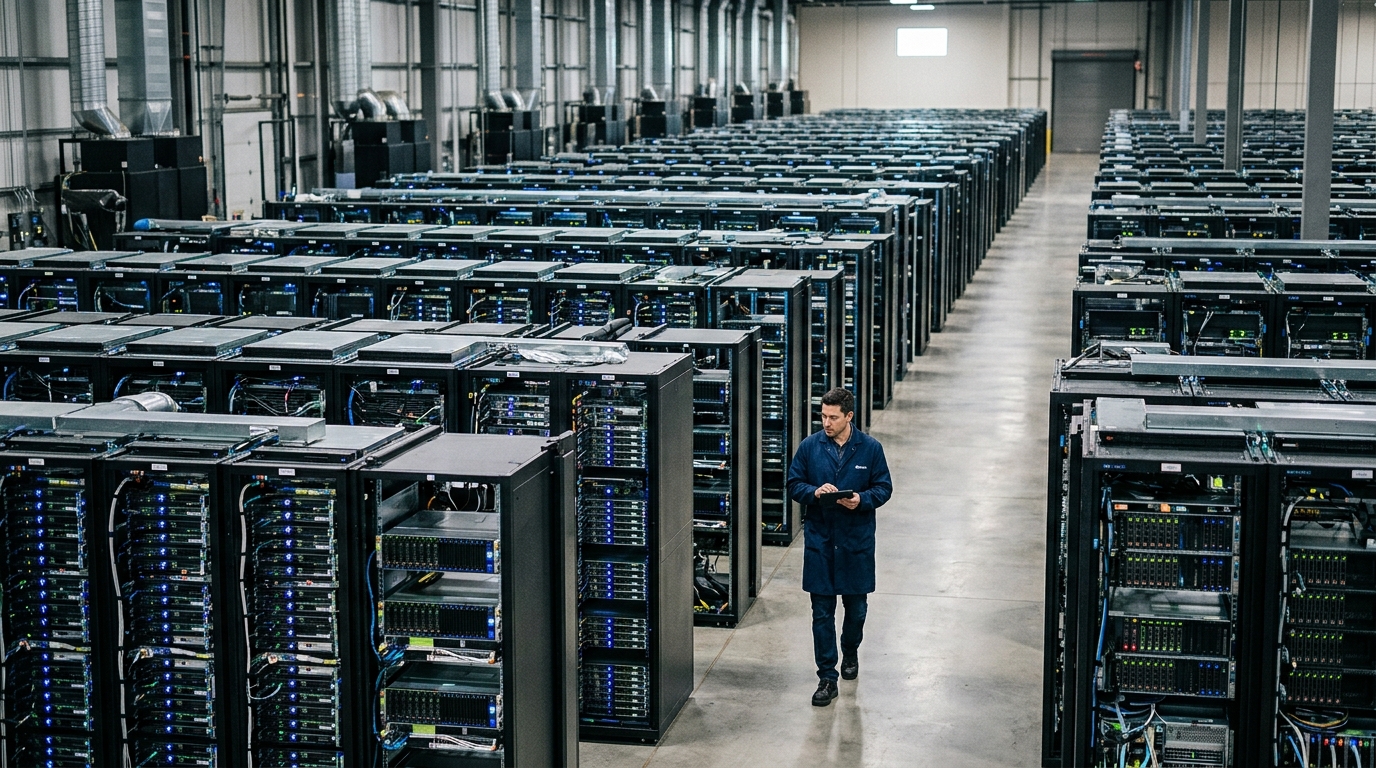
The infrastructure itself also carries an insurance policy of its own design. Zuckerberg has argued that if Meta’s specific consumer AI products fall short but AI succeeds broadly, other technology companies could pay to use Meta’s computing capacity. Meta is constructing high-capacity computing facilities, including a Prometheus cluster that it has described as a 1-gigawatt cluster and a planned Hyperion cluster in Louisiana that it has said can scale to 5 gigawatts. Stranded assets these are not.
The Bear Case
The problem is the free cash flow statement. In Q2 2026, capital expenditures, including principal payments on finance leases, were $31.08 billion and operating cash flow was $31.86 billion, leaving free cash flow at $784 million. Meta shares fell sharply in after-hours trading after the Q2 release even as the company reported 28% revenue growth. The market has already expressed an opinion on this trajectory once.
Elon’s plan to replace the dollar
Elon Musk has called the dollar “a scam…” and “just an entry in a database.” Now, he’s making a move to replace it. It’s not a crypto or anything to do with the blockchain. And it has big implications for anything you hold in dollars.
Make this one money move to get on the right side of Elon’s “dollar takeover” now.
Outside analysts have also raised eyebrows at the intensity of the spend relative to sales. In one widely-circulated estimate based on then-current guidance, CreditSights put 2026 capex at about 54% of Meta’s revenue. Every dollar spent on data centers must eventually flow through depreciation. A $145 billion capex year, spread over a ten-to-fifteen year asset life, adds between about $10 billion and $14.5 billion annually to the expense line, compounding with each successive year of aggressive spending.
The Muse subscription story also faces skepticism from the people closest to it. Wedbush said Muse looks promising but that near-term monetization is likely limited. BNP Paribas noted that the near- to medium-term revenue contribution from Muse Wonder and other recent products remains unclear.
The systemic context is not encouraging either. The IMF’s October 2026 World Economic Outlook, released October 13, warned that a sharp reversal in AI investment could leave global GDP 1.1% below baseline by 2028, including a 1.8% hit to U.S. output. Meta is now large enough that its capex cycle is a macroeconomic variable.
Where the Evidence Leads
The four largest hyperscalers, including Amazon, Microsoft, Alphabet, and Meta, are collectively planning around $725 billion of capital expenditure in 2026, up 77% from last year’s record of roughly $410 billion, with the bulk going into GPU clusters, custom silicon, and data center construction. Meta is not alone, which means competitive pressure to keep spending is real. Falling behind Microsoft or Alphabet in model quality now likely costs more to recover from than the capex itself.
Alphabet is navigating the same capex arms race from a structurally different position. Alphabet’s cloud margins have expanded sharply even as its infrastructure spending accelerates, giving it a return-on-capex story Meta has yet to establish.
The bull case rests on execution: Muse subscriber conversion rates and whether AI lifts advertising yields fast enough to offset depreciation. Meta is scheduled to report third-quarter earnings on October 21. Investors will closely track expenses and capital spending after the Q2 earnings miss, when Meta also guided to full-year 2026 total expenses of $165 billion to $169 billion and capital expenditures, including principal payments on finance leases, of $130 billion to $145 billion.
AI CEO Issues Code Red: Prepare for Meltdown
The CEO of this AI company (click here to get the name, 100% free) just issued a CODE RED in an internal memo…
Warning his employees that they’re dealing with a critical situation.
Another company executive even implied they might need a government bailout.
And now Jim Rickards is predicting this company is about to go bust, in a full-blown AI meltdown that could be 10 times bigger than Lehman Brothers.
Final Verdict
The bull case is more compelling today, but narrowly and conditionally. Zuckerberg’s admission that the commitment preceded proof of concept is honest, not disqualifying. The ad business is durable, the balance sheet can sustain the spending, and Muse’s early adoption is real. What the October 21 call must deliver is a credible depreciation bridge: how quickly subscription and API revenue ramps relative to the expense growth that $130-plus billion in annual capex will mechanically produce over the next three years. If that bridge is missing, the free cash flow squeeze will reassert itself regardless of how good the models are.
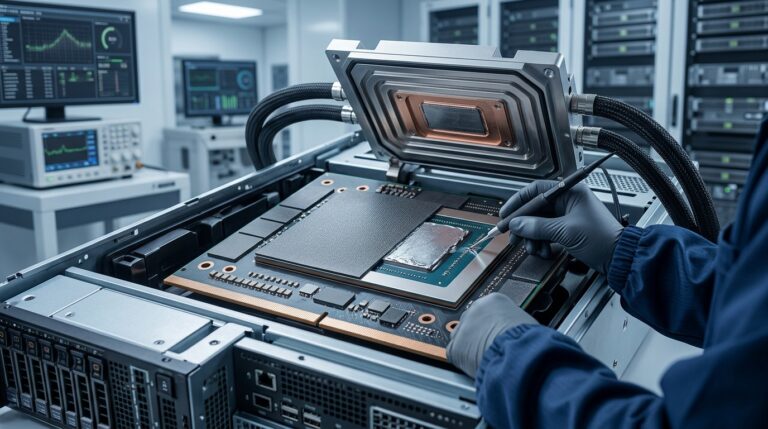
The depreciation math is only one layer of the cost structure. The physical infrastructure behind gigawatt-scale clusters — power, cooling, and nuclear supply contracts — adds a second cost curve that compounds alongside depreciation.