European automakers got a headline they badly needed. After two days of talks in Beijing on Oct. 8-9, 2026, EU Trade Commissioner Maroš Šefčovič announced a “shared understanding” with Chinese Commerce Minister Wang Wentao that would cut projected Chinese hybrid and plug-in hybrid exports to the bloc by more than half over four years, relative to a no-change scenario. The arrangement would “moderate” China’s exports and reduce projected volumes by several million cars over four years. Stellantis and Renault shares rose more than 2% on Monday morning. The question worth asking is whether investors are celebrating real protection or a bureaucratic speed bump.
The Bull Case: Breathing Room at a Critical Moment
The pressure on European manufacturers has been severe and measurable. EU governments are alarmed as Chinese car imports climb while their own carmakers cut jobs, including plans that sources have said could amount to around 100,000 at Volkswagen. Plug-in hybrid imports rose 86% in the year to September, with prices down 20%, and over half now come from China. That is not a gradual competitive shift. It is a market being repriced in real time.
Hybrids are the specific pain point because they escaped the EU’s 2024 tariffs on battery-electric vehicles. Chinese hybrid shipments surged partly because they escaped the tariffs Brussels imposed on fully electric vehicles in 2024, and Chinese brands accounted for about a quarter of European hybrid sales in August. The EU and China have not publicly confirmed a fixed annual cap such as 350,000 units, but the basic intent is clear: constrain the hybrid flow directly, giving Volkswagen, Stellantis, and Renault space to defend their hybrid lineups without competing against subsidized Chinese pricing.
The agreement could ease competitive pressure on Volkswagen, Stellantis, and Renault, which are struggling with declining sales and growing competition from Chinese manufacturers. The deal also carries broader trade concessions. Šefčovič said the two sides reached understandings on China cutting import duties on about €4 billion of EU exports, including car parts, olive oil, and footwear, and on smoothing China’s export licenses for rare earths and permanent magnets. That is not nothing.
The Bear Case: The Factory Is Already Being Built
The bear case rests on a single structural fact: the deal restricts Chinese exports, not Chinese production. And Chinese production is moving to Europe fast.
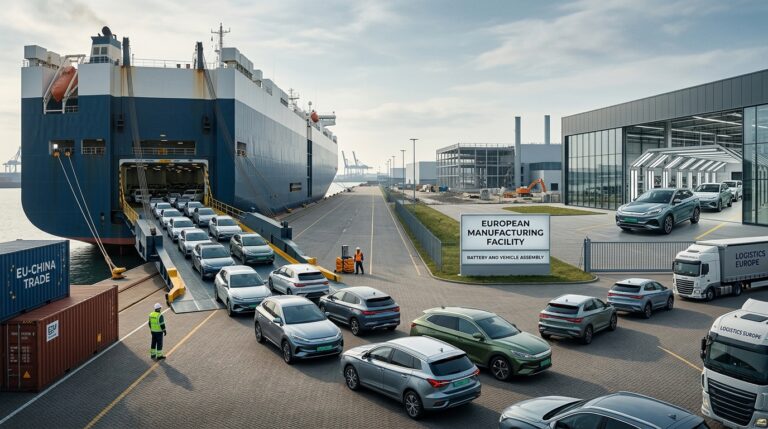
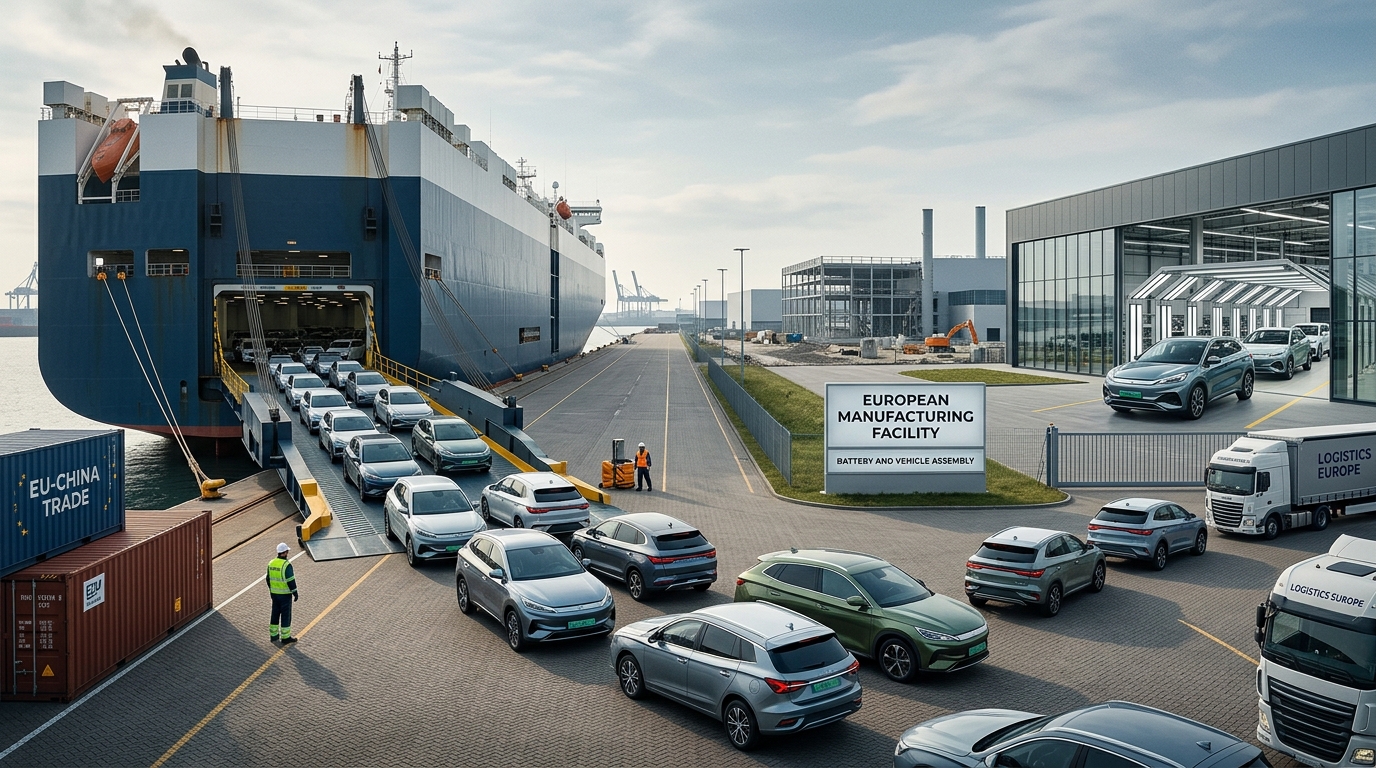
BYD is leading the greenfield push with its passenger vehicle plant in Szeged, Hungary, involving an estimated investment of around €4 billion and designed for an initial annual capacity of 150,000 vehicles, with series production expected to start in the fourth quarter of 2026. That plant produces cars that never cross into China’s export count. The quota does not touch them.
Geely is moving fast as well. Geely and Ford have announced an agreement to establish a joint venture in Valencia, Spain, to share factory capacity, with operations expected to begin in the first half of 2027 and the first new vehicles scheduled to roll off the line in 2028. Meanwhile, Chery holds a 40% stake in its manufacturing joint venture with EBRO in Barcelona, where the launch of a new production line has lifted installed capacity to around 130,000 vehicles annually, with Chery-branded production expected to begin by late 2026 or early 2027.
There is also a serious legal ambiguity baked into the agreement itself. The reported reduction of more than half concerns projected future exports rather than an established commitment to cut existing shipments by 50%. Chinese hybrid exports could still increase in absolute terms while remaining below the volumes otherwise anticipated. That distinction matters enormously for any investor pricing relief into Volkswagen or Renault today.
According to a client note issued by Jefferies on Sunday, the EU-China deal could hit BYD, Chery, and state-owned SAIC’s MG brand hardest, as between them they accounted for 90% of Chinese brand hybrid sales in the EU in the first eight months of 2026. Those three will feel it most from a direct export standpoint. But BYD and Chery each have European factories ramping now.
Where the Evidence Leads
The 1980s parallel is instructive. When Japan agreed to “voluntary” export restraints on cars bound for the United States, the result was higher prices on Japanese imports, fatter margins for Detroit, and an accelerated push by Toyota and Honda to build in Kentucky and Ohio. European carmakers risk the same outcome here: short-term margin relief, followed by a Chinese competitive presence that is far harder to dislodge because it carries a “Made in Hungary” or “Made in Spain” label.
The bull case is real but time-limited. A cap-like constraint on Chinese hybrid exports buys Volkswagen and Stellantis roughly two to three years before European-built Chinese models reach scale. The bear case reflects the structural reality that Chinese automakers are moving beyond exports as they expand their manufacturing presence across Europe, including Hungary and Spain, via new plants and manufacturing partnerships.
Final Verdict
The deal is genuine relief, but it is not a solution. Investors who bought Stellantis and Renault on the news this morning are trading a real but expiring catalyst. The agreement moderates one supply route while Chinese brands cement another. Volkswagen CEO Oliver Blume said Sunday that Europe must still ensure a level playing field in its own markets. That is the right framing. The export constraint addresses where Chinese cars come from. It says nothing about where they will be built next year.
Confidence in the bull case is moderate over the next 12 months, weak beyond that. Watch BYD’s Szeged ramp rate and whether the EU extends tariff disciplines to locally assembled Chinese-brand vehicles. Those are the two data points that will determine whether Friday’s handshake was a turning point or a delay.