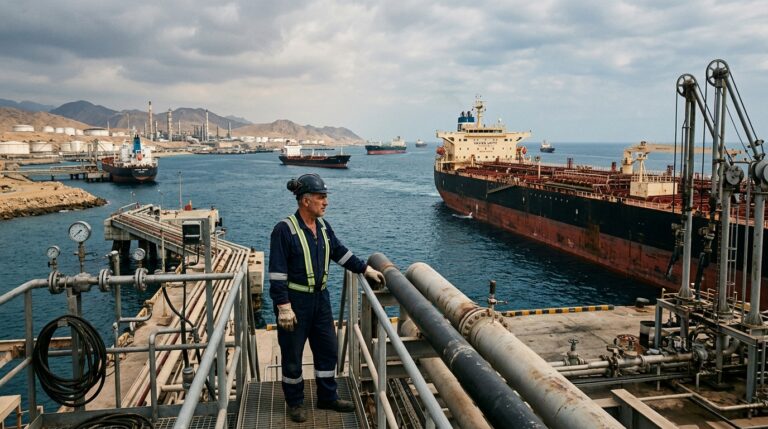
The relief trade lasted about 48 hours. Late last week, reports that Iran had proposed a seven-day plan to reopen the Strait of Hormuz sent Brent down more than 2%. Then Trump said no. Reuters reported that oil prices rose in early Monday trading after President Donald Trump rejected Iran’s latest proposal to reopen the strait, keeping the conflict-driven supply disruption in place. Brent was trading near $107 a barrel in early Asia, landing the sector’s cost problem squarely back in the headlines three weeks before Q3 earnings begin.
The Bear Case
The numbers are not subtle. The IATA Fuel Price Monitor said the global average jet fuel price last week rose 7.4% versus the prior week, reaching $194.90 per barrel. A widely circulated quote attributing a $200-by-end-of-September and $225-by-year-end forecast to aviation risk expert John Gradek has appeared in media reports, but the precise outlet and wording are inconsistent across re-postings; treat the path beyond current spot levels as directional rather than a point forecast. American is closest to the flame.
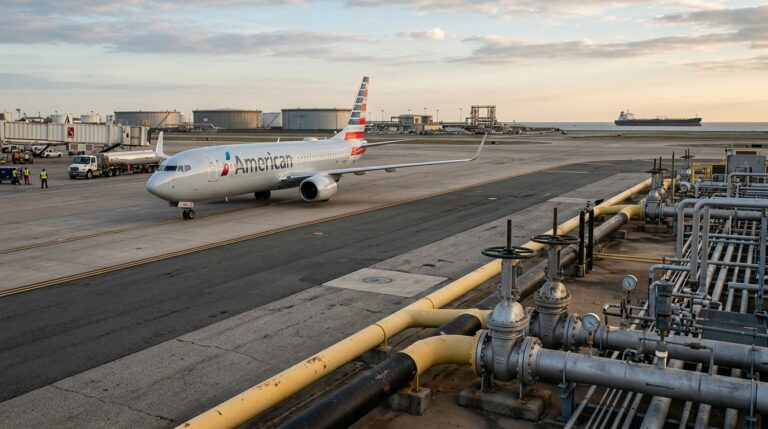
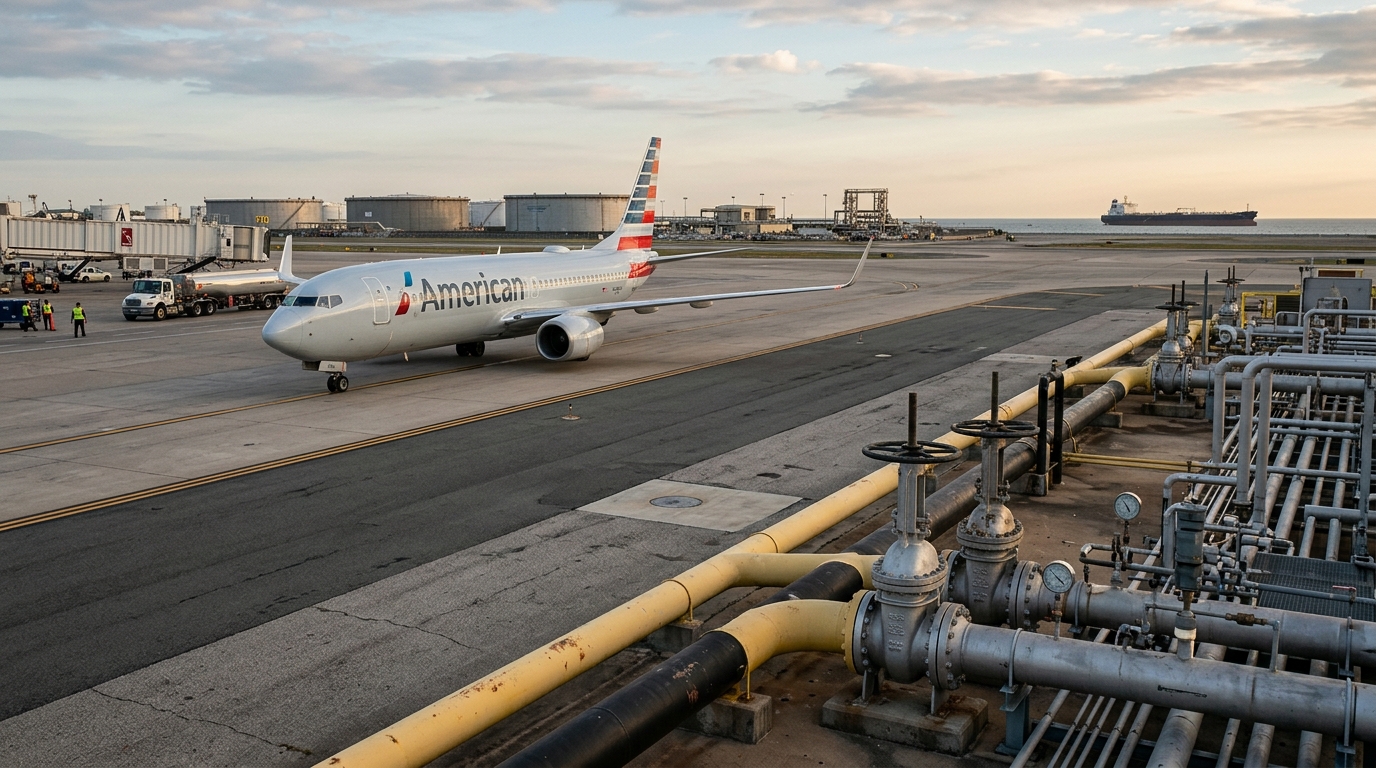
Reuters reported from the Morgan Stanley Laguna conference on September 16, 2026 that American Airlines CFO Devon May said fourth-quarter fuel prices had risen roughly $1 a gallon above the level assumed in July guidance, and that each 1-cent move changes quarterly costs by about $10 million, implying roughly a $1 billion quarterly headwind at current forwards. In its June 30, 2026 10-Q, American said it had no fuel hedging contracts outstanding as of that date and reported an average aircraft fuel price (including related taxes) of $4.05 per gallon in Q2 2026. There is nothing between the carrier and spot prices. Reuters also reported that United said some flights planned for December will no longer operate and that further adjustments could follow in the first quarter and into 2027 if fuel remains elevated. Southwest CFO Tom Doxey said at the same conference that the company began the year targeting 2%-3% capacity growth but has cut that roughly in half because fuel has been higher.
Reuters also reported that JPMorgan said it no longer has a clear baseline view for oil markets for the first time since the conflict began, warning that disruptions were worsening an already serious supply shock. When the street’s largest energy desks say they cannot model the endgame, airline investors cannot model Q4 margins either.
The Bull Case
The cost shock is real. So is the revenue response. In the August 2026 CPI release on September 11, 2026, airfares were up 23.4% over the prior 12 months, following a 25.5% year-over-year increase cited in the July 2026 CPI release. Demand has not flinched. Reuters reported that executives at American, United and Southwest said demand has remained resilient despite higher fares, with United describing fourth-quarter bookings as strong and American pointing to strength across premium and economy cabins.
The capacity cuts, counterintuitively, strengthen the revenue argument. If American cuts capacity while fuel stays high, it takes the least-profitable flying out of the schedule, which can push up load factors and give fares more support, helping unit revenue rise enough to offset part of the higher fuel bill. Delta’s Q2 math illustrates the dynamic: Reuters reported the airline’s second-quarter revenue rose nearly 14% on about 1% capacity growth, suggesting the consumer absorbed higher prices without visibly pulling back.
The geopolitical option also has real value. Trump rejected Iran’s seven-day plan, but reporting in late September indicated talks and conditions were still being discussed rather than conclusively closed. A Hormuz reopening would likely drop jet fuel costs quickly, handing much of the Q4 hit back to carriers in margin terms while booked fares stay elevated.
Where the Evidence Leads
The bull case depends on two things holding simultaneously: fares that are already up 23% holding firm, and a geopolitical resolution that remains entirely in Washington and Tehran’s hands. The bear case requires only that current conditions persist for another quarter.
Delta currently offers the strongest recent margin benchmark while United is showing clear capacity discipline. Southwest has some hedging protection but less margin room, and American faces the most visible near-term fuel cost shock. That pecking order matters. AAL is the highest-risk name if fuel stays above $190 a barrel; DAL, with Monroe Energy’s partial crack-spread protection, is the most defensible position in the sector.
What Could Change the Debate
Watch three things into Q3 earnings: American’s Q4 capacity guidance, whether fare strength in October bookings matches Q2 levels, and any shift in the Hormuz talks. Such fluctuations make it harder for airlines to plan ahead and give them reason to be cautious about lowering ticket prices. That caution protects margins in a high-fuel world. It also means that if crude falls fast, fares may not follow, which is the one scenario that genuinely favors airline equity holders heading into 2027.
The bear case carries more weight today. Brent near $107, no Hormuz resolution, and zero hedging at American is a difficult combination to talk past. The bull case is real but conditional on events neither management nor investors control.