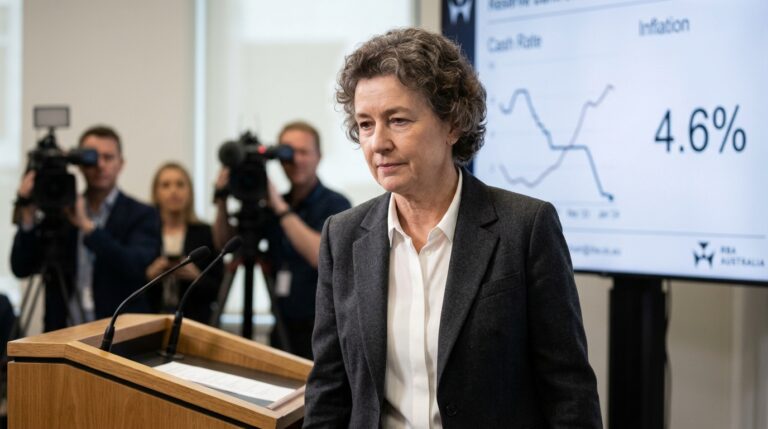
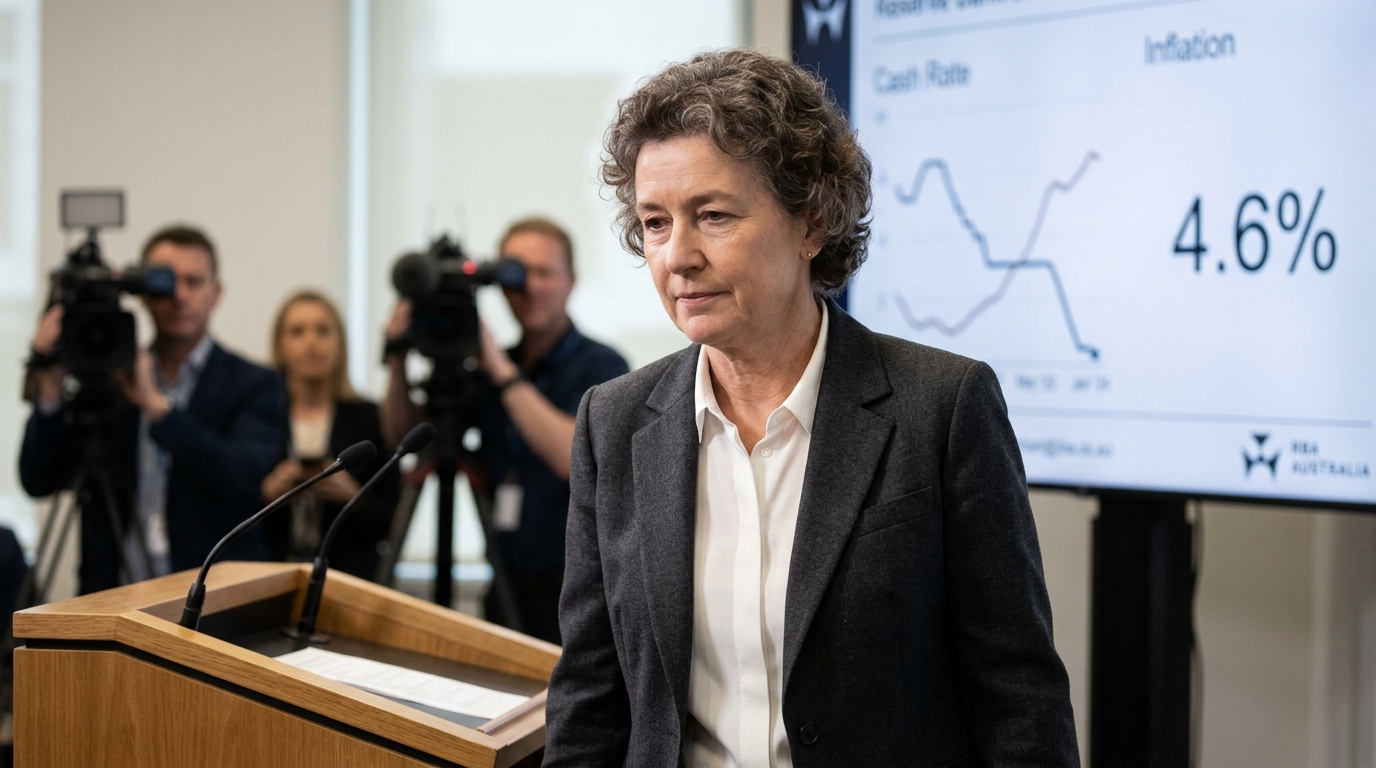
The Reserve Bank of Australia did what markets expected this morning, and that is almost beside the point. The RBA raised its cash rate target by 25 basis points to 4.60% in a unanimous September 2026 decision, marking its fourth hike this year and taking borrowing costs to their highest since 2011. Governor Michele Bullock will face the cameras this afternoon. The harder question is whether the board is doing the right thing, or compounding a problem that interest rates cannot solve.
The Bull Case: The RBA Has to Fight This
The numbers leave limited room for sympathy. Australia’s inflation ran above the RBA’s 2–3% target band throughout 2026, hitting 4.6% in March before easing to 3.5% in July. Six years outside the target band is not a run of bad luck. It is a structural credibility problem.
Policymakers have pointed to higher global energy prices following oil supply disruptions linked to conflict in the Middle East, stronger-than-expected recent inflation, and persistent domestic capacity constraints as forces adding to price pressures. The RBA has also flagged that AI-related investment is part of the backdrop shaping global demand, and firms continue to report rising costs and plans to pass those on. These are not transitory blips. They are compounding.
The global policy backdrop reinforces the case for action. The Fed voted 12–0 for its own September hike, and the ECB has moved twice this year. A central bank that pauses while its peers push forward risks a currency slide that makes imported inflation worse.
The RBA justified the hike by arguing that upside risks to inflation have materialized since August. Some major bank economists, including ANZ, have said they expect another increase at the November meeting. When your own data is moving in the wrong direction, pausing is a policy error.
The Bear Case: 4.6% Into a Weakening Economy
The problem with fighting a supply-side shock with demand destruction is that you hurt the second half of that equation without fixing the first. With oil prices having recently pushed back above $100 a barrel at times, central banks face the classic challenge of responding when inflation accelerates and growth slows simultaneously, a stagflationary shock.
That scenario is already visible in Australian households. Housing stress has worsened in recent years, with official data showing around 20% of private renters and roughly 23% of social housing renters were in housing stress in the latest comprehensive ABS release. Separate surveys and research often put overall rental stress higher. If commercial banks pass on each of the four 2026 rate rises in full, many borrowers will have seen monthly mortgage obligations rise materially since January, though the exact dollar figure varies by loan size and rate type. With the cash rate at 4.6%, advertised owner-occupier variable mortgage rates are commonly in the mid-5% range for the sharpest offers, with many existing borrowers paying more depending on their lender and discount.
The damage feeds into the broader economy. GDP growth is expected to be subdued in 2026, as high inflation dampens household disposable income and the recent tightening in monetary conditions weighs on housing-related activity. Betashares chief economist David Bassanese has warned about stagflation risks in the current environment. Raising rates into that environment risks killing demand without bringing energy prices down by a single cent.
Where the Evidence Leads
Markets were largely unmoved. The ASX 200 edged higher, gaining about 0.3% to around 8,709 points. Neither reaction suggests investors believe the hiking cycle has materially changed the economic picture.
The bull case carries more weight today, but only narrowly. The RBA cannot let core inflation become entrenched, and pausing while domestic capacity pressures persist would invite exactly that. Governor Bullock has repeatedly warned that leaving inflation above target for longer can raise the risk of a more costly adjustment later.
What could shift the balance: easing Middle East tensions, stable Chinese data, and confirmation that the RBA’s hiking cycle has peaked. A fifth hike in November, which some economists expect and markets will continue to debate, would force a harder reassessment of whether the cure is becoming more damaging than the disease. Watch the August CPI release Wednesday and Bullock’s press conference this afternoon for any sign the board sees a ceiling in sight.