Editor’s Note: Hedge fund legend Larry Benedict went 20 consecutive years without a single losing year. Now, he’s stepping forward to reveal what could be the biggest profit opportunity of his career – all tied to one overlooked ticker. Read more below…
Dear Reader,
What if every time bills went up… you celebrated?
Sounds crazy.
But that’s exactly how it works for some Wall Street traders.
And once you know their secret…
You could be rooting for prices to climb too.
I recently sat down with Larry Benedict…
A man who ran a hedge fund ranked in the world’s top 1% by Barron’s…
And who managed money for the Saudi Royal Family, the Bank of New York, and the Canadian government.
He told me there’s one ticker that moves like crazy…
Whenever prices at the pump or the grocery store start climbing.
Wall Street quietly siphons money from everyday investors the moment it happens…
While most regular folks just try to keep up.
But Larry’s readers have had the opportunity to play the same side as Wall Street…
They had the chance at fast payouts like:
✅ $2,482 in two days
✅ $7,623 in eight days
✅ $8,704 in six days
All from that one ticker in a normal brokerage account.
Larry names it – completely free – in our new interview.
Regards,
Kimi Weintraub
Host, The Vienna Cartel
City Traffic Cameras Are Becoming a Software Business
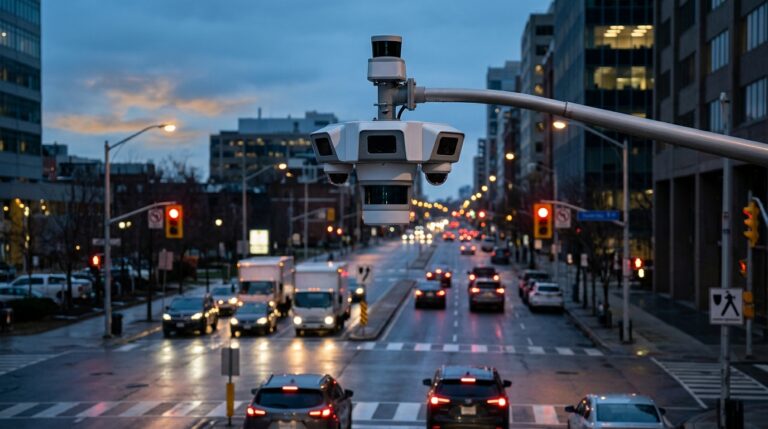
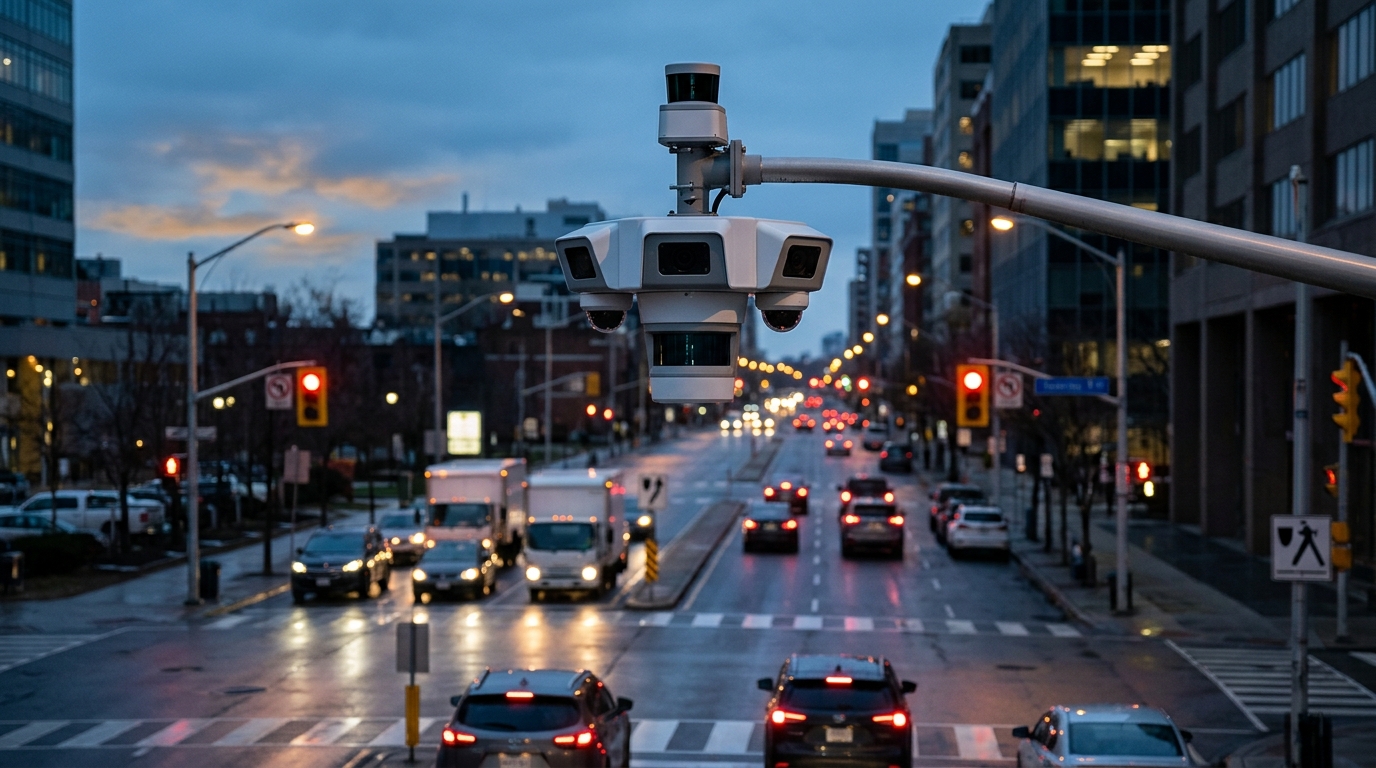
The traffic light at the corner of your city’s busiest intersection is not just a signal anymore. It is a data collection node, and the companies that sell the software sitting above it are about to take the more valuable half of a market growing toward $106 billion by 2032.
That number comes from MarketsandMarkets, which puts the global traffic management market at about $55.24 billion in 2026 and projects it to reach about $106.13 billion by 2032 at an 11.5% annual rate. But the more telling figure is directional, not absolute. The business model is migrating.
The traffic management sector is undergoing a strategic shift from standalone roadside equipment sales toward software-defined, adaptive mobility orchestration. Physical signal heads, inductive loops, and ANPR cameras remain vital field actuators, yet software platforms and AI algorithms are increasingly capturing most of the market value.
Cities are not ripping out their cameras to fund this shift. They are buying a software license on top of hardware they already own. With platforms like IvedaAI, existing camera systems can become tools for smarter traffic flow, faster alerts, and safer streets without requiring cities to replace infrastructure. The installation cost has already been sunk by the public works budget. The recurring revenue accrues to the software vendor.
Iteris, now owned by Italy’s Almaviva Group after its acquisition closed on November 1, 2024, is the clearest U.S. example of where this goes. In recent years, Iteris pivoted toward a larger mix of recurring software and services revenue. But the margin story here should be stated more carefully. Iteris reported gross margin of 37.6% for fiscal 2024, and while the company laid out “Vision 2027” targets that included higher profitability, there is no single, verifiable public figure that supports a blanket claim that gross margin was already approximately 40% to 42% or that margin expansion by 2027 is “expected” rather than an internal target.
Cities that have already deployed sensor and controller infrastructure are now allocating incremental budgets to analytics and optimization platforms, a shift that Iteris and TomTom are actively monetizing through subscription and licensing models that can carry higher gross margins than one-time hardware sales.
The bear case is not obscure. Adoption velocity is governed less by roadside sensor density than by an agency’s ability to integrate legacy field assets into unified command-and-control architectures. Vendors that deliver open APIs, multi-agency data sharing, and embedded zero-trust cybersecurity will maintain a durable competitive advantage over suppliers offering closed, proprietary field hardware. Most municipalities have neither the IT staff nor the budget to run competitive procurement on every software layer. Incumbents win by inertia as much as by product quality.
At the top of the market, Siemens, Kapsch TrafficCom, and Thales are often cited among the leading global players in traffic management and intelligent transportation systems. But an estimated combined 30 to 35% share of global revenue for those three specifically is not a figure that can be cleanly verified from public sources, so it should be treated as a rough framing rather than a hard number.
The smart traffic camera market alone is projected to reach $30.74 billion by 2030, growing at about 15% annually, according to a Research and Markets report summary. Growth rests on three pillars: rapid rollouts of AI-based adaptive signal control across U.S. Sun Belt metros, sustained EU TEN-T funding for cooperative ITS projects, and China’s nationwide automatic number-plate recognition mandate.
The question worth asking now is not whether this market grows. It does, and the data from multiple independent research houses is consistent on direction if not on magnitude. The real question is who captures the software margin: the infrastructure giants who already own the hardware relationships, or the analytics-first vendors building subscription models on top of someone else’s poles and cameras. That answer will determine which companies in this space are worth owning, and which are building elaborate tollbooths on roads they do not control.