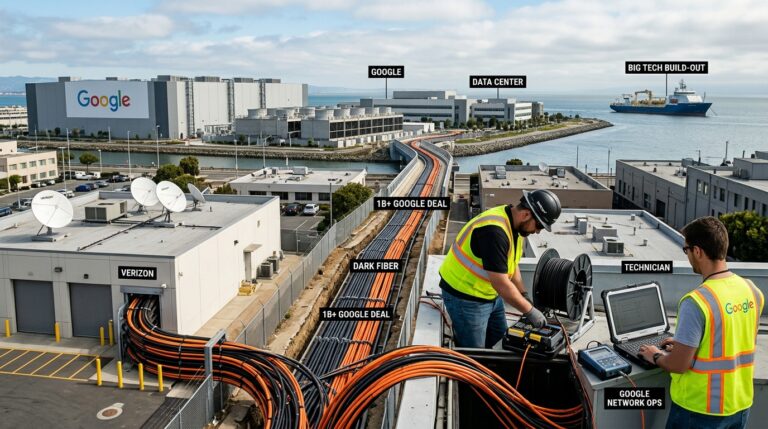

The uncomfortable thing about Tuesday’s announcement is what it implies about Google, Microsoft, and Amazon all at once. OpenAI and Google Cloud confirmed on October 21, 2026 that GPT-6 Astra, GPT-6.1 Sol, and GPT-6 Luna, along with Codex agentic workflows, are coming to Google Cloud’s Model Garden via Google Cloud Marketplace, putting OpenAI’s technology on sale through the platform run by one of its most direct competitors. That completes a sweep. Before this week, Astra and OpenAI’s recent models were already available through the OpenAI API, Microsoft Azure, and AWS Bedrock. Google Cloud becoming the fourth distribution channel closes what had been a conspicuous gap.
The structural shift did not happen overnight. On April 27, 2026, Microsoft and OpenAI announced the most significant restructuring of their partnership since it began, loosening what had functioned in practice as Azure-first distribution for many OpenAI product rollouts. Azure remains the “primary” cloud partner under a license that runs through 2032, but the unilateral lock-in that defined the partnership since 2019 is gone. Google’s deal is the last brick in that wall coming down.
The Bull Case: Distribution Is the New Moat
For the hyperscalers, the optimistic reading is that OpenAI’s ubiquity proves the market is large enough that nobody loses. The Google Cloud integration is designed to give enterprise customers native access to OpenAI’s models for building agentic software and automating complex tasks without leaving Google’s infrastructure, including Google Cloud access controls and data-governance tooling that can be decisive for regulated industries like banking, healthcare, and government. Compliance, residency guarantees, audit logging: these are not features OpenAI can replicate on its own API, and they are exactly the friction that keeps regulated spending inside the cloud providers.
Billing runs through a single Google Cloud invoice, draws down existing commitments, and counts toward Flexible Savings Plans. Enterprise procurement teams don’t love new vendors. Wrapping GPT-6 in Google Cloud’s commercial and compliance infrastructure makes adoption easier, not harder, which means more compute consumption running over Google’s network and GPU fleet. That is a revenue argument, not a dilution argument.
Google Cloud says it can now offer enterprises first-party Gemini models alongside major third-party closed models, including OpenAI and Anthropic, in one catalog. If breadth of choice becomes a real enterprise buying criterion, Google’s Model Garden has a temporary edge over Azure, which remains anchored primarily on OpenAI, and over AWS Bedrock, which does not carry Gemini.
AWS Bedrock’s position in this catalog war carries its own margin story. AWS has been expanding operating margins while absorbing the largest infrastructure buildout in Amazon’s history, which shapes how much pricing flexibility Bedrock can offer as model availability normalizes across clouds.
The Bear Case: Models Without Margins
The bearish read is that the hyperscalers are becoming toll roads for someone else’s product. When GPT-6 runs identically on Azure, Bedrock, and Model Garden, there is no model-layer reason to prefer one cloud. Switching costs erode. The differentiation collapses to price, proximity, and legacy contracts, thin foundations for premium valuations.
Microsoft’s lock on OpenAI’s models was once treated as a structural moat for Azure. Its unwinding, followed by OpenAI landing on AWS and now Google Cloud, shows frontier labs no longer see single-cloud exclusivity as worth the trade-off. If labs won’t grant exclusivity, the cloud providers cannot manufacture it. That leaves infrastructure spending, Nvidia GPUs, custom silicon, data center build-out, as cost rather than competitive advantage, which compresses margins even as headline revenue grows.
The cost side of that equation is already visible in AWS’s results. Amazon’s in-house chip division has crossed a $25 billion run-rate, a figure Wall Street had been underweighting for months.
There is also a subtler threat. Google Cloud now distributes models from OpenAI, Anthropic, and its own Gemini family side by side, a genuinely unusual position for a hyperscaler that also builds its own competing frontier model. Google is simultaneously a model vendor and a neutral distributor. That works while customers want a broad catalog. It becomes awkward if Gemini ever leads on capability and Google wants to steer customers toward it.
Where the Evidence Leads
The bull case is better supported right now, but not by a wide margin. Enterprise procurement realities, compliance tooling, unified billing, existing commit drawdowns, give the hyperscalers genuine intermediation value that OpenAI cannot fully replicate direct. Before this change, enterprises using AWS or Google Cloud faced a choice: migrate critical workloads to Azure for native OpenAI access, or use OpenAI’s API directly and miss cloud-native benefits like unified billing and compliance frameworks. That friction existed, and removing it drives incremental volume.
The bear case is a medium-term risk, not an immediate one. Pricing power erodes gradually as model availability normalizes across all three clouds. Watch per-token margins at the hyperscaler level over the next two to three quarters. If they hold while volume grows, the bull case is vindicated. If they compress as customers use cloud switching as negotiating leverage, the toll-road concern will reassert itself fast.
For now, the cloud providers look like the necessary infrastructure layer in a market still growing faster than pricing pressure can neutralize. That balance will not hold indefinitely.