September 15, 2026
Bonus Content: Intel’s Foundry Wins Clients. The Math Still Doesn’t Work.
Most traders have never noticed the weird market anomaly that happens at 9:35 AM every morning.
They’re too busy with lagging indicators trying to predict the next move… when the market makers have already set the tone for the trading day.
It’s this weird anomaly that points us to the market maker’s key levels above and below.
And by playing the move within that range…
Regular folks like you have been able to reach for $100 or more (on a $1K stake) over 600 times in the last 2 years.
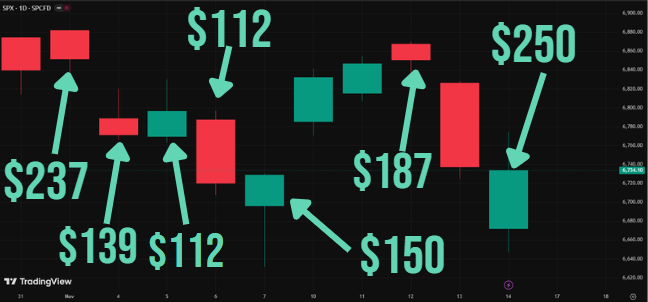
We’ve seen this straightforward approach play out whether the market broke out… broke down… or stayed choppy.
Granted, I can’t make trading guarantees here.
But I’ve opened up the data behind those trades, as well as how you can get in on the very next morning opportunity.
You’ll find the full details right here.
See you in the market.
Chris Pulver
Intel’s Foundry Wins Clients. The Math Still Doesn’t Work.
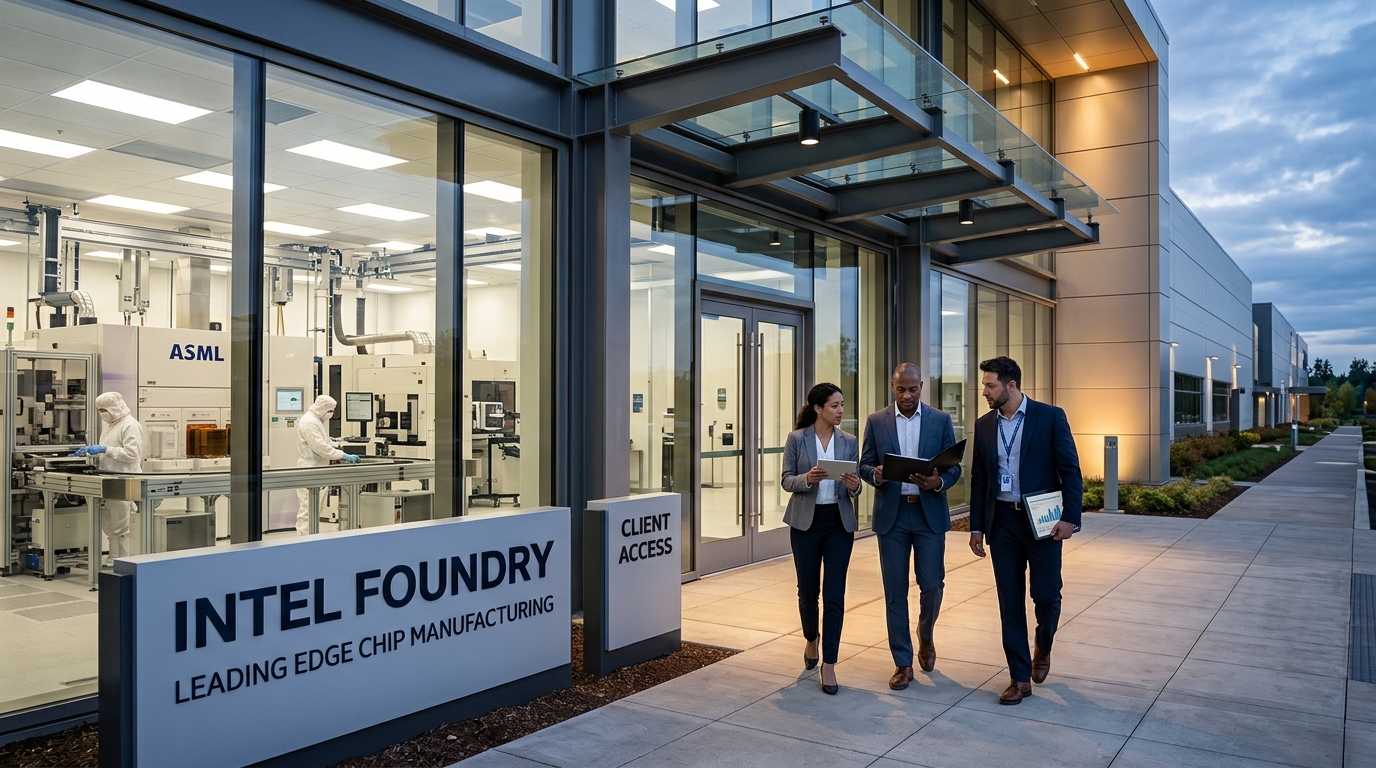
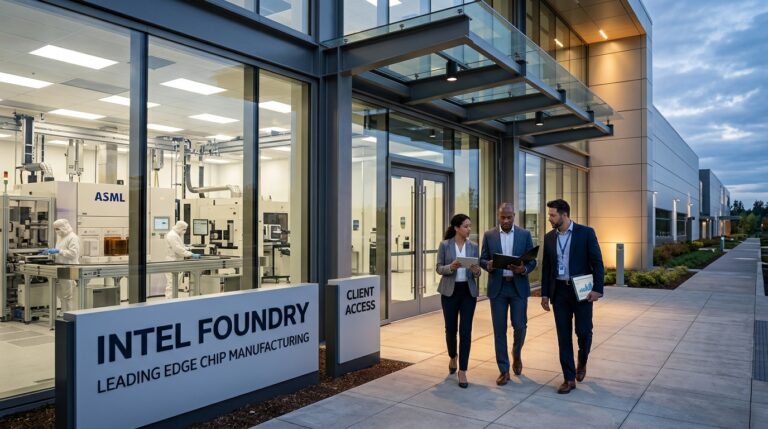
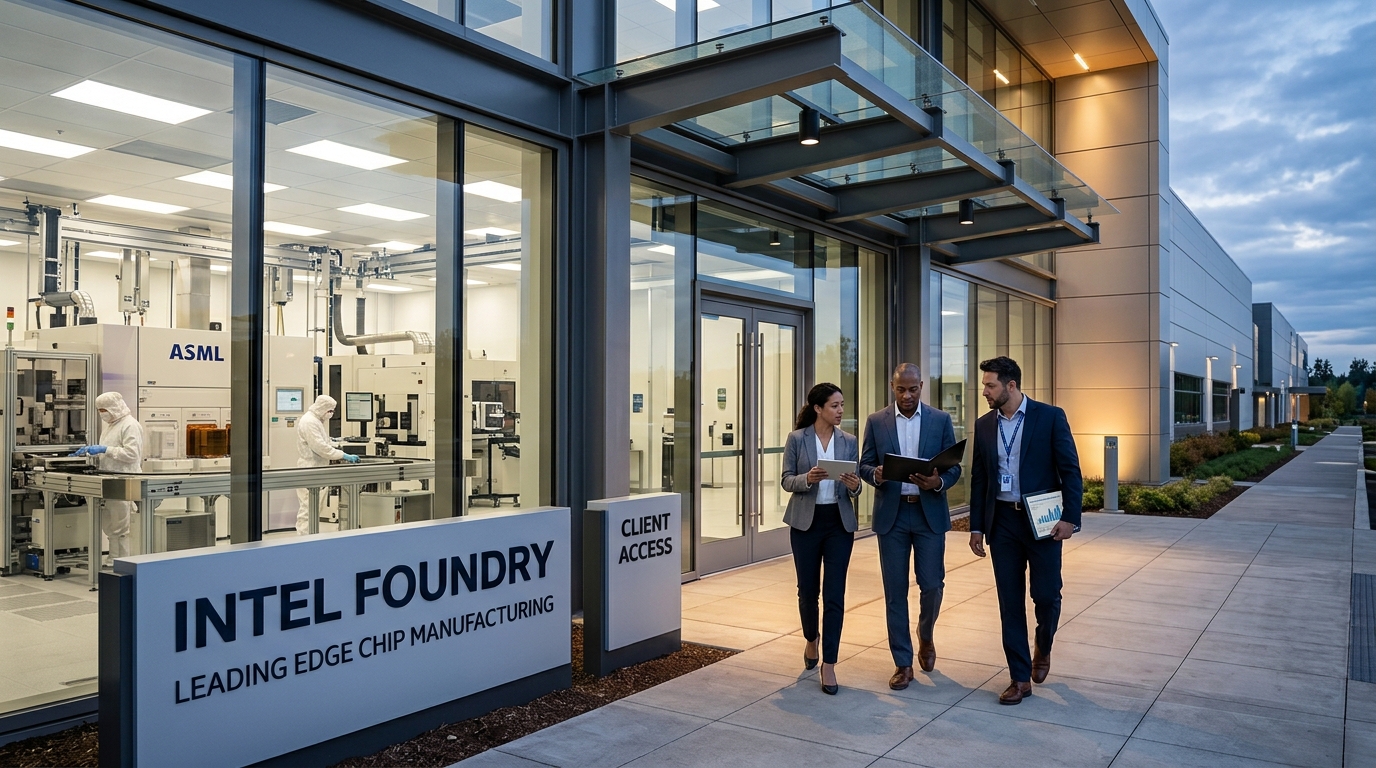
Intel’s foundry business is doing something it hasn’t managed before: it’s actually winning customers. The question worth asking in September 2026 is whether that matters yet, given the numbers underneath it.
The Bull Case: Real Wins, Real Momentum
Fortinet will use Intel’s foundry to produce its next-generation security chip, marking a win for CEO Lip-Bu Tan, who took over in March 2025. It is the first named external customer under Tan’s tenure, and the symbolism is not trivial. The deal shifts Fortinet away from TSMC, which dominates the foundry industry with about a 72.5% market share, according to TrendForce.
Beyond Fortinet, the technical progress is genuine. CFO David Zinsner said at Deutsche Bank’s Technology Conference that 14A defect density is tracking better than Intel’s internal target, describing the improvement rate as the best the company has seen since its 22-nanometer process. Intel has confirmed AWS as an anchor customer for a custom AI fabric chip built on its 18A node. And Intel expects customers will begin making firm supplier decisions for its next-generation 1.4nm-class 14A process starting in the second half of this year.
Intel Foundry’s revenue climbed from $4.4 billion in the year-ago quarter to $5.8 billion in Q2 2026, while its operating loss narrowed from $3.2 billion to $2.1 billion, with 31% year-over-year revenue growth accelerating from 16% in Q1. That trajectory has a direction.
The Bear Case: The Ratio That Won’t Close
Here is the problem. External customers generated just $293 million of Intel Foundry’s Q2 revenue, versus $467 million across the first two quarters combined, out of a division producing $5.8 billion in quarterly sales. The foundry’s commercial rationale depends on external volume, and that number remains a rounding error relative to the capital at stake.
The $11.0 billion GAAP net loss reported alongside $2.2 billion of non-GAAP net income is one of the strangest line items in large-cap equities right now. Intel said it is meaningfully increasing its investment to support expected growth across products and foundry, and it has also pointed to higher investments in equipment, clean room space, and substrates. On this balance sheet, success is the scenario that requires more capital, not less.
The valuation compounds the concern. Despite recent positive results and strong demand for compute, Intel’s forward multiple of roughly 45x dampens potential upside, leading most analysts to a neutral stance. The Q2 net loss widened to $11.0 billion. A stock up about 160% in 2026 has priced in a foundry turnaround that the income statement has not yet delivered.
Where the Evidence Leads
The foundry’s operating margin has moved from negative 72% to negative 36% in four quarters. That is progress. But Intel’s 14A high-volume manufacturing commitment sits two years out with no confirmed external customer at volume, and node execution and customer adoption are separate problems.
If Intel does not secure an anchor customer by late 2026, the likely outcome is a slower path forward, extending 18A rather than pushing aggressively into 1.4nm. Watch Q3 foundry external revenue and any named 14A design-win announcement. Those two data points will do more to justify or deflate the current valuation than any macro-driven multiple debate.
The bull case is real but early. The bear case is the price tag on that earliness.