September 12, 2026
Big Tech’s hunger for baseload electricity is real
Two pieces of nuclear news landed within 48 hours of each other this week, and they point in opposite directions. Together, they force a sharper question than either story raises alone: is the AI electricity boom a tailwind for nuclear power broadly, or mainly for the plants that are already running?
Rickards: “Trump’s Gold Mine” to Deliver 10X Gains In a Few Months
According to Jim Rickards – the world’s #1 gold expert and a man with close ties to Donald Trump’s “inner circle”…
The president is about to unleash a major new gold initiative…
One that opens up the largest gold deposit in the entire world – right here on U.S. soil…
And that is valued at over $1 TRILLION.
Today, Jim has revealed one of his favorite ways to play this gold boom – 100% FREE.
The Bull Case: Existing Reactors Win, and the Model Is Spreading
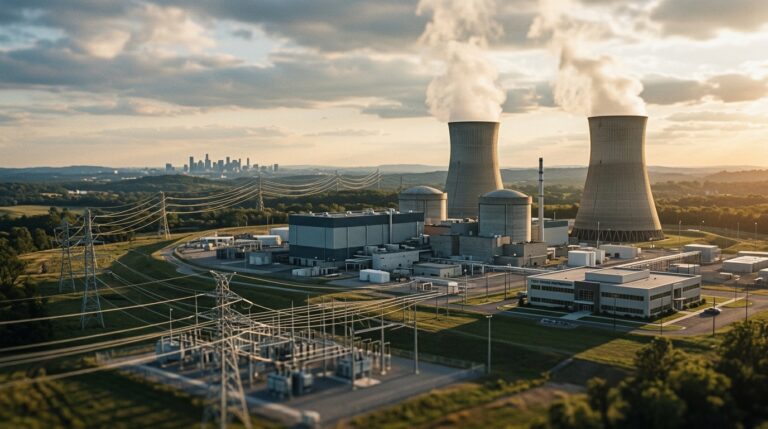
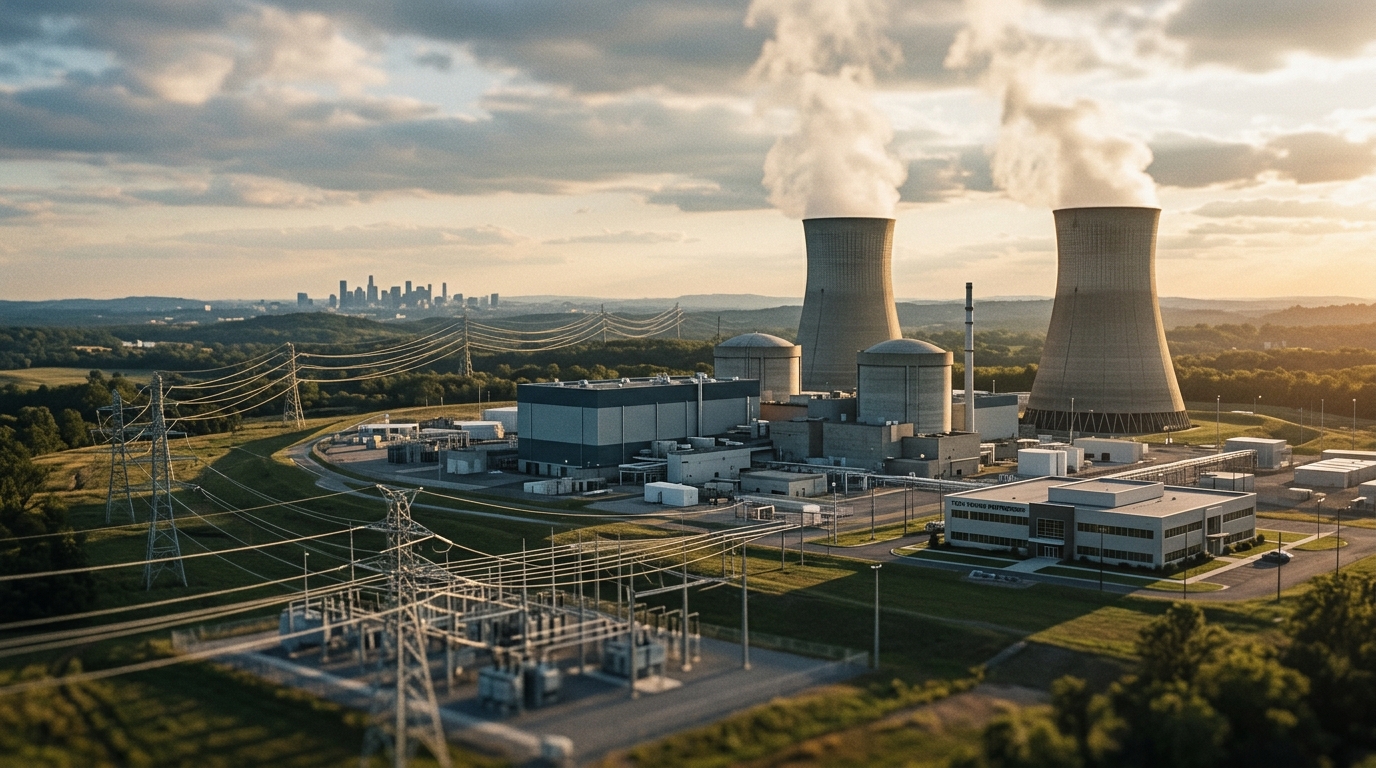
A deal between Google and Nordic utility Fortum, billed by Fortum as Google’s first nuclear power purchase agreement in Europe, is designed to help unlock investment needed to keep a nuclear power plant in Finland running for decades to come. As part of a planned €13 billion investment in AI infrastructure in Finland, Google agreed to buy up to 50% of the capacity from Fortum’s two-reactor Loviisa nuclear power plant, supporting operation through the end of its operating licenses in 2050.
The structure matters as much as the headline number. Fortum has said the long-term agreement provides the revenue certainty to complete the lifetime extension and power upgrade, keeping a facility that produces about 10% of Finland’s electricity running through 2050. The deal begins at a lower level in 2028 before reaching 50% from 2030 through 2049. This is not a green marketing exercise. It is an infrastructure commitment that extends the runway for two reactors that are already operating.
Loviisa extends a pattern in which Big Tech companies become anchor tenants of nuclear plants. Microsoft agreed to buy power under a 20-year agreement with Constellation Energy tied to restarting Three Mile Island Unit 1. Separately, Google signed a 25-year agreement with NextEra Energy tied to restarting the Duane Arnold Energy Center in Iowa, which shut in 2020 and is expected to be back online by the first quarter of 2029, pending approvals. Constellation Energy and Vistra are the domestic names most exposed to this playbook, and both have benefited as corporate power purchase agreements turn old fleet into premium assets.
Fortum shares rose about 10% after the announcement, a signal that the market reads long-term revenue certainty from a creditworthy counterparty as genuinely transformative for a utility’s investment calculus.
What 25 years on a Wall Street desk taught me about retirement income
I spent 25 years at Merrill Lynch and Vanguard watching the same play run, week after week, in every market condition imaginable. The money keeps coming in on every trade. Now that I’m on the outside, I’ve put together a free guide that breaks down exactly how this works, in plain English.
The Bear Case: Small Reactors Are Still Promises, Not Plants
While Google was locking in Finnish megawatts, UBS was walking away from the sector’s most prominent small modular reactor pure-play. UBS downgraded NuScale Power to Sell from Neutral and lowered its price target to $6 from $10, citing construction timeline challenges and lack of firm customer commitments.
The specific numbers in the note are difficult to dismiss. UBS said competitors are moving toward construction while NuScale faces an estimated five-plus-year build timeline, and the firm now assumes only one project begins construction in 2028. UBS estimates that from 2026 to 2028, NuScale will suffer $700 million in negative free cash flow, consuming approximately 65% of its cash on hand. Other analysts polled by S&P Global Market Intelligence estimate 2026 to 2028 cash burn closer to $1 billion.
At the current stock price, UBS estimates the market implies $124 million of 2028 EBITDA, compared to its own forecast of $29 million, and it says project delays, setbacks tied to the RoPower project in Romania, and limited progress on a Tennessee Valley Authority agreement should expose that valuation gap. UBS concluded NuScale’s path to secure firm customer orders is increasingly difficult as peers make tangible commercial progress with competing designs.
Oklo fell only modestly in sympathy. Oklo’s execution around the Aurora reactor at Idaho National Laboratory, plus first criticality at its Groves isotope test reactor announced on August 6, 2026, gives it a separate story from the NuScale file. The market is distinguishing between SMR developers, not condemning the category.
5 Little-Known Stocks Behind Today’s Defense Tech Shift
Behind the headlines, a major transformation is underway.
Modern warfare is being driven by AI, autonomous systems, and next generation technology. A handful of lesser known companies are helping power this shift.
This report uncovers five stocks quietly playing a critical role in the future of defense.
Where the Evidence Leads
The Google-Fortum deal and the UBS note are not actually contradictory. They describe two different time horizons. Corporate buyers urgently need baseload power now, and existing reactors with life-extension runway are the only credible answer before 2030. That is a genuine, fundable opportunity, and Constellation and Vistra are better positioned to collect it than any SMR developer.
NuScale’s problem is not that the long-run thesis is wrong. It is that revenue is expected to rise meaningfully only later in the decade, and getting to that point without running out of money first is the problem NuScale must overcome. NuScale enters the fourth quarter of 2026 carrying a sharply reduced institutional price target and no widely reported firm customer backlog to offset the bearish thesis.
What Could Change the Debate
A binding customer agreement, a credible financial close on RoPower, or a domestic construction milestone would each materially shift the NuScale picture. On the other side, if grid constraints tighten faster than expected across European data center markets, the Google-Fortum template could accelerate demand for any nuclear capacity, new or old, and that lifts the whole sector.
Verdict: The bear case on NuScale is better supported by current evidence. The bull case on existing nuclear operators, with Constellation and Vistra as the cleaner expressions, is stronger still. The AI power trade is real. The SMR trade is early, and early is expensive when the cash burn clock is running.