September 5, 2026
Citadel’s move from trading barrels to owning them could signal US shale is underpriced, or a trading firm stepping into unfamiliar terrain.
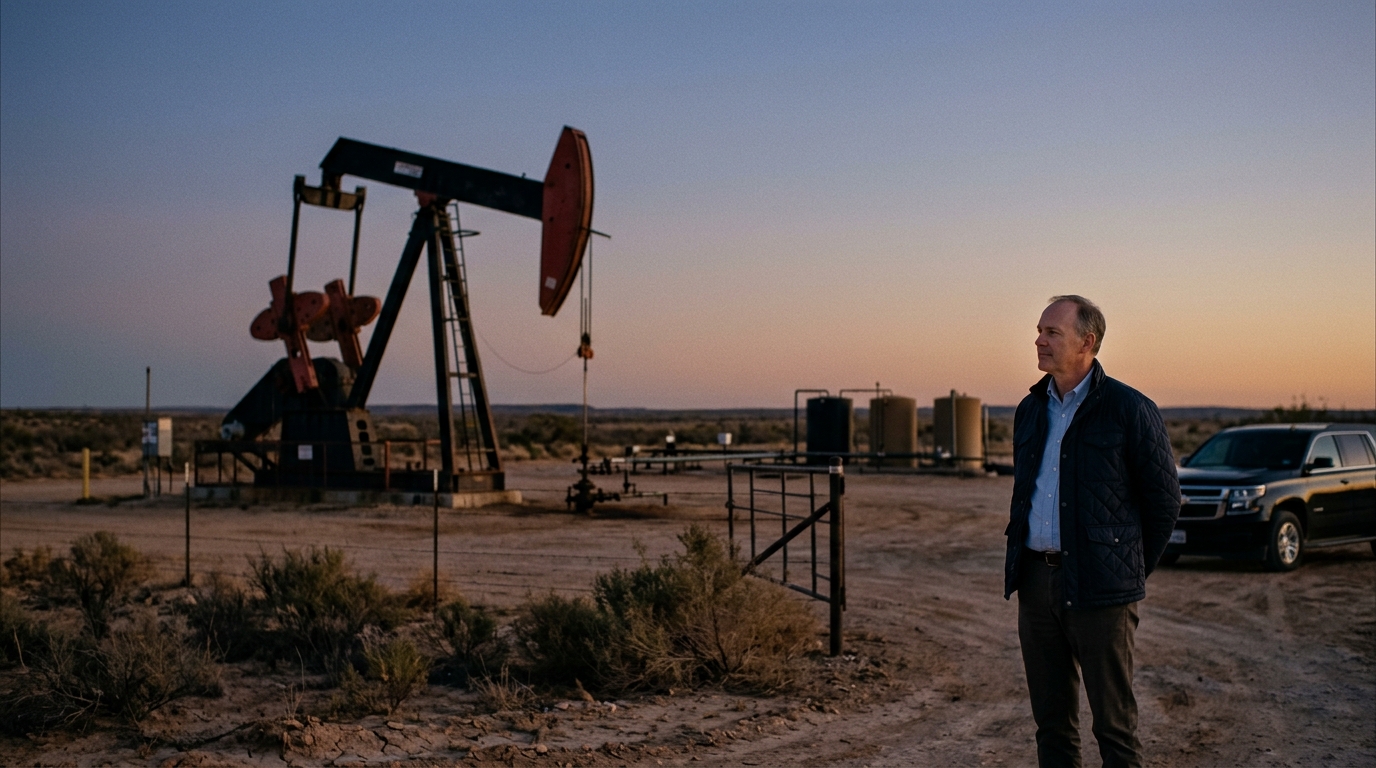
Reuters reported Friday that Citadel, Ken Griffin’s firm, has been in active talks to acquire US oil production assets. The most concrete example: Citadel was among the bidders for WildFire Energy, the Eagle Ford operator put up for sale by private equity sponsors Warburg Pincus and Kayne Anderson. Griffin’s firm was among the bidders for WildFire Energy, which Magnolia Oil & Gas ultimately won, agreeing to buy the Eagle Ford operator for $4.06 billion. That loss didn’t end the pursuit. The WildFire bid was among a handful of engagements Citadel has had in recent weeks with private equity firms that own exploration and production companies about buying oil-weighted assets.
5 Stocks Under $10 With Big Upside Potential
You don’t need a three-digit share price to find an interesting company. This free report reveals 5 stocks currently trading below $10, each with a specific catalyst that could put significantly higher prices within reach.
See why they’re on our radar now.
The Bull Case
This is not a firm stumbling into unfamiliar territory. Citadel has been building an actual energy operating business for 18 months. Citadel acquired Paloma Natural Gas for about $1.2 billion in February 2025, renamed the company Apex Natural Gas, and then acquired further assets, including from Comstock Resources. That is not paper trading. That is operational scale.
The strategic logic for moving into oil is also clear. In April, Griffin warned that a six-to-12-month Hormuz closure would push the global economy into recession, with sustained oil shortages raising energy costs, inflation, and transportation costs across the global economy. Owning US production gives a commodities firm direct exposure to the barrels that become more valuable when overseas supply gets disrupted. US oil and natural gas assets have drawn heightened buyer interest because they can deliver oil without passing through chokepoints such as the Strait of Hormuz.
The broader market validates the thesis. XOP, the S&P Oil & Gas Exploration and Production ETF, closed at $190.96 on September 4, up sharply from earlier in 2026 as Hormuz risk kept a floor under domestic production valuations. Buying producing assets now, before any Hormuz resolution, locks in exposure that paper derivatives cannot fully replicate.
Nuclear Energy’s Comeback Could Spark Before 2026
Global energy demand is surging and one overlooked power source is quietly returning to the spotlight. New policy support and supply constraints are setting the stage for a surprising shift in the energy markets.
The Bear Case
The Haynesville gas build is instructive, but it is also an argument against assuming oil follows the same path cleanly. For Citadel, buying a platform such as WildFire would offer not just producing assets but also an existing management team to operate them and any future acquisitions. That dependence on acquired management is itself a risk. Losing key operators after a deal closes is a recurring problem in E&P transactions, and a trading firm has no internal bench to replace them.
The operating risk distinction between gas and oil matters more than it first appears. Haynesville gas wells follow relatively predictable decline curves in a basin Citadel already controls. Eagle Ford oil production involves a different cost structure, different hedging mechanics, and tighter integration with crude logistics. In the past, commodity traders and hedge funds relied more on financial instruments such as futures and options to gain exposure to the energy market. Now, they are beginning to combine trading capabilities with physical assets such as production, storage, and transportation. The transition is industry-wide, but few have Griffin’s specific track record in oil operations to draw on.
Valuation is the other constraint. WildFire fetched $4.06 billion from Magnolia, a disciplined operator with existing Eagle Ford infrastructure. At that level, Magnolia paid a price that reflects a market in which oil prices have been persistently elevated this year amid Middle East tension. Any deal Citadel now pursues will carry similarly elevated pricing, limiting the margin of safety if geopolitical tensions ease.
A Forgotten Energy Source Is Powering Back Up
While investors chase the next tech story, one long-ignored sector is quietly heating up. A mix of global policy, rising demand, and tightening supply could reignite this market before 2026. See what the latest research reveals.
Where the Evidence Leads
The bear case rests primarily on operational inexperience in oil. The bull case rests on demonstrated execution in gas, a coherent geopolitical rationale, and a peer group doing the same thing. Other major commodity traders have also been expanding into oil and gas production. Vitol in July agreed the sale of its VTX Energy Partners US shale venture, and Reuters reported last week that Gunvor was in talks to buy Haynesville shale assets for more than $1 billion. When Vitol, Gunvor, and Citadel are all moving in the same direction simultaneously, the probability that this is mispriced contrarianism falls considerably.
The more pressing question for investors in MGY, CRK, and XOP is what Citadel’s appetite signals about private market valuations for US shale. A well-capitalized, information-rich buyer competing aggressively for Eagle Ford and Haynesville assets suggests that public E&P companies, which trade at a discount to private deal multiples, have room to close that gap. That is a stronger near-term read than debating whether Griffin will prove a capable driller.
Final Verdict
The bull case is more compelling today, and the confidence level is moderate. Citadel’s gas build was not a hobbyist experiment: it became an active Haynesville operator within a year of acquiring Paloma. The oil pursuit follows the same template, with the same rationale. The primary risk, overpaying into geopolitical fear that later deflates, is real but applies equally to every buyer in this market. What sets Citadel apart is that it can hedge its physical position through its trading book in ways a pure E&P cannot. That asymmetry is not nothing. Watch whether Citadel closes an oil deal before year-end, and monitor whether XOP holds above $175 if Hormuz tensions ease as the clearest signal of whether the physical premium was earned or borrowed.