September 4, 2026
Bonus Content: Tesla’s Cybercab Is Real. 45 Cars Is Not a Fleet.
Dear Reader,
In 1859, Edwin Drake drilled America’s first oil well in Pennsylvania. John D. Rockefeller turned that single discovery into Standard Oil. And one of the largest fortunes in history.
Today, a new American resource could mint the next great energy fortune.
The U.S. Geological Survey just confirmed enough of it buried beneath New England to power the United States for 328 years.
President Trump has signed three executive orders to unleash it.
And I believe three American companies are positioned to capture the lion’s share.
Click here to continue reading…
To Your Profits,

Adam O’Dell
Chief Investment Strategist, Money & Markets
Tesla’s Cybercab Is Real. 45 Cars Is Not a Fleet.
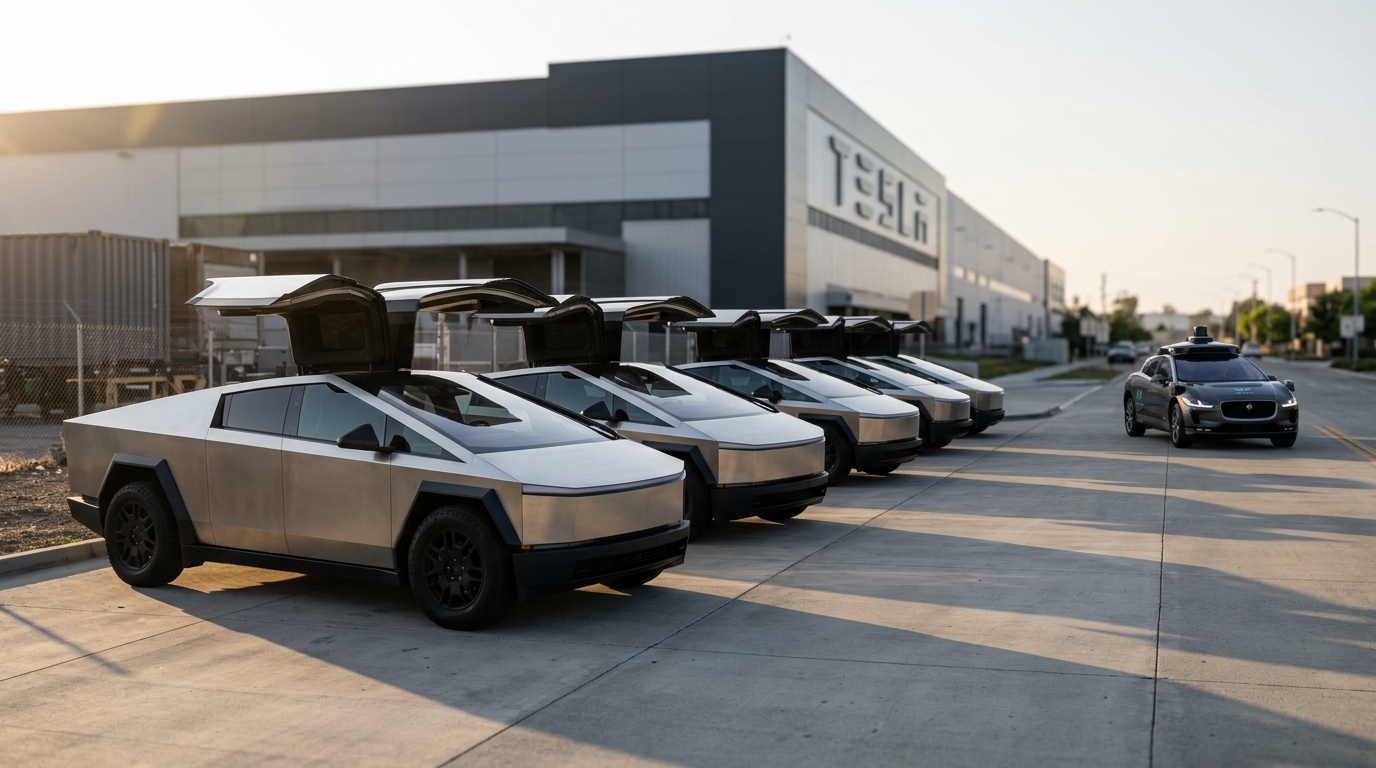
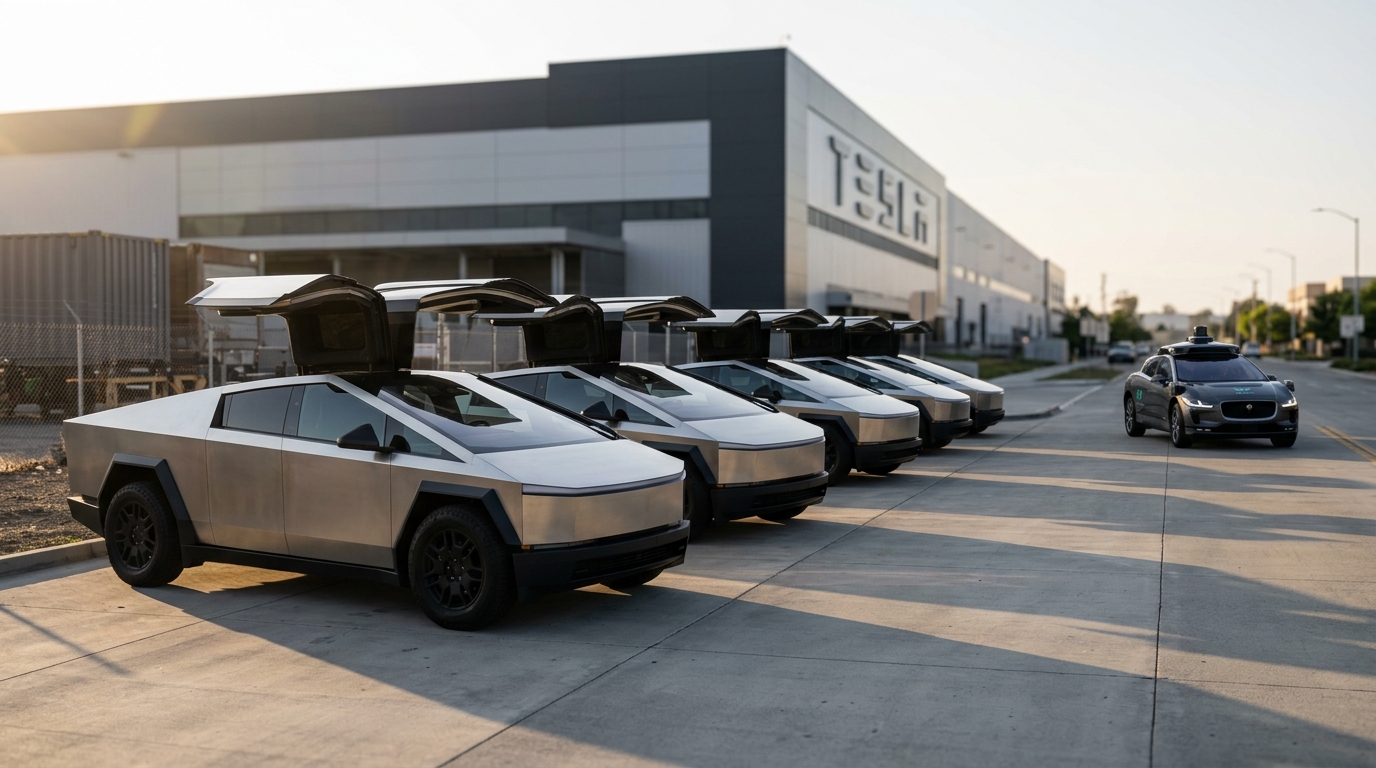
Thursday evening in Austin, Tesla finally put passengers inside a steering-wheel-free Cybercab. The vehicle is real, the gull-wing doors opened on cue, and attendees chanted its name. Then the market read the fine print.
Tesla released no new information about the Cybercab at the event. Texas filings tracked by multiple outlets showed 45 Cybercabs registered under Tesla’s Texas robotaxi operation ahead of the launch, with service limited to a restricted area of Austin through the Robotaxi app. Morgan Stanley analyst Andrew Percoco had warned before the event that a launch limited to a small number of vehicles committed to the road would likely send the stock lower, while a broader rollout with material fleet impact could excite investors. The stock delivered a version of his first scenario: TSLA gained more than 5% during regular trading on September 3, 2026, then slipped modestly after hours.
The Bull Case: Scale Without a Ceiling
The argument for Tesla in this race is not about today’s 45 cars. It is about the factory behind them. Tesla has designed the Cybercab to certify to Federal Motor Vehicle Safety Standards under the industry’s self-certification framework. In theory, that reduces reliance on the exemption pathway that caps sales of noncompliant vehicles at 2,500 per manufacturer per year. Rivals operating under exemptions face a hard stop; a compliant vehicle does not.
Claims about “more than 125,000 units” of annual Cybercab capacity at Gigafactory Texas, and that Cybercab production had commenced by Q2 2026, are not supported by public filings or primary-source disclosures that can be independently verified. Tesla has, however, discussed unsupervised robotaxi mileage in investor materials and public forums, including references in 2026 to more than 380,000 unsupervised miles. If the software holds and regulators follow through on NHTSA’s proposal to amend braking rules to accommodate vehicles designed never to be operated by a human, Tesla’s camera-only system could flood city after city at a cost per vehicle that Waymo’s lidar-heavy platform cannot approach.
Last week, Nevada’s Transportation Authority unanimously approved permits clearing Tesla, Alphabet’s Waymo, and Uber’s affiliate Aviari to run commercial robotaxis in Clark County. The combined ceilings across the three permits add up to 7,000 vehicles over the first 12 months, not 8,000.
The Bear Case: Waymo Already Won the Operating War
While Tesla staged a launch event, Waymo ran its business. Recent reporting indicates Waymo’s nationwide commercial fleet is now beyond 4,000 vehicles, but the “11 commercial cities” framing is not consistently supported by Waymo’s own current materials, which in September 2026 described 14 cities where it is providing fully autonomous trips. Waymo said it was delivering about 500,000 paid rides per week as of early 2026, and has highlighted rapid year-over-year growth in weekly paid rides. That is not a pilot program. It is a functioning network with compounding operational data that Tesla’s 45 Cybercabs in one Austin zone cannot yet challenge.
A $16 billion funding round announced on February 2, 2026 valued Waymo at $126 billion post-money, a record-setting raise for the sector. That capital funds faster expansion. On July 8, Waymo said it was preparing to launch fully autonomous operations in San Diego, Las Vegas, Tampa, and Denver. Tesla, by contrast, had not publicly disclosed Cybercab registrations outside Texas as of the week of the Austin launch, and the best-supported claim here is simply that the initial registered Cybercab count was concentrated in Texas.
The valuation context makes the bear case harder to dismiss. Tesla stock is down roughly 20% year to date in 2026. The 52-week high cited in widely used market data for the prior 52-week window has been $498.83, though the exact “52-week high” figure can vary by vendor and measurement window. Tesla closed September 3, 2026 at about $376, not near $370, and the stock’s after-hours move was a modest dip rather than a full reversal of the day’s gain. The operating reality on September 4 is a geofenced slice of Austin.
Where the Evidence Leads
The manufacturing bull case is compelling on paper. A compliant production line with six-figure annual capacity, no exemption cap, and a camera-only cost structure is a genuinely differentiated position. If Tesla can demonstrate that its FSD software scales safely across more geographies, the 45-car starting point becomes irrelevant in hindsight.
But the bear case rests on observable facts, not projections. Waymo has a fleet beyond four thousand vehicles and is actively expanding the list of markets where it is providing fully autonomous trips. Tesla has forty-five Cybercabs registered in Texas ahead of launch and an Austin-limited service area. Tesla does not completely control its own growth trajectory: regulators will ultimately dictate how quickly the service can scale. The self-certification approach is standard for the auto industry, but a purpose-built vehicle with no human controls still has to clear practical and regulatory hurdles, and federal silence is not the same as federal approval.
What Changes the Debate
Watch the Texas DMV registry. If the Cybercab count grows from 45 to 500 before the end of Q4, the bull case gains real traction. If it stalls, the market will treat the September 3 event as another well-produced promise. Waymo’s weekly ride data is the other number to track: any deceleration in its growth rate would narrow the competitive gap faster than any Tesla announcement could.
The evidence today favors the skeptics. Tesla has the better long-term manufacturing argument and the worse near-term operational reality. That gap may close, but closing it requires regulators, software, and a production ramp to all cooperate on the same timeline. At a forward multiple built entirely on autonomy, investors are already paying for the version of Tesla that wins. The Cybercab still has to earn it.