On July 1, SoftBank wired another $10 billion to OpenAI. Tranche two of three. SoftBank executed the follow-on investment second tranche of $10.0 billion in OpenAI Group PBC via SoftBank Vision Fund 2, as part of the total $30.0 billion follow-on investments previously announced in February 2026.
Five days earlier, its stock had dropped 12.5% in a single session.
Those two facts are the whole story, really. SoftBank keeps deploying capital into a company that keeps pushing back its IPO. And the bridge loan funding all of it is due in March 2027.
The Numbers Are Getting Hard to Ignore
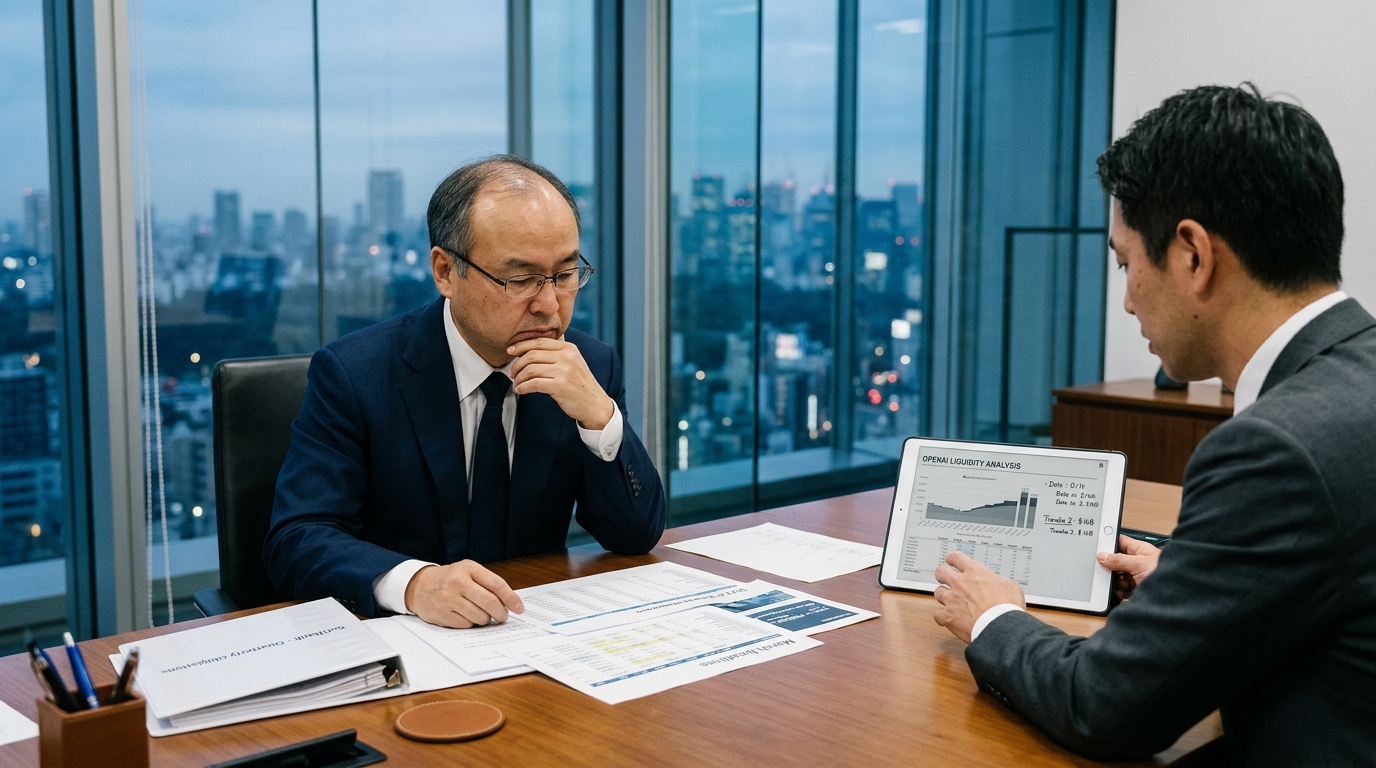
SoftBank carries a $40 billion bridge loan it took on to fund its OpenAI commitments, with repayment due in March 2027. The third and final $10 billion tranche hits in October. SoftBank has committed approximately $65 billion to OpenAI, giving it about a 13% ownership stake.
The plan was always to recycle that capital through a public listing. Fast liquidity event, mark to market, refinance the bridge. Clean.
That plan is now in question. According to The New York Times, three people familiar with the discussions surrounding OpenAI’s listing preparations revealed that OpenAI is leaning toward postponing its IPO to 2027. CEO Sam Altman made it clear that any proposal below a trillion-dollar valuation is unacceptable.
So SoftBank is sitting on a $65 billion private position, with a $40 billion bridge loan due in six months, and the exit it was counting on is now penciled in for sometime next year. Maybe.
The Financials Underneath OpenAI
This is where it gets interesting. OpenAI posted a net loss of over $21.3 billion in the first quarter of 2026, compared to a $39 billion net loss for the entire year of 2025. The losses are accelerating, not stabilizing. OpenAI’s prospectus shows a net loss of approximately $8.5 billion as of the first quarter of 2026, which does not yet include non-cash accounting expenses for warrants, while its cost of revenue reached $3.5 billion.
Altman wants $1 trillion. OpenAI’s own bankers are telling him the market is not ready for that number right now. Choppy tech stocks — including the volatile post-IPO experience of SpaceX, which saw SPCX drop from a $225.64 high to a $147.11 intraday low in three sessions — may be dampening appetite for a similarly scaled listing.
What the market watches as a SpaceX valuation story is actually a warning shot for OpenAI’s window. And SoftBank is caught in the middle.
The Collateral Problem
SoftBank tried to buy itself time. An effort by SoftBank to raise at least $6 billion through a margin loan collateralized by its OpenAI holdings stalled, with lenders citing difficulty pricing a stake in a private company with no public market valuation.
Think about that for a second. The world’s largest holder of OpenAI equity could not borrow against it. Banks would not lend because they could not value the collateral. Now SoftBank has resumed talks with a banking consortium to borrow $10 billion using its OpenAI shares as collateral, and has offered a repayment guarantee on the loan to dispel lender concerns. The repayment guarantee is the tell. When you have to personally backstop the loan, it means the underlying asset is not doing that work for you.
While the delay does not impair the fundamental value of SoftBank’s stake, it creates uncertainty regarding capital recycling. In a high-interest-rate environment, the postponement of liquidity increases carry costs and complicates the company’s leverage-heavy structure.
The Bull Case Masayoshi Son Is Still Making
Son is not panicking. He stated that AI is still in its infancy, dismissing talk of an AI bubble as an underestimation of its potential. Son emphasized that the potential of AI is only beginning to be unlocked, and SoftBank will continue to position itself around OpenAI, robotics, data centers, and energy infrastructure.
He has also pivoted hard toward Roze, a physical robotics startup that integrates AI and hardware assets, aiming for a $100 billion IPO as early as the second half of 2026. SoftBank plans to hold an analyst open day in July at the data center it is helping build in Texas, intended to promote the upcoming IPO. That event is worth watching closely. It is Son’s attempt to create a new liquidity story before the OpenAI one fully stalls.
But here is the tension. SoftBank has a history of weathering delayed investment returns, with previous successes like Alibaba’s IPO highlighting its potential. However, the stakes involved with a $65 billion position are magnitudes larger than earlier bets like Alibaba’s initial $20 million investment.
What to Watch
- The July analyst day at SoftBank’s Texas data center — this is the Roze IPO pitch and a liquidity alternative signal.
- OpenAI’s S-1 timeline. OpenAI submitted a confidential draft registration statement to the SEC. However, the company said at the time that it had not decided when to proceed and that it could remain private for longer.
- SoftBank’s collateralized loan talks. The lending group is expected to include Goldman Sachs, JPMorgan Chase, and Mizuho Financial Group. Whether that deal closes — and at what terms — is a direct read on bank confidence in OpenAI’s private valuation.
- The October tranche. SoftBank plans to complete the third tranche, in the amount of $10.0 billion, on October 1, 2026. If OpenAI’s IPO timeline slips further before then, watch for any renegotiation signals.
The Bottom Line
Because of its exposure, investors have increasingly treated SoftBank as one of the largest public proxies for OpenAI’s future value. That is both the opportunity and the risk. If OpenAI goes public at $1 trillion in 2027 and SoftBank refinances cleanly, the bet works spectacularly. Son gets his Alibaba moment, only bigger.
But the path between here and there runs through a $40 billion debt maturity, a private market valuation nobody can independently verify, and a CEO who will not compromise on price. That is a narrow corridor. The market is only just starting to price how narrow.
For informational purposes only.