
The number Rheinmetall put on its ambitions for 2030 has just been cut sharply. Management today unveiled a 2030 revenue range of €33–37 billion and an operating margin of around 20%. That compares with an original target of around €50 billion. At almost any other moment, a cut of that magnitude would have buried the stock. This morning, shares are higher. The question is whether that tells you something useful or just something about how beaten down sentiment had already become.
The Bull Case: Demand Is Real, Timing Is the Problem
Start with what has not changed. Rheinmetall’s backlog reached €78.0 billion at the end of September, up from €56.7 billion a year earlier, with the value of new orders and framework agreements signed in the first nine months rising 19% to €19.1 billion. That is not a demand crisis. Revenue across the first nine months of 2026 climbed 38% to €8,376 million, while operating group profit rose to €1,339 million.
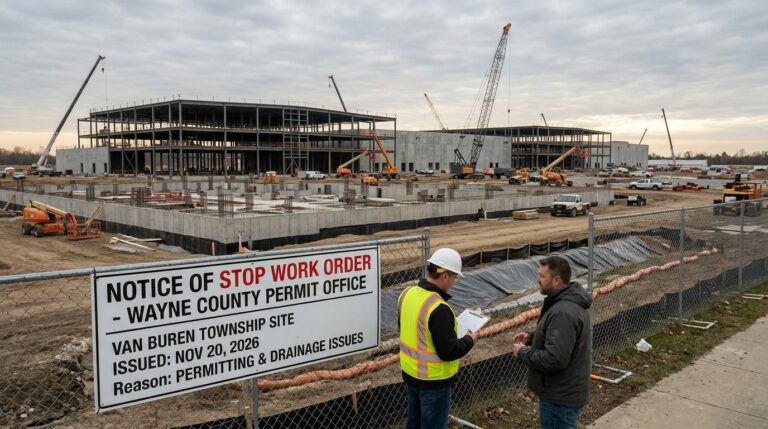
The bull case hinges on a single distinction: execution timing versus structural demand. The revision comes as Europe’s largest ammunition maker deals with conversion bottlenecks despite soaring continental defense demand, as European governments have struggled to translate increased rearmament funding into firm orders. The Boxer programme delay and ammunition acceptance bottlenecks are bureaucratic and logistical snags, not cancellations. Both Barclays and RBC Capital Markets maintained constructive ratings ahead of the capital markets day, arguing that the anticipated reduction of the 2030 revenue goal was already reflected in the share price and could actually serve as a positive reset.
Barclays made the counterintuitive case explicitly: more conservative guidance, not maximal ambition, could be what finally puts a floor under the share price. Critically, by one broker’s calculation, the share price at recent levels was already pricing in only around €30 billion of 2030 revenue and an 18.5% margin, meaning even the new, lower target range sits above what the market was discounting.
The Bear Case: Credibility Has a Price
The bear argument is not about European rearmament being fake. It is about Rheinmetall having sold investors on a growth curve it cannot execute. Rheinmetall cut its 2026 sales outlook for the second time in three months, citing delays to Germany’s Arminius Boxer vehicle programme and slower approvals that pushed artillery ammunition revenue out in time. Two guidance cuts inside one year, a cancelled frigate programme it had been widely expected to win, and now a 2030 target reduced by roughly €13–17 billion is a pattern, not a blip.
Cash flow underlines the concern. Operating free cash flow came in at minus €1.7 billion over the first nine months of 2026, a wider outflow than the minus €0.8 billion recorded a year earlier. And Berenberg, analyzing 417 contracts and opportunities, found near-term visibility is high at around €80 billion in backlog including €56 billion of firm orders, but revenue under contract falls to just 29% in 2030. Ammunition is the bigger worry, with concerns about artillery demand after 2030 likely to continue weighing on sentiment, and only 16% of 2030 revenue in the Weapons and Ammunition division currently under contract.
The contract-visibility problem is not unique to Rheinmetall. RTX, Northrop, and Lockheed face the same gap between record backlogs and stocks that keep losing ground despite active conflict demand.
The geopolitical backdrop sharpened further this week. Two civilian technicians employed by Rheinmetall Italia were killed while performing maintenance on detection equipment belonging to Kuwait’s Skyguard air defense system when a drone attack caused an explosion at the site, according to statements carried by The Associated Press and Reuters. The strike was described as the second reported Iranian attack on the US-allied Gulf state this month. The deaths are a human tragedy first. For the investment case, they also underscore that Rheinmetall’s contracted work puts its people in front-line risk environments, with reputational and operational consequences that are hard to model.
Where the Evidence Leads
The 56% drawdown from the 2026 peak looks less like a rerating of European defense spending and more like a forced correction of a multiple that had run far ahead of delivery certainty. The underlying demand from European governments has not reversed. Romania just placed a €738 million Lynx vehicle order alongside the Capital Markets Day disclosures, and NATO commitments have only hardened since Russia’s 2022 invasion.
What was mispriced was the assumption that a defence contractor could grow fivefold in six years without procurement bureaucracy, programme cancellations, and ammunition certification delays getting in the way. Rheinmetall’s repeated delivery delays are seen as largely stemming from its failure to build production capacity quickly enough to handle the surge in orders driven by European rearmament. Today’s lower target range of €33–37 billion, with a roughly 20% margin, is the more credible version of the same story.
The geopolitical calendar adds another variable to that delivery timeline. A U.S. policy shift on Russia sanctions directly affects the peace-versus-rearmament calculus that underpins European defense procurement budgets.
The bull case carries more weight at current prices, but with one firm condition: a convincing outlook would need to spell out how Rheinmetall intends to make contract execution more dependable, since assumptions on deliveries and customer acceptances matter as much as the margin target itself. Investors who buy the stock now are betting on a company that has reset expectations to a level it can actually meet. That is a reasonable bet. It is also one that has already been made twice this year and lost.