Dear Reader,
Of the current Forbes list of the world’s top 10 richest people…
Nine of the ten men have a combined net worth of $2.99 trillion…
And right now, they all have ONE thing in common…
They’ve piled BILLIONS into a new technology some are calling “Imperium”…
- Elon Musk calls it “amazing…” and has $4.6 billion allocated to this space…
- Jensen Huang just co-invested a billion dollars…. saying there’s “no question” this is the next amazing tech revolution…
- While Peter Thiel – the first outside investor in Facebook and founder of Palantir – has a stake in companies worth well over $10 billion…
So what is Imperium tech…
And WHY are 9 of the world’s top 10 richest men jumping in with both feet?
To Your Profits,

Adam O’Dell
Chief Investment Strategist, Money & Markets
$450 Billion in AI Bonds: Real Build-Out or Leverage Bubble?
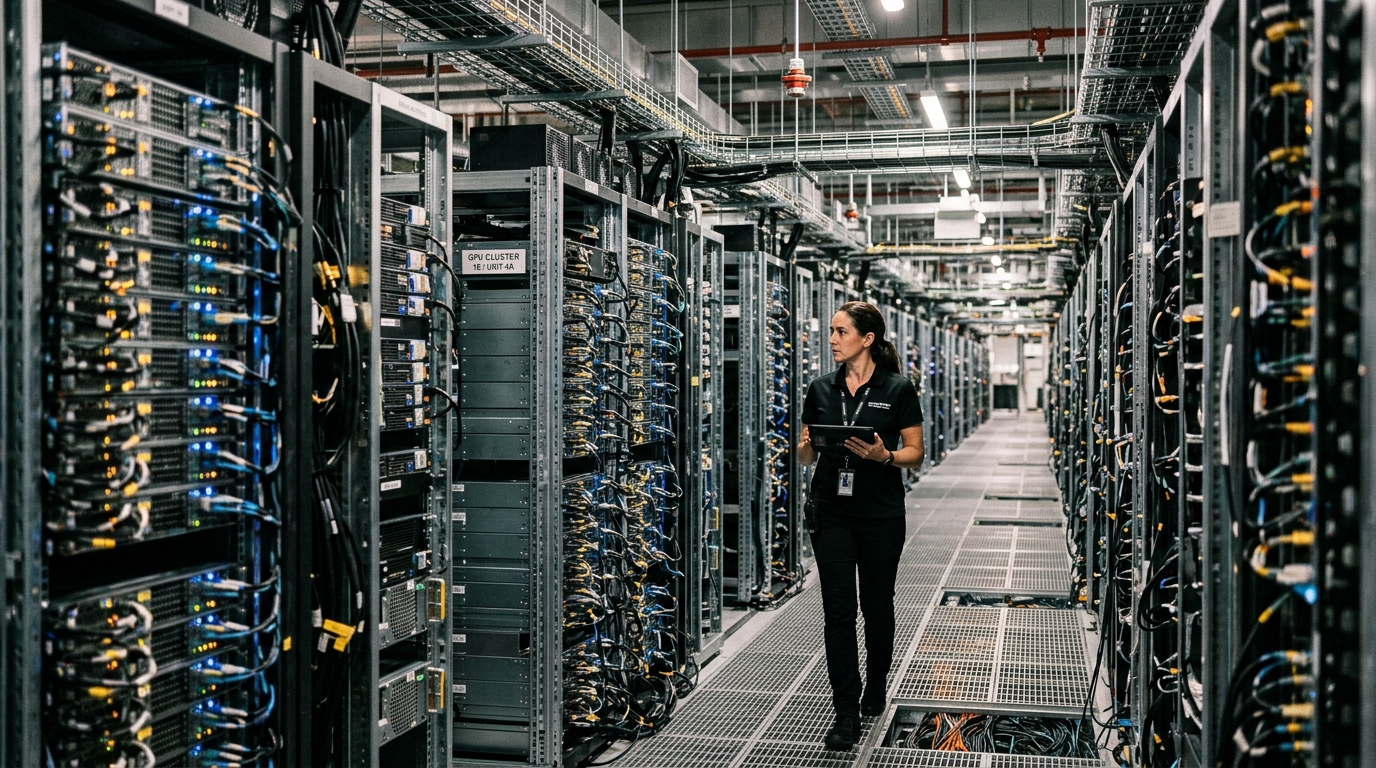
JPMorgan credit strategists Tarek Hamid and Nathaniel Rosenbaum published their 2027 outlook this week, and the number that deserves the most attention is not the headline $450 billion. It is what sits inside it. Data center and GPU financing alone is penciled at $225 billion for 2027, the other half coming from hyperscalers themselves, against just $43 billion raised in that category through mid-November of this year, meaning the forecast asks that segment to deliver more than five times as much next year.
Overall AI-related capital spending is forecast to nearly double to $1.4 trillion in 2027 before leveling off in 2028, according to the strategists. The ambition on display is staggering. The question is whether the ambition is warranted.
The Bull Case: Demand Is Real and the Math Works for the Big Names
Start with who is actually borrowing. The debt remains largely investment grade, with ratings ranging from Microsoft’s AAA down to Oracle’s BBB. Hyperscalers including Microsoft, Alphabet, and Meta carry positive returns above their cost of capital, which is precisely why bond buyers keep showing up. These are not speculative credits gambling on future monetization; they are companies with demonstrated operating cash flow committing to infrastructure that will take years to depreciate.
JPMorgan projects the AI industry will build 151 gigawatts of data center capacity at a total cost of $7 trillion between 2027 and 2031. Because most data center projects require multiple years to complete and raise capital upfront, much of 2027’s construction is already financed, meaning next year’s $450 billion debt raise will predominantly fund 2028 buildouts. Demand is not speculative, it is already contracted.
The Bear Case: The Fringes Are Already Breaking
The problem is that the market does not price every AI borrower like Microsoft. On November 25, CoreWeave’s notes due October 2031 fell to about 74 cents on the dollar, pushing the yield to 17.91%, and another CoreWeave bond due June 2030 hit a record low price. S&P Global Ratings rates CoreWeave B+, in junk territory, and the company’s own interest expense trajectory makes the math uncomfortable: second-quarter interest expense was $640 million, up from $267 million a year earlier.
That stress is not contained to one company. Default protection costs have risen across several AI-linked credits. Oracle, in particular, has faced visible financial pressure as capital expenditures have outrun operating cash flow. And the JPMorgan strategists themselves acknowledge the cycle has a ceiling: they expect a quarter in late 2027 or early 2028 when the outlook for next quarter’s capital spending will be basically flat.
Oracle’s capital pressure has a specific mechanism behind it. Oracle used its entire four-year capital-markets allowance in a single week, pricing a dilutive equity offering days after pledging restraint at investor day.
Cautious comments from Asian tech firms like Tencent and Alibaba already signal a slowdown, with flat quarter-over-quarter capex guidance expected around late 2027 to early 2028. When the plateau arrives, the companies that loaded up on fixed-cost debt at 15% or higher will not be able to adjust their obligations downward. The revenue has to follow.
Where the Evidence Leads
The bull and bear cases divide cleanly along a single fault line: credit quality. Neoclouds like CoreWeave carry negative ROIC-WACC spreads and substantially higher capex intensity than the hyperscalers, which means the $225 billion data-center and GPU financing slice of JPMorgan’s forecast contains the most risk.
FactSet estimated that incremental annual debt rose from 9% of hyperscaler capital spending in fiscal 2024 to 32% on a trailing basis by mid-2026, a compression of equity self-funding that is happening faster than most investors anticipated two years ago. The hyperscalers can sustain it. The neoclouds, whose survival depends on a single customer staying committed, face a structurally different problem.
Final Verdict
The bull case wins for the top of the credit stack. Meta, Microsoft, and Alphabet are financing infrastructure against real contracted demand, and their balance sheets can absorb even a prolonged plateau. The bear case wins everywhere else. CoreWeave trading in the mid-70s cents on the dollar and yielding close to 18% is not a mispricing, it is the bond market’s honest assessment of what happens when leverage meets customer concentration and no free cash flow.
Investors who treat JPMorgan’s $450 billion as a uniform opportunity are reading the wrong number. The more relevant figure is how that total splits between borrowers who can service their debt through a growth slowdown and those who cannot. Right now, that line runs directly between the hyperscalers and everyone below them on the credit ladder.