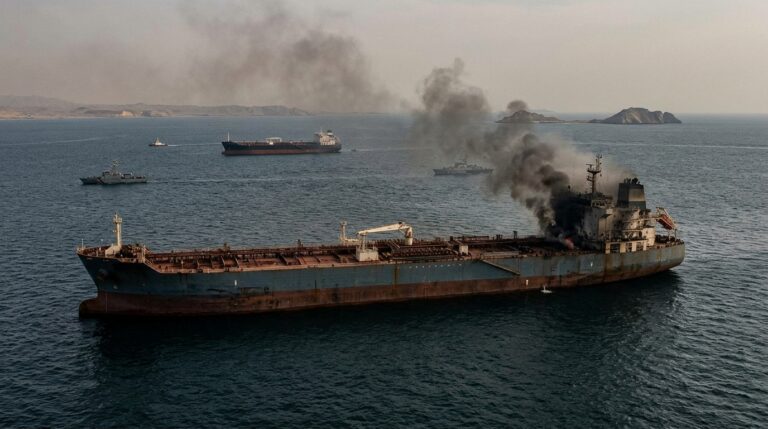
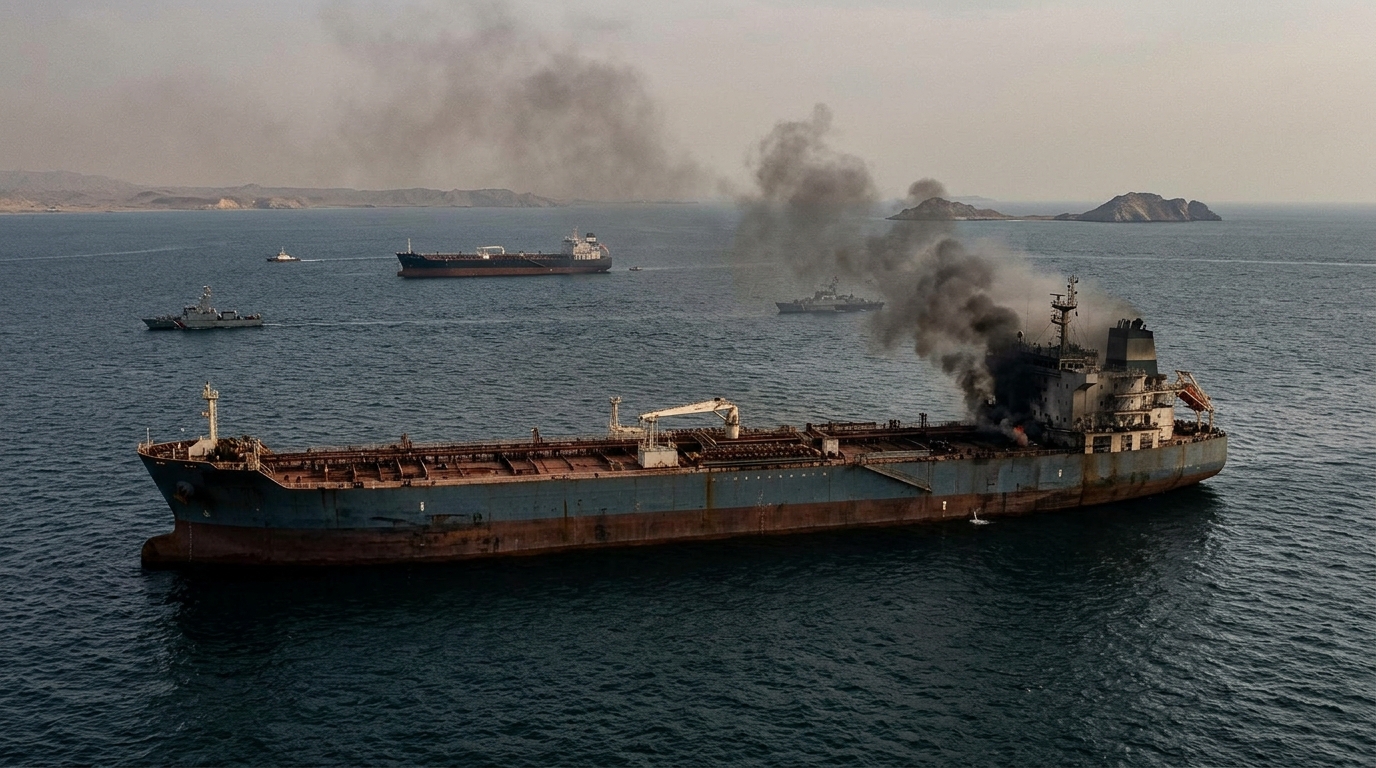
This morning, Iran’s military reported that an oil tanker caught fire east of the Strait of Hormuz after hitting a naval mine in an “unsafe” and “restricted” area. It was not an isolated incident. On Tuesday, Iran’s Islamic Revolutionary Guard Corps said three oil tankers had caught fire in the strait after striking mines while using what it called an unauthorized route. And yet Brent crude is trading around $92 per barrel this morning, down roughly 14% over the past month from levels above $107. The physical risk and the price are moving in opposite directions on the same day. That is the debate: is the market reading the situation with clear eyes, or is it dangerously complacent?
The Bull Case: Peace Is Being Priced, Not Ignored
The selloff has a credible driver. Brent fell below $90 a barrel on Tuesday for the first time since late August after comments from U.S. President Donald Trump fueled hopes of de-escalation in the U.S.-Iran conflict. Trump has been downplaying the prospect of renewed escalation, saying further military action did not appear “necessary” right now, and telling reporters: “We’re seeing momentum toward the end of this conflict. I think it’s going to be ending fairly soon.”
That diplomatic signal matters because oil markets are forward-looking. Analysts at TD Securities have tied the recent weakness in crude to repeated White House signals that the U.S. has little appetite for escalation, arguing that persistent headlines about talks can cap upside even when the situation on the water remains tense.
Crucially, oil has continued to flow, even if the numbers are disputed and hard to verify independently in real time. U.S. Central Command has said U.S. forces have been escorting commercial shipping and that thousands of vessels have transited with U.S. support over recent months. U.S. officials have also cited a seven-day average a little above 10 million barrels a day transiting the strait in recent periods. The mines may be real, but so is the workaround.
The Bear Case: The Market Is Confusing Hope with Fact
The bullish reading requires a lot of faith in diplomacy that has repeatedly stalled. Months of on-off contacts have not produced a durable resolution. Meanwhile, the incidents keep coming. In recent weeks, Iranian authorities have repeatedly said ships caught fire in the area, often claiming mines were involved.
The credibility gap in the peace trade is wide. U.S. Central Command has previously rejected Iranian mine-strike claims at times, saying no vessel had hit a mine in the Strait of Hormuz and describing some announcements as intimidation. At the same time, independent maritime reporting has also documented attacks in and around the strait, sometimes described as projectiles rather than mines. That ambiguity is exactly the kind of tail risk markets tend to underprice when sentiment turns decisively in one direction.
The structure of any eventual agreement matters as much as the headline. Iran and Oman’s emerging shipping-map deal preserves sovereignty language that stops well short of restoring the prior order in the strait.
Brent is now trading below both its 200-day moving average of $93.61 and its 50-day average of $104.29. Crude has also been highly volatile in 2026. The U.S. Energy Information Administration has documented Brent beginning 2026 around $61 a barrel and rising sharply during the first quarter, with the end-March close near $118. That history matters because it shows how quickly a supply shock can get reflected in price. Every peace signal can collide with another strike, and that pattern has not disappeared.
Where the Evidence Leads
The bull case rests on a future event: a deal. The bear case rests on current fact: vessels are still being struck and catching fire around the strait. The U.S. Energy Information Administration’s latest Short-Term Energy Outlook expects Brent to remain near $100 per barrel for the remainder of 2026. That gap is a measure of the risk the market is currently choosing to discount.
The gap between price and physical reality shows up elsewhere in the shipping complex. Supertanker day rates have reached levels that suggest the freight market is pricing Hormuz risk far more aggressively than crude futures are.
The honest verdict is that Brent around $92 implies meaningful de-escalation that is not yet secured, while shipping incidents keep accumulating. Talks can evaporate overnight. The market is not wrong to respond to diplomatic momentum, but treating the risk premium as fully gone at these levels requires more confidence in the path to a durable deal than the past nine months have earned. The asymmetry favors watching energy producers with Hormuz exposure closely: any reversal in negotiations could move Brent back above $100 quickly.