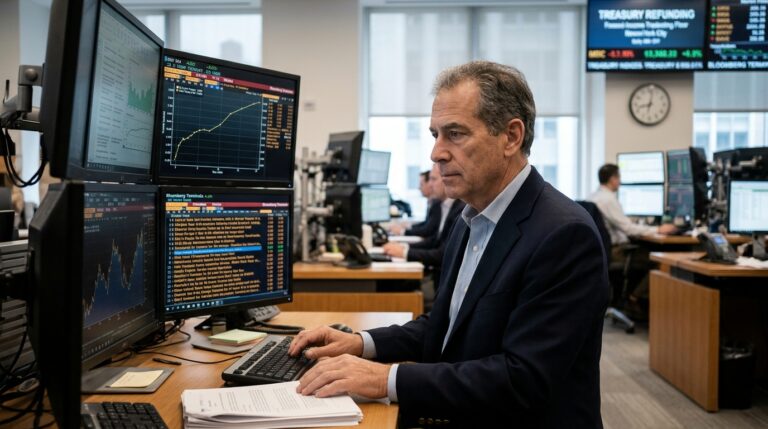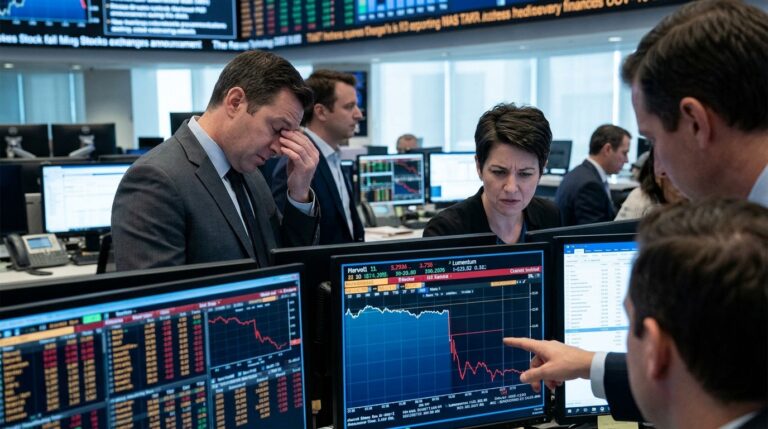
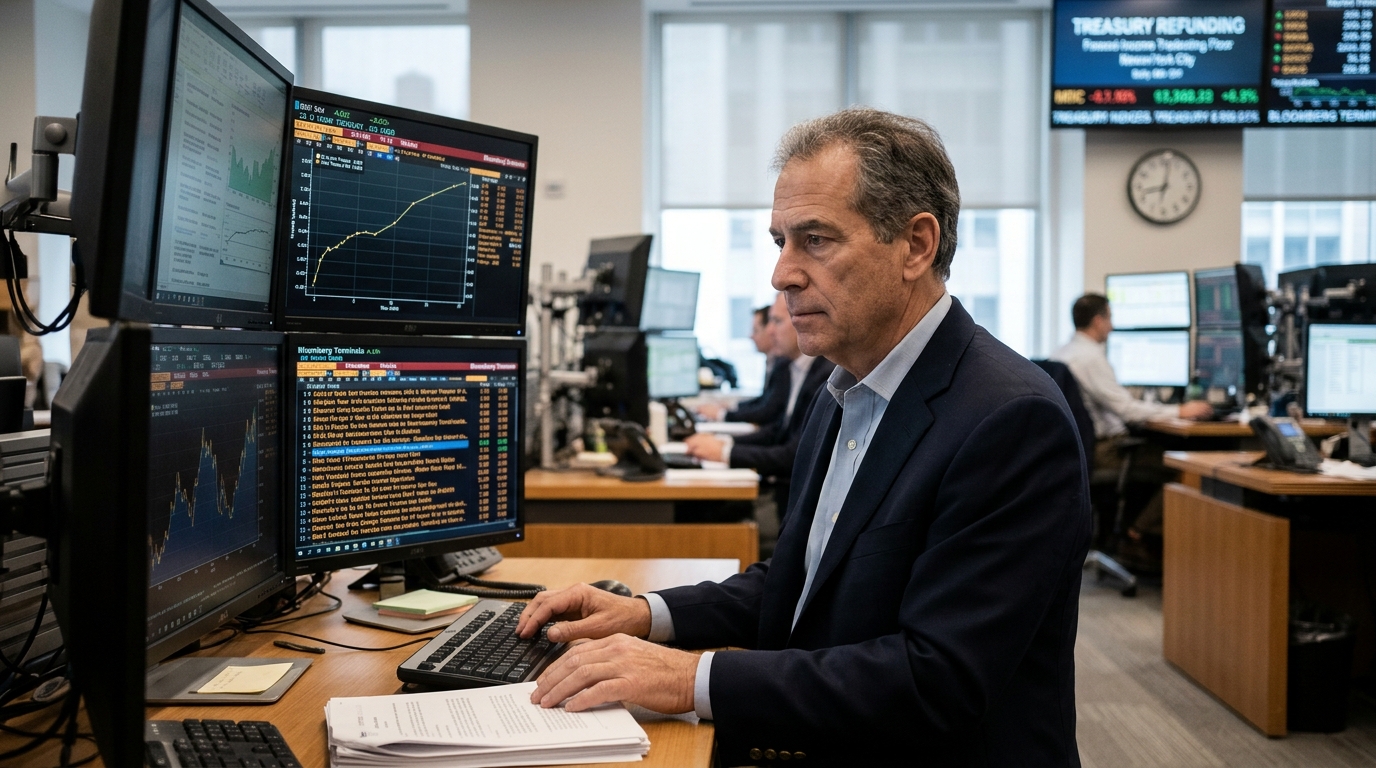
The bond market handed Treasury a gift overnight, then handed Treasury a problem. When Democrats swept both chambers of Congress Tuesday, the 10-year yield fell about five to six basis points to roughly 4.91 percent after topping 5.34 percent earlier in October, its highest level since 2002. The quarterly refunding statement drops into that move this morning, and what it says about long-end buybacks will matter more than any headline figure on coupon sizes.
Start with what is already known. Based on its August guidance, Treasury anticipated maintaining nominal coupon and FRN auction sizes for at least the next several quarters. The October auction calendar held at $39 billion for the 10-year note, $13 billion for the 20-year bond, and $22 billion for the 30-year bond. The Q4 borrowing estimate came in at $628 billion, with an end-December cash balance target of $850 billion, down from $739 billion borrowed in the third quarter. Markets already knew most of this. The refunding statement rarely shocks on coupon sizes when Treasury has pre-committed to stability.
What Markets Are Actually Watching
The real variable is buybacks. In August, Treasury said it would at least double the size of its liquidity support buyback operations in the 10-year to 20-year and 20-year to 30-year sectors, lifting the maximum from $2 billion to at least $4 billion per operation, effective September 9 and running through November 4. That authorization expires today. In the run-up, Treasury asked its primary dealers how investor demand for its debt is shifting, what changes to auction sizes it should consider, and how its enlarged buybacks of longer-dated bonds have worked. Today’s statement answers those questions.
A continuation or expansion of the $4-billion-per-operation floor would pull duration out of the market at the same time the election rally is already compressing yields. That combination could accelerate the move in the 30-year sector. A retreat to smaller operations would do the opposite, especially if the TBAC minutes repeat their earlier warning. TBAC flagged that current issuance projections indicate a roughly $1.3 trillion funding shortfall over the next two fiscal years, an outcome that would require Treasury to increase the size of the securities it issues.
The 2027 Signal Buried in the Language
Coupon sizes themselves may hold today, but the guidance language is where this refunding earns its attention. Primary dealers broadly expect that Treasury will at some point next year cut auction sizes of 20-year and 30-year bonds while boosting issuance of 2-year to 10-year maturities, a move that could help limit long-term borrowing costs by reducing the supply of debt at the far end of the curve, where yields have remained elevated. Citigroup expects cuts to long-dated sales to begin this month, effectively breaking the prior guidance, while UBS sees changed language rather than immediate action.
That distinction is worth holding in mind. A change in language is not the same as a change in supply. If Treasury signals 2027 cuts without acting today, the 30-year yield moves on intent, not on math, and intent can be walked back faster than a scheduled auction calendar.
The Election Distortion
Analysts said Democratic control of Congress could frustrate President Trump’s spending plans and lead to a modest reduction in overall spending. They also said possible future regulation of AI could slow growth and reduce the need for Federal Reserve rate hikes. Both factors pulled yields lower overnight. But the mispricing risk is political: markets now discount fiscal restraint from Congress, yet the data argue for higher terminal rates, which would pressure the 2-year and long-duration growth equities together.
That is the context that makes today’s buyback decision more than administrative housekeeping. The market question is the amount of duration private investors must absorb after accounting for Treasury’s buyback operations and the bill/coupon mix. A larger-than-expected duration burden can pressure long yields higher; a friendlier mix or stronger buyback support can work in the opposite direction. Into a market that just priced in fiscal goodwill it cannot yet verify, the refunding statement is the first hard data point that either confirms the rally or complicates it.
What to Watch Next
Three lines in the statement carry the weight: the buyback authorization for the November-to-January quarter, any change to the “at least the next several quarters” language on coupon sizes, and the TBAC minutes’ take on the fiscal gap. Markets will also focus on guidance relative to the previous 10-year auction, which cleared at 5.300%, ahead of the next sale next week. If the buyback floor holds at $4 billion and the language softens on long-end supply, the rally has a structural foundation. If neither moves, Tuesday night’s yield drop looks more like sentiment than signal.