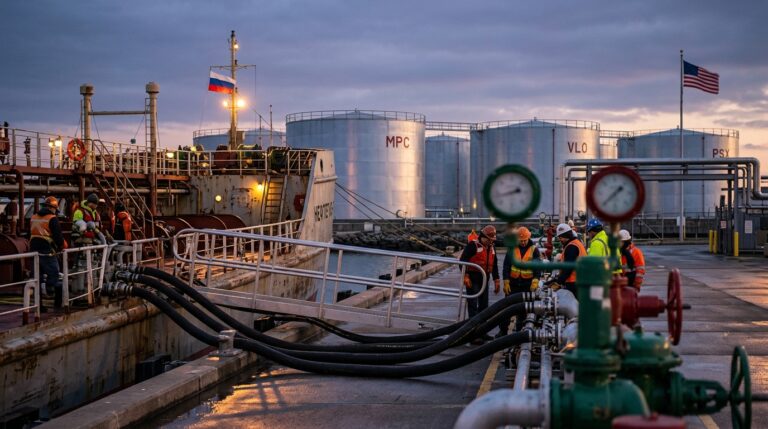
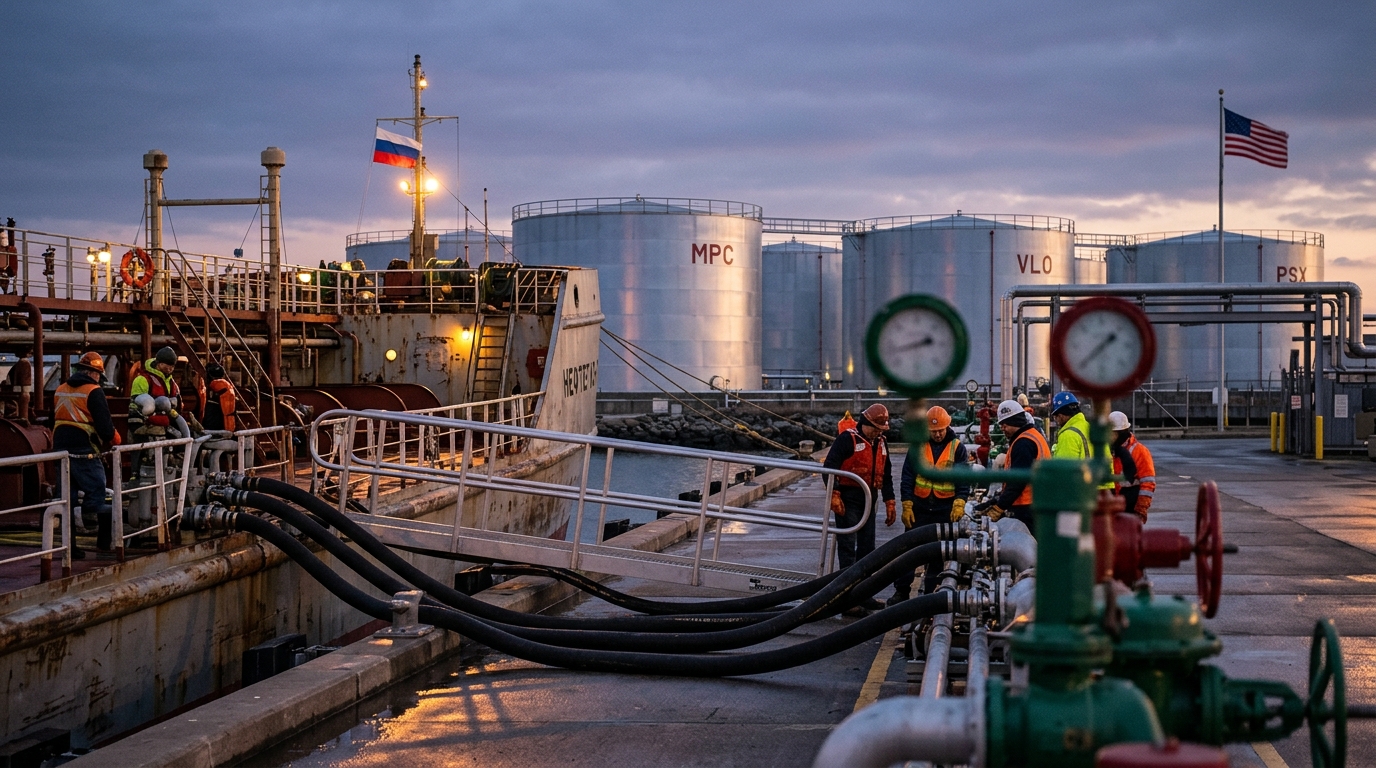
Trump announced on Truth Social that Russia would “immediately supply over 300,000 Tons of Diesel Fuel to the American and Global Marketplace, another 500,000 Tons during the month of November, and 1,000,000 Tons immediately thereafter.” Within hours, OFAC issued General License 135, authorizing certain transactions related to the sale, delivery, offloading, and importation of Russian-origin diesel through April 7, 2027. The announcement lands with U.S. diesel at $6.20 per gallon in the EIA’s week of October 5, 2026, up about $2.49 from the same week a year earlier.
The Bull Case: A Structural Shortage Finally Gets a Physical Offset
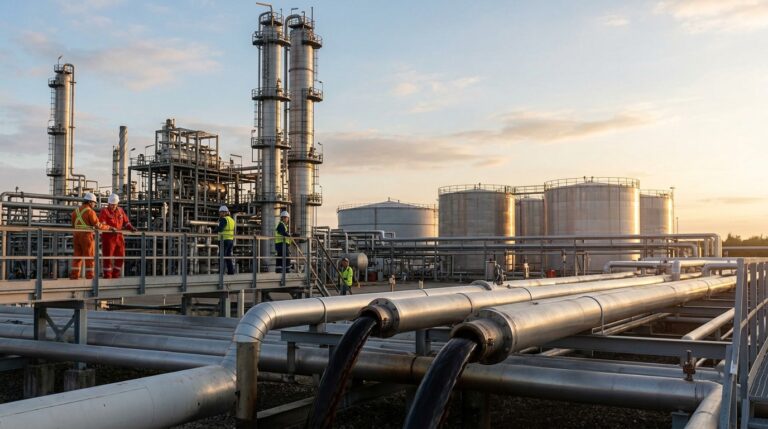
The distillate market is genuinely broken. East Coast distillate inventories were 32% below their five-year (2021 to 2025) seasonal average in September, and the EIA forecasts the region will remain 20% to 30% below that average through the upcoming winter. Roughly 2.5 million barrels a day of Russian refining capacity was estimated offline by late June because of Ukrainian strikes, and diesel markets have been hit at the same time by reduced product exports from the Middle East. Russia compounded the squeeze by banning diesel exports in July to protect domestic supply.
Against that backdrop, the named tranches of 300,000 tons immediately, 500,000 in November, and 1 million tons thereafter amount to roughly 7 million barrels of diesel. Russian Deputy Prime Minister Alexander Novak told state news agency TASS that Russia is “immediately starting to lift restrictions on diesel exports ahead of schedule.” That matters because Russia has kept diesel exports largely shut for months as Ukrainian attacks reduced refinery output, so any return of Russian barrels restores supply that has been conspicuously absent during the global crunch.
For the broader market, the bull argument is straightforward: even partial relief into the tightest inventory position in decades compresses the diesel crack spread, the same spread that has been the primary driver of a remarkable run for U.S. refiners. EIA has said distillate crack spreads almost tripled year over year in the third quarter as tight global supply pushed margins up sharply. Some compression from current extremes could actually restore refiner stocks to more defensible valuations.
The Bear Case: Too Small to Matter at the Pump, Too Big to Ignore for Refiner Margins
The numbers don’t survive close inspection. The first two named tranches are about 800,000 tons in total, which is roughly a day and a half of U.S. distillate demand by comparisons that cited EIA data. Neil Atkinson, former head of the IEA’s oil industry and markets division, told Al Jazeera he is skeptical Russia can deliver, noting that Russian diesel and gas exports in the third quarter were about 190,000 barrels per day, down from 850,000 in the first quarter. CSIS analyst Clayton Seigle has also warned Russia needs to ensure sufficient winter-grade diesel supply at home.
The bigger problem for refiner bulls isn’t whether the volumes move pump prices. It’s what the license signals. This is a notable easing step because GL 135 authorizes Russian-origin diesel transactions well beyond a short, near-term window. Phillips 66, Valero, and Marathon Petroleum have been standout performers in 2026, a run built on the assumption that sanctions-driven supply destruction was durable. General License 135 challenges that assumption directly. If a phone call can suspend sanctions through April 7, 2027, investors holding refiner stocks at record crack-spread multiples must now price the possibility that the next call extends the waiver, expands the volume, or both.
Analysts told Al Jazeera that the deal will likely have little effect on easing the global energy crisis, while European countries could refuse to buy Russian diesel altogether, further complicating how the barrels actually flow. The initial 300,000-tonne shipment is a relatively modest amount compared with international diesel consumption, and actual market impact will depend on shipping arrangements, refinery output, and whether Russian exports genuinely increase global supply rather than simply displacing deliveries elsewhere.
Where the Evidence Leads
The physical case for lower pump prices before the November midterms is weak. The legal and commercial obstacles are real, the volumes are modest relative to the shortage, and Russia’s refinery damage is not repaired by a sanctions waiver. The arrangement is large as a symbol, modest as a pump-price fix, and meaningful mainly for Moscow’s revenue.
The more compelling risk sits with VLO, MPC, and PSX. Crack spreads this extreme historically compress once refiners ramp utilization or a geopolitical resolution reopens flows, and a credible diesel release can accelerate that compression on a defined schedule. The bear case for refiners isn’t that 1.8 million tonnes closes the gap. It’s that OFAC just demonstrated sanctions can be waived when prices are politically inconvenient, and the crack spread that underpins every refiner earnings model is, at least in part, a policy variable now.
Watch weekly EIA distillate inventory data and the diesel crack over Brent for confirmation that the barrels are actually landing. If inventories stay flat and the crack holds above $90, the bull case survives. If the crack compresses below $70 on actual delivery confirmation, the refiner trade has turned. The license expires April 7, 2027, but the precedent it sets has no expiry date.