October 10, 2026
Congress may not be the real threat to data centres. Zoning boards and electricity bills never needed a vote.
With November 3 now 24 days away, Wall Street is pricing political risk into the AI infrastructure trade it spent two years building. CNBC reported Friday that the composition of the next Congress is now treated as a direct variable for a buildout carrying more than $5 trillion in planned capital spending through 2030. That is no longer a niche policy debate.
Don’t sell your shares to him on Friday afternoon…
Every Friday afternoon like clockwork, a legendary trader scoops up shares knowing after-hours breaking news will have traders desperate on Monday morning to buy back from him for 5X… 10X… or even 100X what they sold for.
All the while he gets to collect as much as $9,518 OR MORE just for holding shares over the weekend.
The Bull Case: Veto Power and Committed Capital
President Trump has made his support for data centres explicit. When Texas Governor Greg Abbott paused data centre approvals in August 2026, Trump called the decision “a mistake,” and that posture, backed by veto power, would make it difficult for Congress to pass meaningful restrictive legislation.
The committed capital reinforces that view. Amazon, Alphabet, Meta, and Microsoft plan to spend roughly $725 billion on capital expenditures in 2026, up about 77% from roughly $410 billion in 2025, with much of it going to AI data centres, Nvidia GPUs, custom silicon, and power. These are active commitments with long-lead equipment already on order, not aspirational budget lines.
For the power generators beneath the buildout, revenue is already locked in. Constellation Energy (CEG) has struck long-term deals with Microsoft and Google, and it has also announced an agreement tied to a CyrusOne data center project. Vistra (VST) has described 20-year power purchase agreements tied to more than 2,600 MW of nuclear generation with Meta. Talen Energy (TLN) expanded a power purchase agreement with Amazon Web Services (AWS) through 2042 for up to 1,920 MW from Susquehanna. Multi-decade contracts do not unwind on election night.
Grand Canyon Discovery Could Power America
The biggest energy deadline in American history is 12 days away.
On July 4th, Washington killed the tax credits for solar, wind, and EVs…
But left one energy source untouched. And gave it eight years of credits.
Because near the Grand Canyon, a drilling crew unearthed a clean energy well producing almost 8x the output of Saudi Arabia’s largest oil well.
Google signed on. Bill Gates wrote a $100 million check.
On October 20th, 83 parcels of federal land hit the auction block.
One company owns the entire chain.
The Bear Case: The Threat That Skips Congress
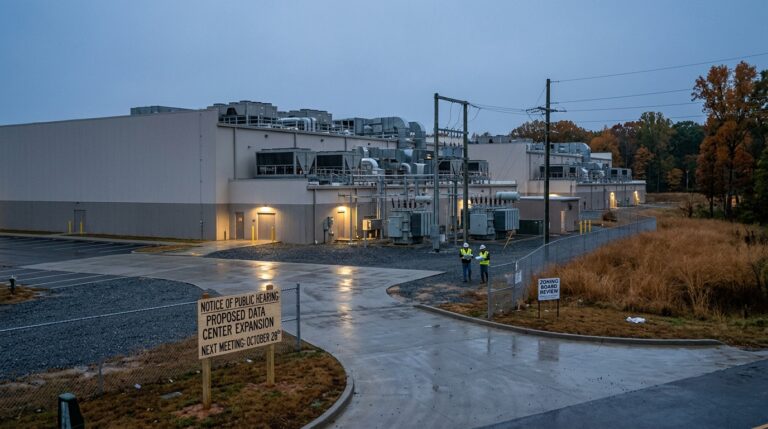
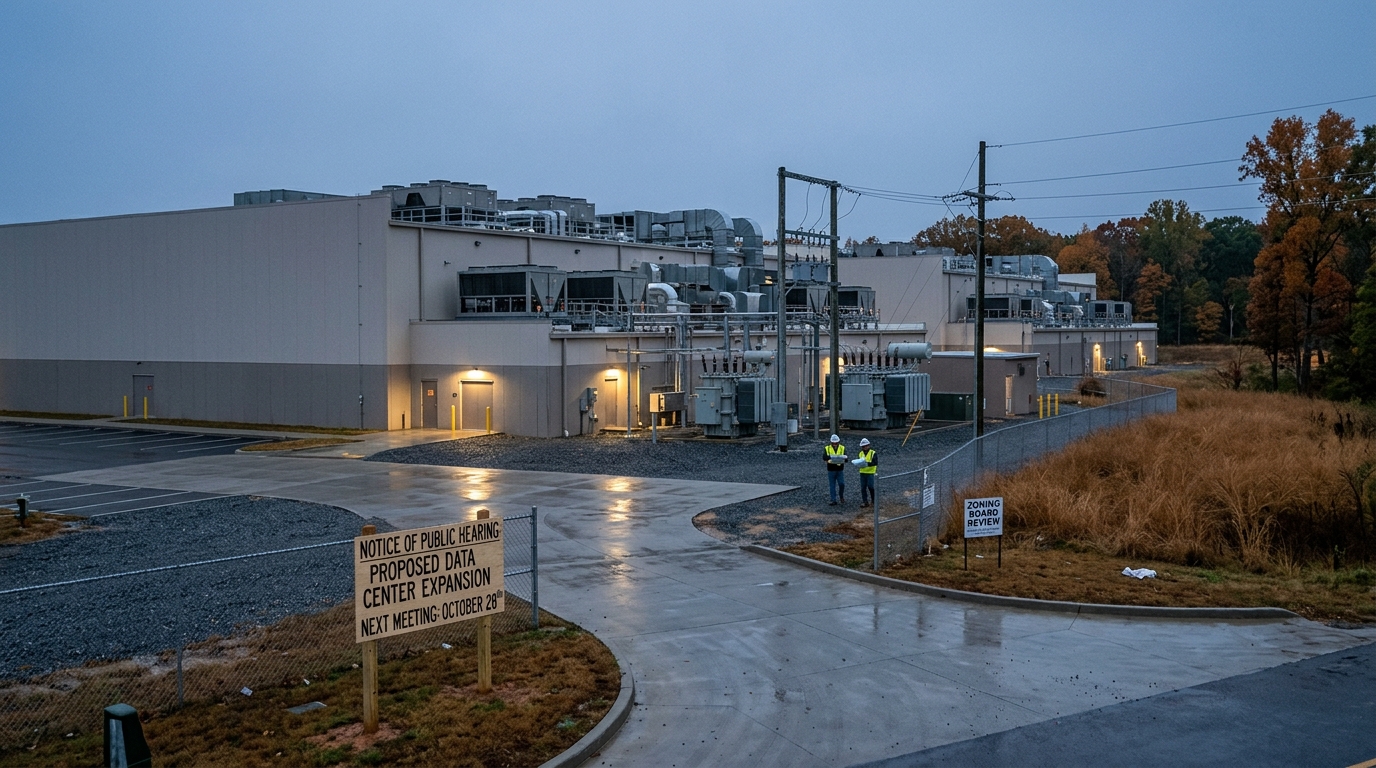
The veto backstop does not reach local zoning boards, state utility commissions, or governors acting by executive order. New York became the first state to enact a statewide moratorium in July 2026. As of April 2026, 27 states were advancing data center-related energy legislation, and California, Ohio, and Utah had already enacted laws related to data center development that go beyond the federal government’s voluntary pledge. At the federal level, the Ratepayer Protection Act passed the House 417 to 3, then stalled in the Senate after Democrats argued its standards were voluntary and after a failed procedural vote to advance it.
The opposition is hardening fast. A survey published in August by the Annenberg Public Policy Center found 61% of U.S. adults oppose data centre construction in their area, up 12 percentage points since a survey ending in March, crossing party lines. The ad-tracking firm AdImpact has reported a surge in campaign spots mentioning data centers, but the specific figures in this draft cannot be verified from public AdImpact reporting and are removed here.
Trump promised to cut energy prices in half within 12 months. Instead, electricity prices rose in 2025 on average. Candidates in both parties are running ads against data centres, framing opponents as indifferent to community concerns. Permitting fights do not require an act of Congress.
Did Trump Draw a Red Line Around This Mystery Stock?
When a major U.S. trading partner targeted one American energy company’s profits, Trump publicly warned it was making a “big mistake.”
Why defend this company?
Where the Evidence Leads
The veto backstop is real. Investors are assigning it too much weight. The primary risks are local permitting delays, state moratoriums, and PJM grid constraints that accumulate without a single congressional vote. Losses for pro-data centre candidates in November could fuel more moratoriums and pauses that threaten AI investment even without any bill reaching the President’s desk.
The races to watch on November 3 may not be in Washington at all. State legislative contests in Ohio, Virginia, and Pennsylvania will shape the rules governing tens of gigawatts of capacity that Nvidia, Microsoft, Amazon, and Meta have already committed to build.