October 5, 2026
Bonus Content: Korea’s Banks Were Breached. Now Every Bank Has a Problem.

Patriots’ Most Trusted Gold Company
Since 2000, Gold Is Up 1,395%. The S&P Is Up 425%.
For U.S. savers age 55+ with $50,000 or more in an IRA, 401(k) or savings. Free of charge, no obligation to buy anything.
Same twenty-six years. Same two dot-com and 2008 collapses. Two very different lines on the chart.1,2 Most Americans have never seen them put side by side – and almost nobody was told they are allowed to hold the better-performing one inside a retirement account.
Two lines on the same chart
In December 1999 gold traded near $290 an ounce and the S&P 500 closed the year at 1,469. Since then gold has multiplied roughly fifteen times over. The S&P has multiplied about five.1,2
Be fair about the comparison: that S&P figure is the price index and does not include reinvested dividends, which would lift it meaningfully.2 Even allowing for that, the gap over a quarter century is not a rounding error.
The reason has less to do with gold than with the dollar. Over those same twenty-six years the money supply expanded, two crises were met with emergency printing, and the national debt crossed $40 trillion. Gold did not get more valuable so much as dollars got less so – and gold is the one asset that cannot be issued by anybody.
Right now gold sits below its January 2026 peak while the world’s central banks keep adding more than a thousand tons a year, and published bank targets still run from roughly $4,900 to $6,300.3,4 Those are opinions, not promises. But a quiet stretch is a better time to read up than a panic. Get the free 2026 Gold IRA Guide.
The free 2026 Gold IRA Guide walks through exactly how a rollover from an IRA, 401(k) or TSP works, which metals the IRS allows, how insured depository storage works, and the mistakes that cost retirees the most. It is free and it takes about thirty seconds to request.
Claim Your Free 2026 Gold IRA Guide →

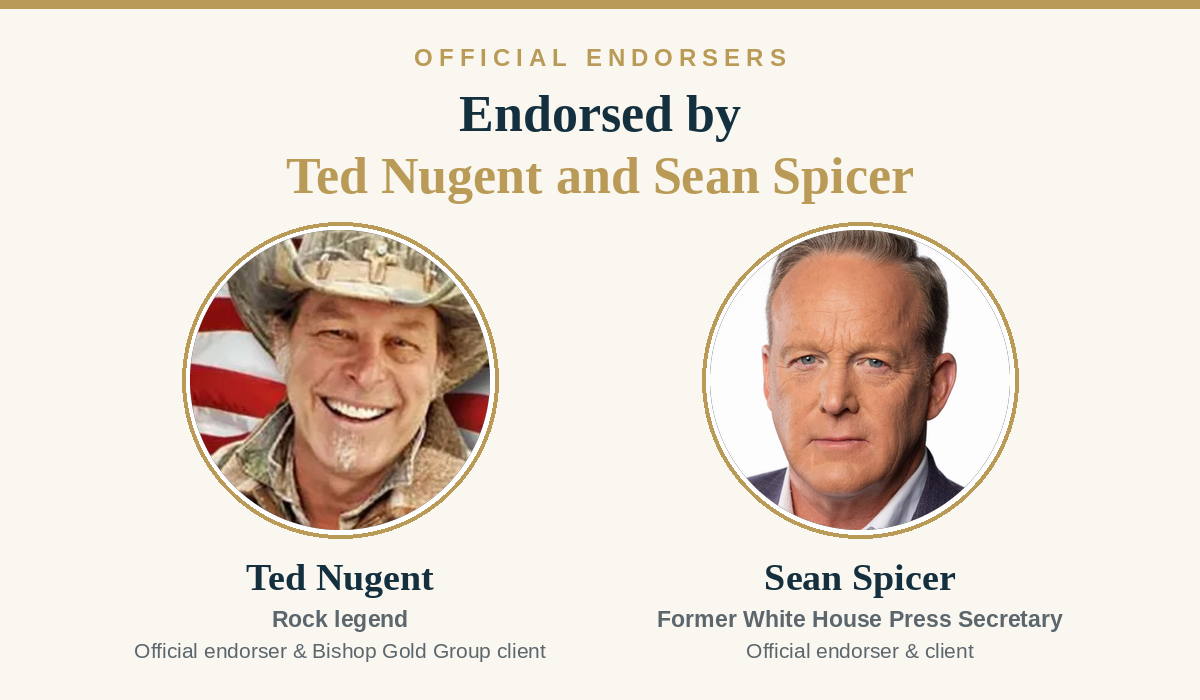
Rock legend Ted Nugent and former White House Press Secretary Sean Spicer are official endorsers and clients of Bishop Gold Group. 10 years in business ⢠5-star rated on Trustpilot and Google ⢠Mint Authorized Dealer
Prefer to speak to someone? U.S.–based specialists, no pressure, no jargon.
Mon-Fri ⢠7am-5pm PT
Sources
1 LBMA gold price, 31 December 1999 ($290.25/oz) to September 2026. Past performance is not a guarantee of future results.
2 S&P 500 price index, 1,469.25 close on 31 December 1999 to 7,707 in September 2026 – a price-only comparison that excludes reinvested dividends, which would raise the S&P figure materially.
3 Published year-end gold price forecasts as reported 2026: Goldman Sachs, J.P. Morgan, UBS and Bank of America, spanning roughly $4,900–$6,300/oz. Analyst forecasts are opinions, not guarantees.
4 World Gold Council, Gold Demand Trends, annual central bank net purchases 2022-2024.
Past performance is not a guarantee of future results. Precious metals are volatile and can decline in value. This comparison is historical and is not a prediction or a recommendation to buy or sell any asset.
Korea’s Banks Were Breached. Now Every Bank Has a Problem.
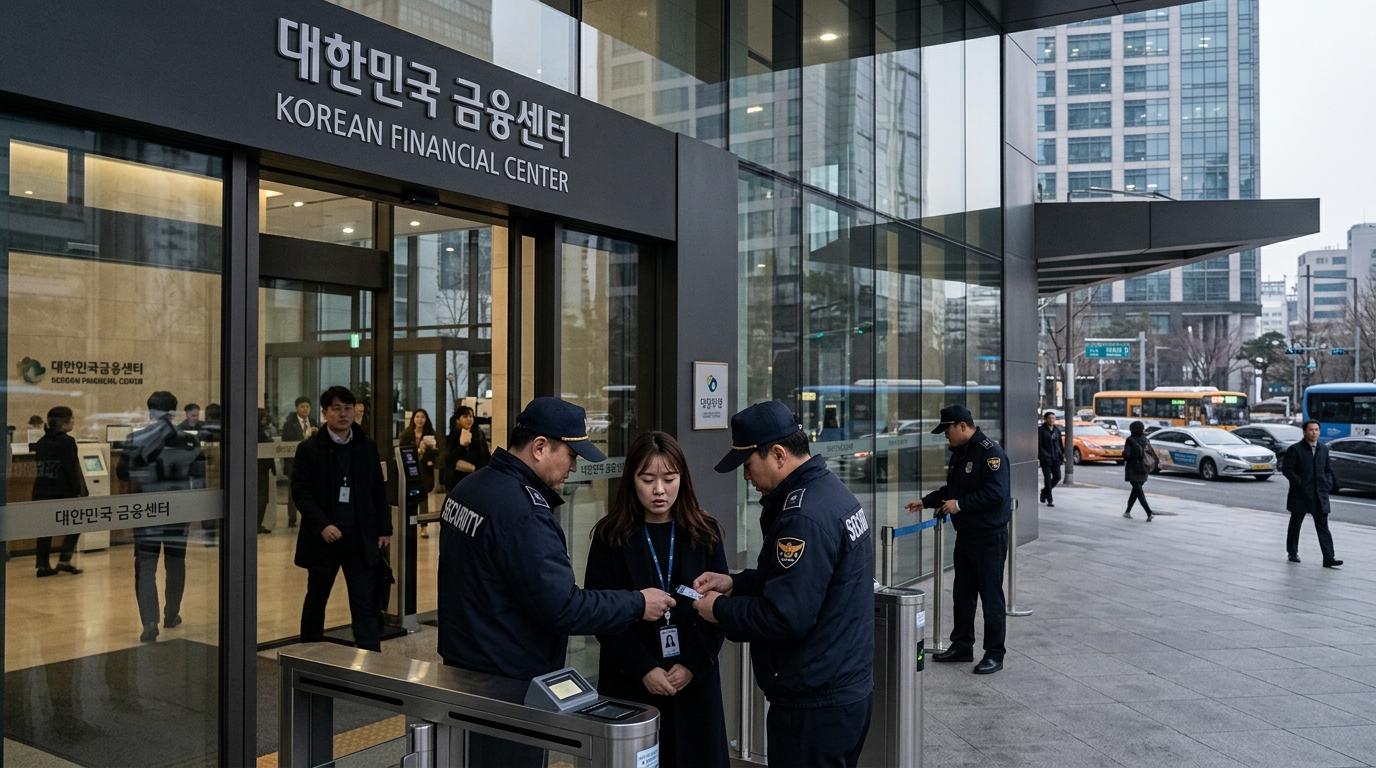
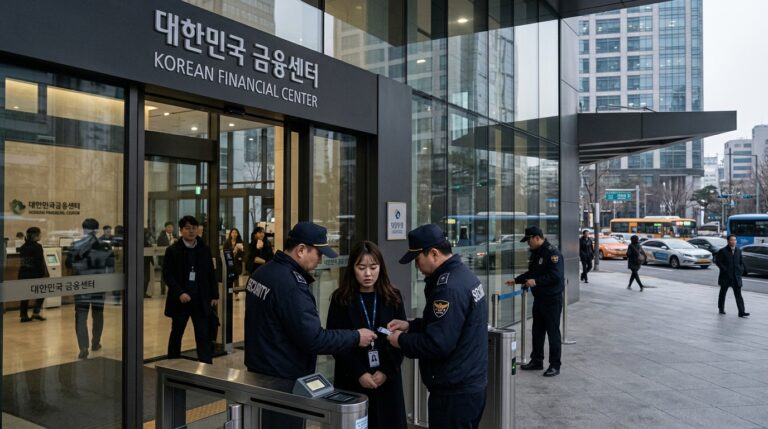
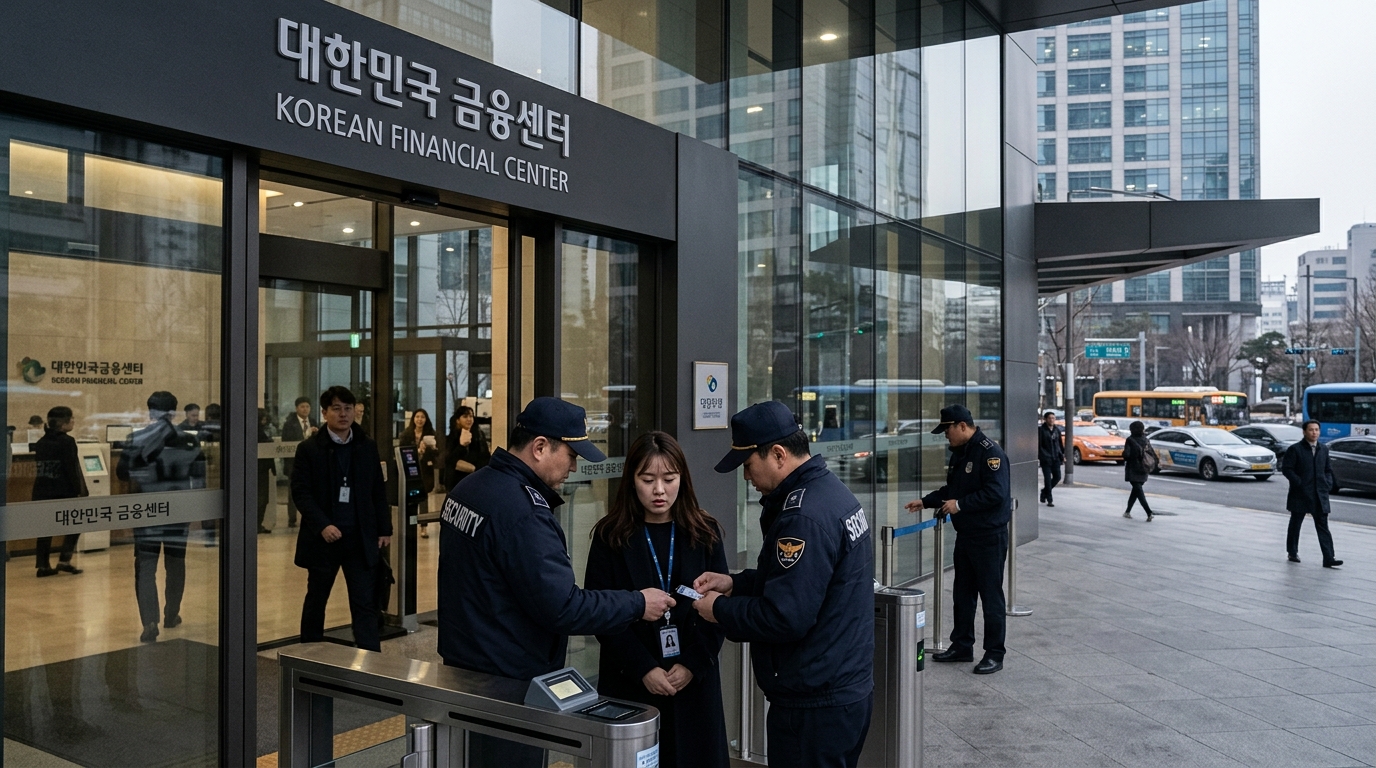
The breach wave that swept South Korea’s financial sector last week landed on the president’s desk Sunday. President Lee Jae Myung ordered a thorough investigation on October 4, 2026 after a series of financial sector data breaches exposed customer and worker information. Markets in Seoul were closed for a holiday, so the damage to KB Financial, Shinhan, and Hana Financial prices would not be visible until trading resumed Tuesday morning. Investors watching from New York had the weekend to decide what this means. The answer splits cleanly along a fault line that matters well beyond Korea.
The Bull Case for Complacency
The first read is that this is a Korean problem with Korean causes. The FSC found that most attacks targeted external web pages and servers used by loan brokers and employees for work convenience, areas that receive relatively less oversight, and concluded that basic security measures were inadequate and that more information than necessary was being stored and accessed. That is a specific institutional failure, not an industry-wide one.
The industry itself argues that the data leaks should be separated from the security of banks’ core transaction systems, since the attacks targeted internet-facing systems used by employees and loan agents, not internal networks that manage account balances and transaction records. FSC Chair Lee Eok-won said there were no signs that information directly usable for payments or other crimes had been leaked. No funds moved. No accounts were drained. Under this reading, KB Financial, Shinhan, and Hana face manageable fines, a compliance overhaul, and a brief credibility bruise. Investors who sell on the headline are overreacting to a perimeter problem, not a core system failure.
The Bear Case for Structural Vulnerability
The problem with that reading is the attacker’s apparent method. Other traces indicate ARTEX, a Chinese-language, open-source AI-based penetration-testing platform, may have been used, a tool designed to identify security vulnerabilities and select its next intrusion method based on the results of previous attacks. That is not a script running credential stuffing against one portal. That is an autonomous system learning in real time.
The series of attacks exemplifies a new cybersecurity threat for banks: AI agents repeatedly sought weak points in these companies’ systems, from employee mobile platforms to sales support and loan broker services. Authorities found the same attacker’s IP address across all seven affected firms, raising suspicions of a coordinated campaign. Regulators believe the attacks may have broadly scanned multiple financial companies for vulnerabilities rather than targeting a single institution.
That behavioral profile does not respect borders. Experts first pointed to lax security management at the banks, noting that systems connected to the external internet with relatively weak authentication procedures may be exposed to automated attacks using AI. Every large bank operates internet-facing staff portals. Every bank has loan-agent interfaces. The attack surface the Korean institutions failed to harden is structurally identical across global retail banking.
Where the Evidence Leads
The FSC’s own response suggests regulators believe this is more than a one-country event. Reuters reported October 4, 2026 that FSC Chairman Lee called for an “AI attacks defended by AI” approach while signaling broader upgrades to the financial sector’s cybersecurity framework. The Financial Supervisory Service also said threat information, including IP addresses, would be rapidly shared across the industry to prevent further incidents. This is not a targeted remediation. It is a sector-wide acknowledgment that the threat model has changed.
For CrowdStrike, Palo Alto Networks, Zscaler, and SentinelOne, the Korean episode reinforces a demand argument that has already driven significant moves this year. As analysts at Cantor wrote earlier this year, “AI has moved from being a cybersecurity feature to a key pillar of both the attack surface and the attacker/defender infrastructure.” An autonomous AI probing seven Korean financial firms in the same stretch is precisely the real-world demonstration that security budget conversations now reference.
The bear case on those cybersecurity stocks is valuation: CrowdStrike is the clearest expression of the trade the AI threat debate has created, and the bull case rests on the view that faster, AI-driven attacks expand security budgets regardless of how quickly frontier models advance. But a stock can be right on the thesis and wrong on the price. Investors should distinguish between the structural demand story, which Korea validates, and the near-term multiple, which already prices in considerable optimism.
Final Verdict
The Korean breach is not simply a supervisory failure. The FSC deserves scrutiny for standards that left loan-agent portals under-protected, and the affected banks will pay in fines, remediation costs, and customer compensation. But the mechanism, an AI agent autonomously probing for weak points across seven institutions in the same period, is not a Korean invention. It is a preview. Authorities flagged weak authentication and excessive data retention and access as key weaknesses in the industry’s defenses: those weaknesses exist in Tokyo, Frankfurt, and Chicago as well. The Korean banks got there first. The bill for catching up will be paid across the entire sector, which is precisely why the cybersecurity trade is not over.