Editor’s Note: Our friend Louis Navellier has been a guest at Mar-a-Lago, President Trump’s private residence in Palm Beach, Florida. He’s one of America’s top tech investors, managing a $1.1 billion portfolio – including $358 million in AI stocks. He called Nvidia before it went up 44,000%. He predicted the dot-com crash and the 2020 Covid rally. And now he’s revealing what he calls the biggest prediction of his 40-year career.
Dear Reader,
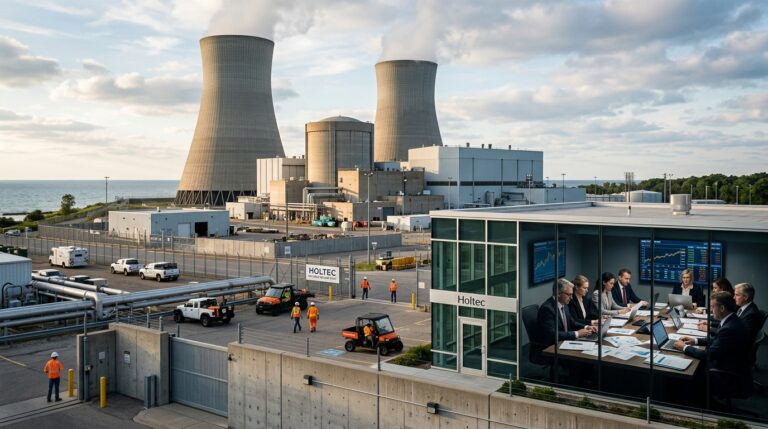
Deep in the Appalachian Mountains of Tennessee…
Behind a triple layer of razor wire and a security clearance most Americans will never hold…
Something extraordinary is being built.
You won’t hear about it on CNBC.
The Wall Street Journal hasn’t touched it.
And yet, according to my research, what’s happening inside this facility will trigger one of the most dramatic wealth transfers in American history.
I know this place well.
It’s the same “secret city” that gave America the atom bomb.
The same lab that turned the tide of World War II.
And now – under a directive from President Trump himself – America’s top scientists and engineers have returned to this site for one purpose:
To build a new category of AI computer so powerful…
Trump himself compared it to a Manhattan Project – but for AI.
And I believe – based on months of exhaustive research – this device is going online very soon.
When it does, it won’t just leapfrog ChatGPT, Gemini, and even Elon’s Grok…
It will accelerate AI breakthroughs by 360-fold.
Breakthroughs that used to take five years? They’ll happen in five days.
And that will trigger a $100 trillion reset of the AI markets – the biggest disruption I’ve seen in my 40-year career.
I called Nvidia before it went up 44,000%. Apple before it went up 36,000%. Microsoft before its 60,800% rise.
But nothing in four decades has looked quite like this opportunity.
I’ve prepared a full presentation with the details – including the name and ticker of the one company I believe is best positioned to profit.
Click here to watch it now, free of charge.
Regards,
Louis Navellier
Senior Quantitative Investment Analyst, InvestorPlace
P.S. The “secret city” in Tennessee has been off-limits to the public for decades. But what’s being built there right now is about to become impossible to ignore. When Trump flips the “on switch,” I expect it to trigger a $100 trillion shock to the AI markets. Go here for full details – including the ticker symbol – before this video comes down.
The S&P 500 Bears Are Getting Louder. Here Is What the Evidence Actually Says.
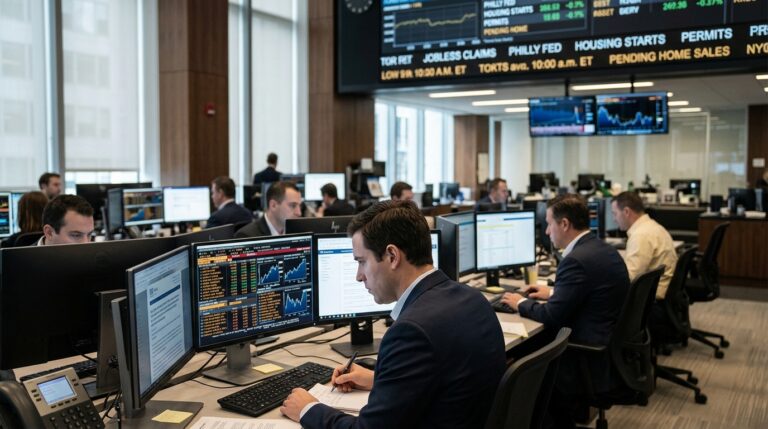
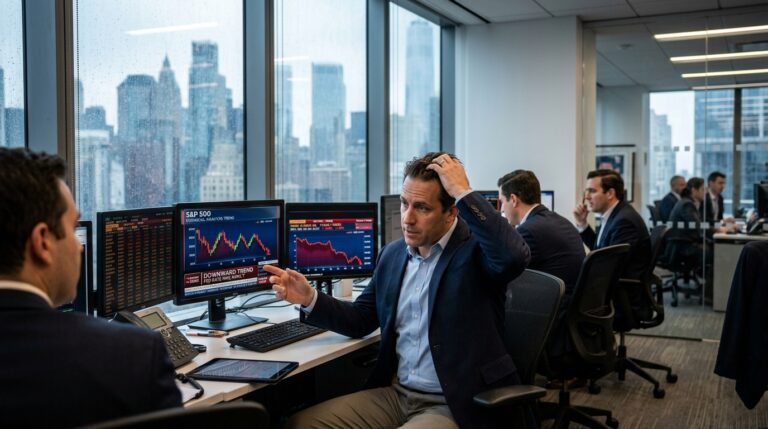
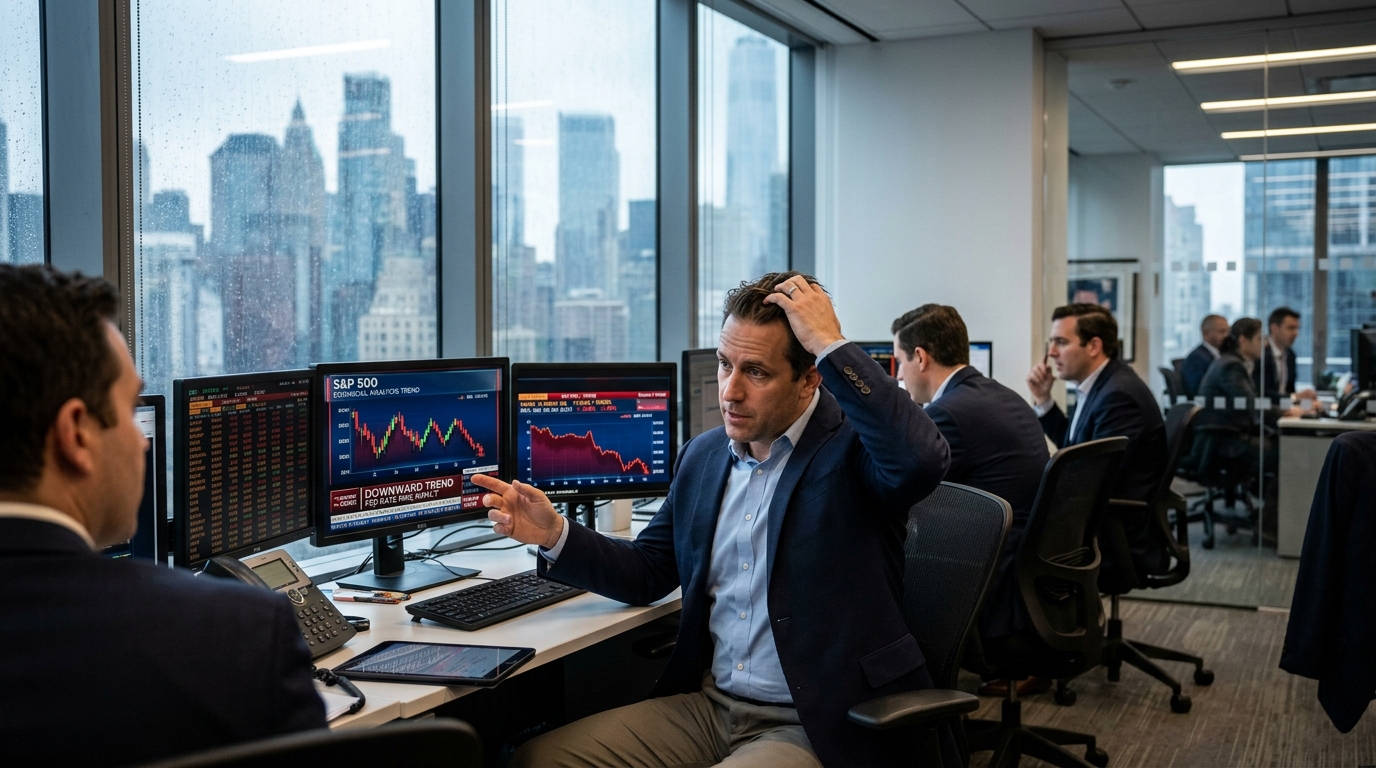
Wednesday was an unusually concentrated day of bad news for US equity bulls. Ed Yardeni, one of the biggest stock bulls on Wall Street, slashed his year-end S&P 500 forecast just a few weeks after raising it, cutting his target to 7,900 from 8,400. On the same afternoon, the Fed raised the overnight funds rate by a quarter percentage point, bringing the target range to between 3.75% and 4%. The Dow fell after Fed Chair Kevin Warsh highlighted persistent inflation, and the S&P 500 dropped 0.45% to close at 7,551.81.
The Bull Case
Despite near-term caution, Yardeni remains bullish long-term, reiterating his end-of-decade target of 10,000 for the S&P 500 and expecting the economy to grow without a recession through the end of the decade. That is not a minor qualifier. A strategist who still sees the index at 10,000 by 2030 from 7,551 today is not waving the white flag; he is adjusting his pace, not his destination.
His previous year-end forecast of 8,400 has now become a mid-2027 target, which implies the bull thesis remains intact, merely stretched. Yardeni lowered his forward price-to-earnings estimate to 18.6x from 19.8x, tied directly to the higher yield environment rather than any deterioration in the underlying earnings picture. Separately, Bank of America’s tracking of the Q2 earnings season showed roughly 30% year-over-year EPS growth for the S&P 500 excluding certain one-time investment markups, versus around 22% expected heading into the quarter. Earnings, at least, are not the problem.
Futures markets offered a partial rebuttal overnight: stock futures climbed early Thursday following Wednesday’s sell-off, with Dow futures advancing about 0.7% and S&P 500 futures up about 0.6% to 0.7%. Markets may be pricing in the hike and moving on.
The Bear Case
The convergence of warnings on Wednesday is harder to dismiss as noise. Yardeni pointed to higher Treasury yields, with the benchmark 10-year yield climbing to an intraday high of 5.041% this week, a level not seen since 2007. Oil prices have marched higher as the war involving the U.S. and Iran shows no signs of ending, with Brent back above $100 per barrel this month.
The sovereign money is sending the same signal from two directions. The New Zealand Superannuation Fund, valued at about NZ$94.35 billion at the end of the 2026 financial year, was ranked the world’s best-performing sovereign wealth fund over the past 20 years earlier this year by analytics firm Global SWF. Its CEO Jo Townsend warned that “returns for U.S. equities over the past couple of years are close to double annualized returns for the past 20 years, so we would expect there to be some reversion to the mean at some point.” That view echoes a warning from Nicolai Tangen, CEO of Norges Bank Investment Management, who told Bloomberg TV last month that after record returns, he was “more nervous” about what comes next. NBIM manages Norway’s $2.3 trillion oil fund, which reported a record first-half profit of about 1.4 trillion kroner (roughly $150 billion). These are not perma-bears; they are the funds that benefited most from the rally, and they are pulling back expectations.
BofA’s Savita Subramanian adds the technical dimension. She warns the S&P 500 has had only one 5% pullback in 2026, versus the typical three annually. The market has gone even longer without a full 10% correction, with the last occurring in the spring of 2025 when markets were shaken by tariff concerns. BofA’s bear-market signposts are about 50% triggered, still elevated even if below the 70% reading seen in May.
Where the Evidence Leads
The bull case rests on earnings delivery and the assumption that a 5% ten-year yield is a speed bump rather than a wall. Both remain plausible. But the bear case rests on something more observable: valuations were priced for a world where the Fed was cutting, and that world no longer exists. The Fed’s latest projections showed most policymakers still see at least one more rate hike in 2026. A forward P/E of 18.6x against a 5% risk-free rate is a tighter squeeze than the index has navigated comfortably before.
The sovereign wealth funds warning on US equities are not doing so from the sidelines. The New Zealand Superannuation Fund remains a major US equity investor. When the world’s top-performing fund trims its long-term return assumption and its CEO signals mean reversion while still holding risk assets, that is not a panic call. It is a measured adjustment from someone with skin in the game.
Yardeni’s revision lands the same way. Watch the 10-year yield around 5% and oil prices relative to $100 as the two variables most likely to determine whether 7,900 holds as a year-end floor or becomes the next ceiling to break.