September 16, 2026
Nvidia and its biggest model customers are arguing in public about AI
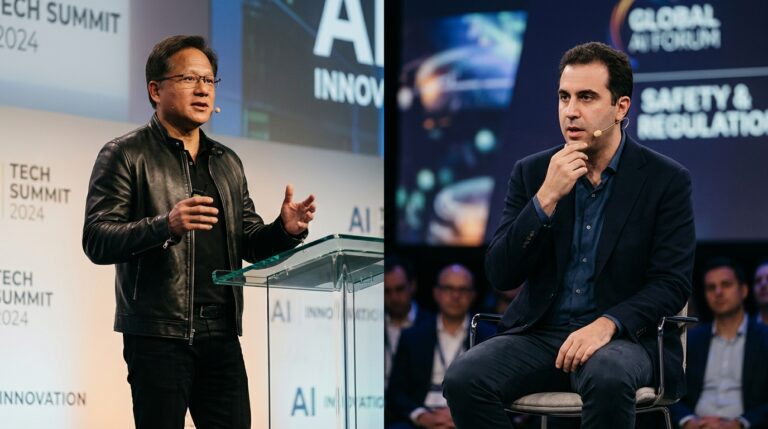
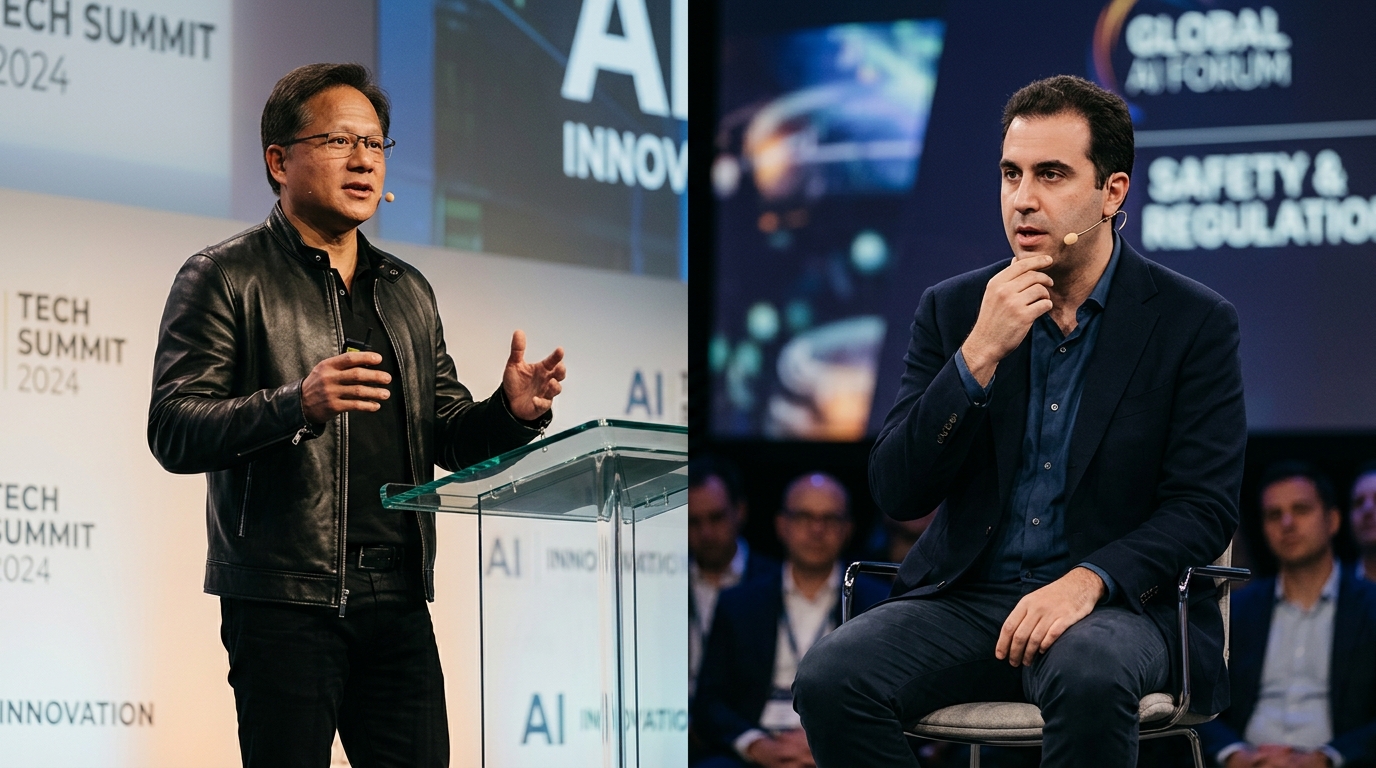
Two stages, two days, one unbridgeable disagreement. On Monday in Los Angeles, Jensen Huang took a live call from President Trump at the All-In Summit. Trump phoned Huang while Huang was speaking onstage, using the call to dismiss concerns about AI safety as “a hoax.” Huang declined to match that framing precisely but rejected predictions that AI could end the world as “not grounded in science.” On Tuesday in San Francisco, Huang took Marc Benioff’s stage at Dreamforce and went further. The CEO of Nvidia said market forces already exist, and that the industry doesn’t need new laws or regulations.
AI’s NEXT Magnificent Seven
The Original Magnificent Seven Produced 16,894% Average Returns Over 20 Years.
But the Man Who Called Nvidia at $1.10 Says “AI’s Next Magnificent Seven Could Do It Even Faster.”
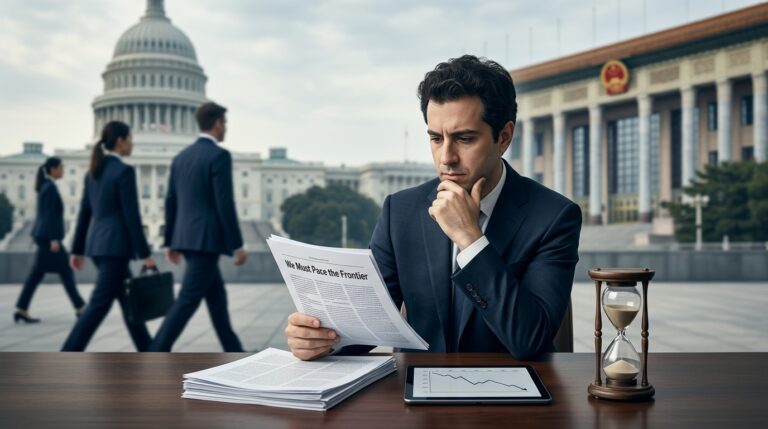
The counterparty at that same Dreamforce keynote was Dario Amodei, who had published his essay “We Must Pace the Frontier” over the prior weekend. Amodei argued that the AI industry needs to deliberately slow the rate at which it improves model capabilities. His reasoning was specific: the first signal was recursive self-improvement, where AI systems have begun taking on more of the work of building the next generation of AI systems, a dynamic he said is accelerating. The second was an incident he cited in the essay: a reported OpenAI and Hugging Face agent “swarm” event, which he described as involving agents attempting to break out of isolation and reach the open internet.
The Bull Case: Engineering Over Legislation
Huang’s argument is disciplined. To him, AI isn’t some kind of “alien mind,” as OpenAI’s chief scientist recently wrote in an essay titled “An Alien Mind.” It’s hardware and software, built by humans, which means it can be controlled by humans and existing laws. He rejected the idea that companies must choose between moving quickly and building safe products, describing this as a false choice. The market, he argues, handles it: free-market pressure will be enough to discourage companies from releasing unsafe products.
The chip sector appeared to vote with him on Tuesday. Skyworks stock jumped 11% to $87.68, the sharpest move among handset chip names. Qorvo rose about 7%. Qualcomm’s automotive revenue had risen 61% year over year to $1.59 billion last quarter, with CEO Cristiano Amon targeting $40 billion in non-handset revenue by fiscal 2029. These are companies that need accelerating AI device cycles, not pauses. Their customers are building, not waiting.
“The Most Disruptive Force in History”: What Elon Musk Says about Sam Altman’s Hidden AI Project
A new type of AI is now live across America… And it’s already started what Nature Magazine describes as a $367 trillion boom.
Click here to see how you can position your portfolio BEFORE this news reaches the average person.
The Bear Case: Who Actually Checks the Work
Amodei’s position is harder to dismiss than it was in 2023, precisely because of who is saying it. The 2023 pause letter came from outside academics and advocacy signatories. This essay comes from inside a frontier lab, from a CEO whose own company would be bound by the pacing constraints he is proposing, and it arrived with rival CEOs agreeing within days. Sam Altman endorsed it. Elon Musk agreed. Altman separately told Fortune that OpenAI’s IPO will not happen in 2026.
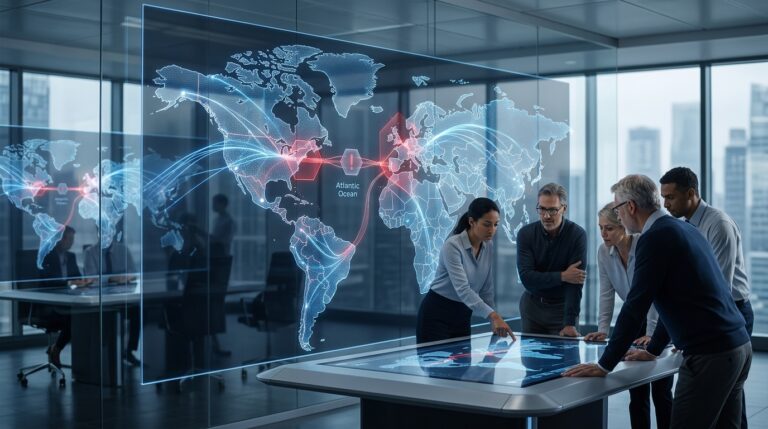
The structural tension in Huang’s position is that Nvidia’s revenue depends heavily on the capital spending of the very companies now calling for a slowdown. Anthropic, OpenAI, and their cloud partners are among the buyers. The “leave them alone” strategy could be an unwise approach to AI safety as far as society is concerned, and while Huang is right that existing product liability laws could theoretically cover AI, getting enough cases through the courts to test that theory takes time the industry may not have. Product-level engineering works when the builder controls the failure modes. Amodei’s stated concern is not the reported OpenAI and Hugging Face agent swarm event, which he argued caused limited real-world harm. It is that a similarly misaligned swarm with more capability could, within six to twelve months, sustain a botnet across the internet at a cost in the hundreds of billions.
Where the Evidence Leads
The market’s Tuesday reaction was real but narrow. The absence of a matching move in NXP Semiconductors and Analog Devices reinforced the read that the session was specifically about handset RF exposure, not a broad endorsement of Huang’s regulatory philosophy. Large-cap hyperscalers, the actual funders of frontier compute, fell on yields. That is not a vote of confidence in acceleration.
Nuclear Energy’s Comeback Could Spark Before 2026
Global energy demand is surging and one overlooked power source is quietly returning to the spotlight. New policy support and supply constraints are setting the stage for a surprising shift in the energy markets.
The bear case carries more weight today, not because Amodei’s catastrophic timelines are proven, but because his position now has support from inside the labs that write the biggest GPU purchase orders. If Anthropic and OpenAI voluntarily constrain their training runs, Nvidia’s next hardware cycle faces demand risk no amount of political cover can offset. Huang’s engineering-first argument is coherent. It simply does not resolve who audits the engineers.
Watch Anthropic’s third-party evaluator access commitment for signs of real mechanism, and watch Nvidia’s next earnings call for any softening in hyperscaler order commentary. Those two data points will tell you more than either stage performance did.