September 9, 2026
HBM4 is consuming wafer capacity about three times faster than DDR5
The number that matters this morning is not a stock price. It is 10 days. Samsung and SK hynix have fallen below 10 days of finished memory inventory, per a September 7 Seoul Economic Daily write-up citing a KB Securities report. In semiconductor supply chains, healthy inventory is typically 30 to 45 days of production output, enough to absorb disruptions in manufacturing, shipping, or demand without triggering supply failures at customers. Below 10 days is not a warning level. It is a near-zero buffer.
Your Power Bill Is Funding the AI Boom
The bulk order that keeps the lights on across 13 states just jumped from $2.2 billion to $14.7 billion – nearly 7x in one year – because data centers are draining the grid. There’s one energy source that runs 24/7 with no fuel, and Washington just preserved its tax credits through 2033 while terminating everyone else’s. Google signed for 15 years. Bill Gates invested $100 million. One company has spent sixty years building it.
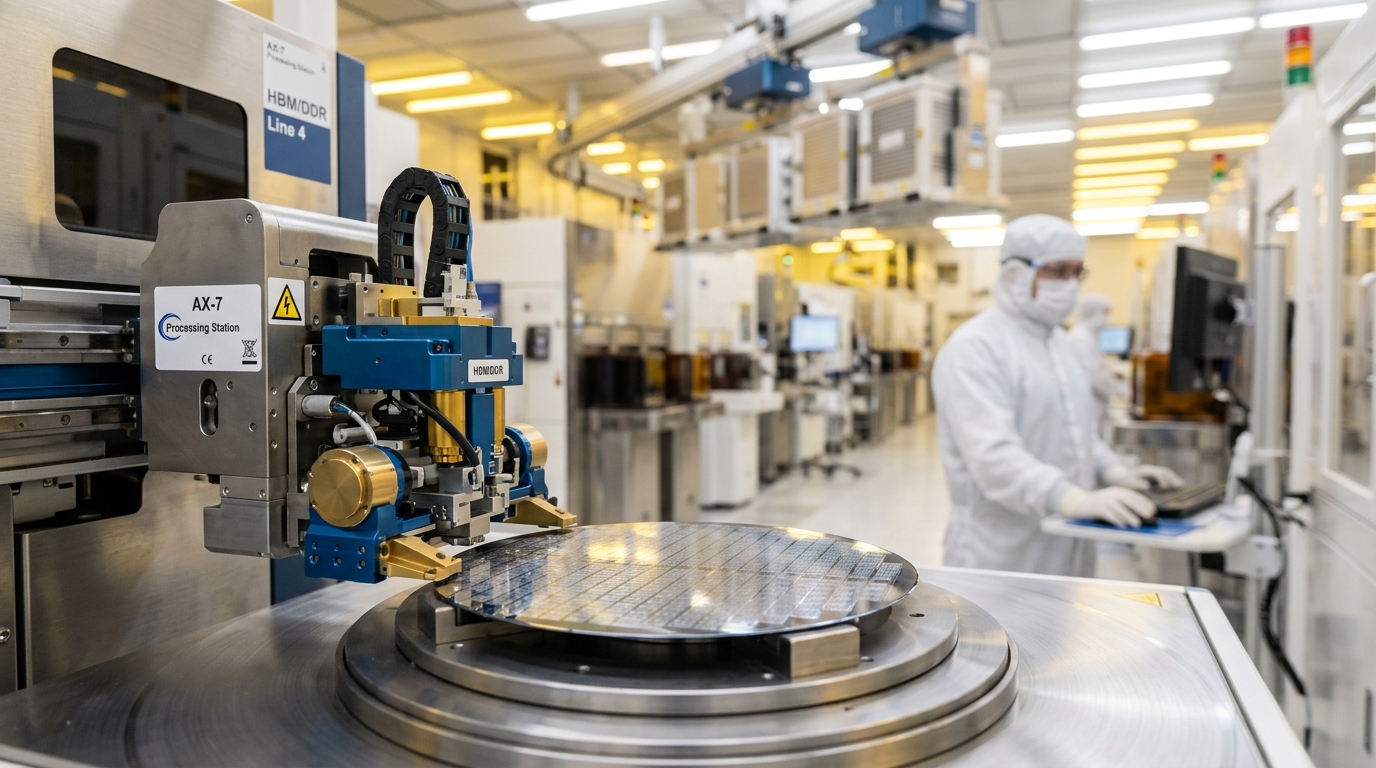
The mechanism is straightforward. On a per-bit basis, HBM consumes roughly three times the wafer capacity of conventional DRAM such as DDR5. The more HBM production increases, the fewer wafer inputs can be allocated to commodity DRAM, constraining bit supply growth. The demand pressure extends beyond HBM alone. AI servers are simultaneously absorbing server DDR5 and enterprise solid-state drives in addition to HBM, increasing supply pressure across the entire memory segment.
The Bull Case: This Is Structural, Not Cyclical
TrendForce estimates the DRAM industry generated about $154.73 billion in revenue during Q2 2026, a 59.5% jump from Q1. Server DRAM contract price increases are still being framed as unusually large, even as the pace is expected to moderate as long-term agreements cap some increases. Those are not cyclical numbers. They are the result of a reallocation of wafer capacity toward a product that did not exist at scale two years ago.
The shortfall is not something that gets solved by running existing fabs harder. It requires new capacity, and new capacity takes years to come online from the point a fab breaks ground. The transition from HBM3E to HBM4, expected to begin in 2026 and broaden into 2027, will increase the amount of memory required per accelerator platform, which can add pressure on overall DRAM supply. Every new AI accelerator generation requires proportionally more memory, not less.
Get Into Anthropic Before the IPO
Anthropic is heading for a huge AI IPO.
A little-known public company already owns nearly 1% of it.
Because the shares are already trading, there’s no six-month lockup.
You could position yourself now and decide later whether to hold or sell on day one.
The stock market voted, but not on Monday, since U.S. markets were closed on Monday, September 7, 2026 for Labor Day. On Tuesday, September 8, Apple fell about 1.75% to about $316.22. Micron’s last close was not $1,020.60, and its stock traded well below that level in early September 2026. Micron guided fiscal Q4 2026 revenue to a $50.0 billion midpoint and an approximately 86% gross margin at the outlook midpoint, an unusual result for a company selling into a historically cyclical market. Margins at those levels do not suggest a cycle rolling over.
The Bear Case: Every Shortage Ends the Same Way
The bear argument is not that AI demand is fake. It is that buyers panic-order in shortage conditions. Signs of double-ordering, inflated backlogs, and parabolic price rises are dynamics that often precede a reversal once customers slam the brakes or new fabs ramp up. Device makers have been forced to pull forward orders and lock in supply at record-high prices, which has squeezed hardware margins and created a dangerous inventory situation. If consumer demand for AI-integrated devices fails to meet expectations in late 2026, those companies could find themselves sitting on billions of dollars of overpriced components.
A Barron’s report cited analyst Karl Ackerman expecting DRAM and NAND average selling prices to peak in mid-2026 and begin falling quarter over quarter as early as 2027, roughly a year ahead of his earlier forecast. Contract price momentum has also been described as decelerating sharply versus the early-2026 surge, and consumer end-markets have been weak.
Where the Evidence Leads
The critical difference between this shortage and prior DRAM cycles is where the demand lives. PC and smartphone shipments can be weak while DRAM prices still rise if AI-server demand is strong enough to absorb the slack. In prior cycles, consumer weakness of that magnitude was a reliable peak signal. In this one, it has been partially absorbed by AI-server demand.
5 Little-Known Stocks Behind Today’s Defense Tech Shift
Behind the headlines, a major transformation is underway.
Modern warfare is being driven by AI, autonomous systems, and next generation technology. A handful of lesser known companies are helping power this shift.
This report uncovers five stocks quietly playing a critical role in the future of defense.
The device-cost transmission is already visible. Apple CEO Tim Cook told investors on the fiscal Q3 2026 call that Apple expects to pay even higher memory costs in September, and flagged that the DRAM market has only three suppliers and that Apple’s sourcing flexibility is thin. That commentary lands directly on the September-quarter margin at the one company with the most to lose from sustained memory inflation on a hardware launch day.
The structural case is stronger right now. Memory-industry commentary has repeatedly emphasized that much of 2026 HBM output is already allocated under longer-term agreements, limiting near-term flexibility and reducing the spot market’s influence. Double-ordering typically shows up in spot market divergence; contracted supply can undercut that thesis.
Watch two things: the rate at which HBM die-per-stack requirements rise with each new GPU generation, and whether hyperscaler capex guidance for 2027 holds above current levels. Either one flinching would shift the balance. For now, the shortage is real, the physics of wafer substitution are not going away, and the bill is landing on every device maker without a fab.