August 29, 2026
Bonus Content: Gold’s Hot August Just Took a 3% Hit
Dear Fellow Investor,
What does the “Smart Money” know that you don’t?
On September 30th, a 90-year-old law is set to pull the rug out from under the global gold market.
While retail investors are sleepwalking in paper ETFs…
Institutions like Bank of America and Jane Street are quietly loading up on a specific “Shadow Miner.”
They aren’t buying the metal.
It moves 10x faster than the metal.
They’re buying the vault.
The logic is simple: When the paper market defaults on September 30th, the price of physical gold won’t just rise – it will “teleport.”
I’ve identified the one stock at the epicenter of this $14 Trillion repricing event.
The math suggests a 1,000% surge is on the table as the “Paper Gold” illusion shatters.
See the 13F filings and the evidence here >>>
“The Buck Stops Here,”
Dylan Jovine, CEO & Founder
Behind the Markets
Gold’s Hot August Just Took a 3% Hit
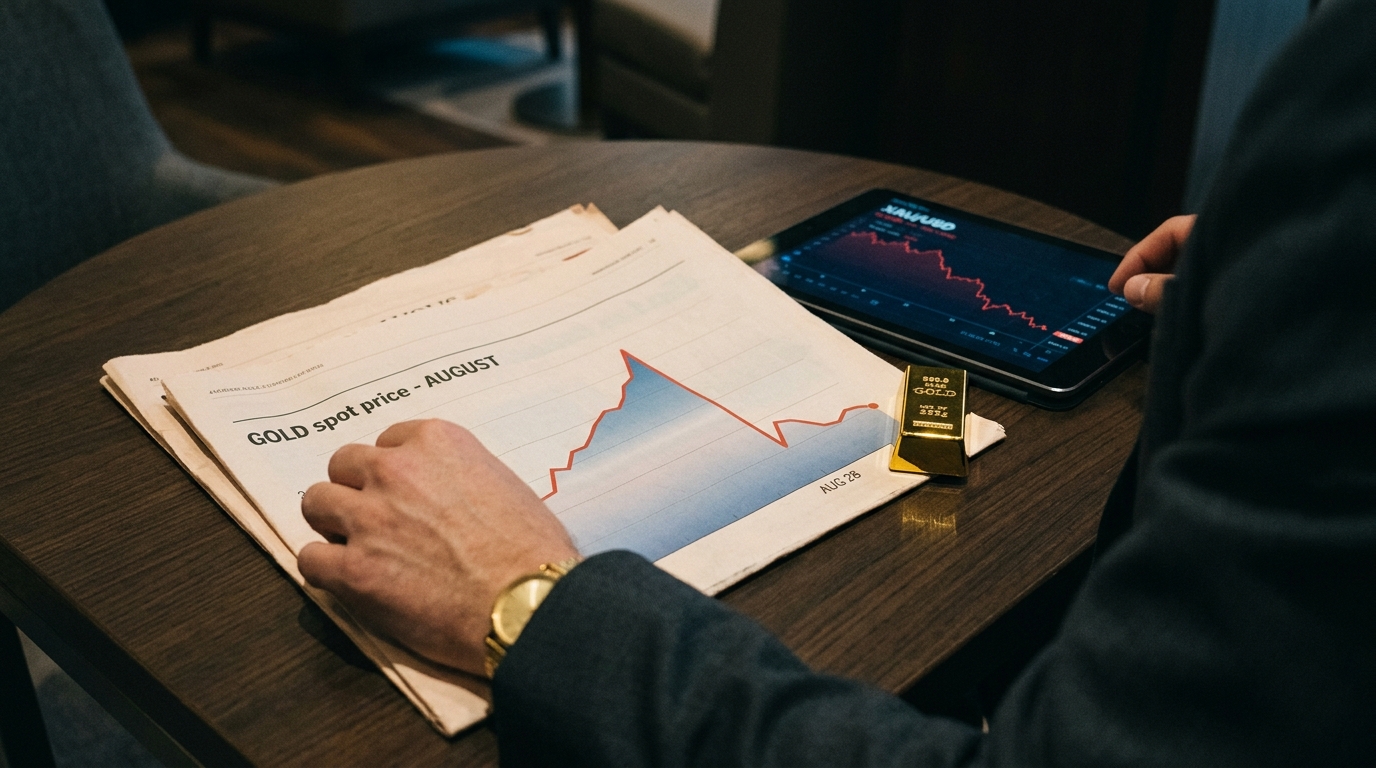
Gold entered Friday, August 28 on track for its strongest monthly performance since January, up roughly 13% from near $4,000 at the start of August. Then Kevin Warsh stepped to the lectern at Jackson Hole, and the price of gold fell sharply as the Fed chair surprised markets by rejecting the usual forward-guidance choreography while clearly arguing that tighter monetary policy could still be needed to curb inflation. Spot gold dropped to an intraday low around $4,531 per ounce.
Before Warsh took the stage, gold and silver miners were having the kind of month investors do not easily forget. GDX was up roughly 40% month-to-date through Friday morning, putting it on track for its strongest monthly performance since 2020. Then Warsh started talking about inflation. Within minutes, precious-metals miners rolled over with the rest of the risk trade. First Majestic Silver and AngloGold Ashanti were among the notable decliners. Silver, which had built a 17% monthly gain ahead of the speech, fell to $66.15 on August 28, down 4.48% from the prior day.
The Bull Case
A single session, however violent, does not unwind a structural argument. Gold started August near $4,000 and the month’s rally was driven by a week of soft economic data, the national debt crossing $40 trillion, and central banks posting their biggest second quarter of gold buying on record. That last point carries the most weight for the multi-year investor.
Central banks purchased 288.9 tonnes of gold in Q2 2026, up 62% year-over-year and the strongest second quarter on record per the World Gold Council, buying into a quarter when gold prices were falling. Physical gold has no credit risk and pays no interest. It sits entirely outside the fiscal trap the Fed is navigating. Precious metals have also benefited from the so-called debasement trade, as the U.S. Treasury’s expanded debt buybacks heightened concerns over the risk of a U.S. debt crisis and further dollar weakness. StoneX senior analyst Matt Simpson noted that any decline could attract buyers who had missed the initial rally and were targeting the $5,000 level.
The miner bull case is even more straightforward. The leverage is rooted in the fixed-cost nature of extraction: if it costs a company $2,000 to mine an ounce of gold, a move in the spot price from $4,000 to $4,400 boosts gross margin from $2,000 to $2,400, a 20% improvement on a 10% move in the metal. GDX still closed August up substantially even after Friday’s reversal, and AngloGold Ashanti reported 2025 revenue of about $9.9 billion, up roughly 71% year-over-year.
The Bear Case
Warsh was unusually direct. “The Fed’s price-stability objective of 2 percent, as measured by the personal consumption expenditures (PCE) price index, is a firm, fixed target,” he declared. July PCE ran at 3.7% year-over-year, exceeding market expectations of 3.6%, while core PCE remained around 3.3%. That gap between 3.7% and 2.0% is not a rounding error; it is the entire argument for higher real rates.
Following the speech, markets marked up the odds of a September rate hike into the mid-50% range on CME’s FedWatch measure. Higher real rates raise the opportunity cost of holding an asset that yields nothing, and that is the most reliable short-to-medium-term headwind gold faces. The miners compound the problem: operating leverage cuts both ways. During gold’s recent six-month correction from its 52-week highs, the miners suffered a vicious downside re-rating. As the gold price slips, margins compress rapidly. GDX’s RSI had already reached overbought territory before Friday. A position up roughly 40% in a single month absorbs bad news poorly.
Under Warsh, the Fed has been arguing for less forward guidance, so each major speech can carry genuine information value rather than the familiar ambiguity markets grew accustomed to under prior chairs. That unpredictability alone is a recurring source of volatility for gold.
Where the Evidence Leads
The real-rate bear case won Friday decisively. It has not yet won the broader debate. From Tuesday’s high near $4,698 to Friday’s intraday low around $4,531, gold surrendered approximately $167 per ounce. Despite that correction, the broader August recovery remains significant: gold rose from roughly $4,000 at the beginning of the month, meaning Friday’s decline came after an unusually strong recovery rather than from already depressed prices.
What matters most is which of the two forces is structural and which is cyclical. A Fed chair committed to 2% PCE is a real constraint, but one operating inside a fiscal environment where 89% of reserve managers surveyed by the World Gold Council expect global gold holdings to increase over the next 12 months, with a record 45% planning to add to their own reserves, the most bullish result in the nine-year history of the report. Central banks do not trade on Jackson Hole speeches.
What Could Change the Debate
Watch the September 16 FOMC decision first. A hike would validate Warsh’s hawkish framing and likely push gold back toward the $4,400 range that served as resistance earlier this month. A hold, especially with a dissent from members who favored a hike at the July meeting, would be read as a ceiling on real-rate risk and probably bid gold back above $4,600.
PCE for August, due in late September, is the second variable. The July reading at 3.7% was the number that handed Warsh his argument. A sequential deceleration shifts the balance back toward the bulls.
Verdict
The debasement and central-bank-buying case remains intact. The real-rate case just received its best evidence in months. One 3% session does not break a 13% month, but it does confirm that gold at these levels needs two things working in its favor simultaneously: continued fiscal deterioration and at least a neutral Fed. Right now it has only one. That tilts the near-term balance modestly bearish for the metal and more sharply bearish for the higher-beta miners, while leaving the multi-year structural case largely undisturbed. Treat Friday as a compression, not a conclusion.