The most consequential sentence spoken at the BloombergNEF summit in Houston on November 11 did not come from an energy executive. It came from Noelle Walsh, Microsoft’s president of cloud operations and innovation, who told the audience the company has no intention of making other electricity customers pay for its data centers. “We don’t want other customers to be paying for our growth,” she said. “We will pay our own way.”
No hyperscaler had made that commitment publicly before. The timing is not incidental.
Texas Governor Greg Abbott ordered the state’s environmental regulator to stop issuing permits for data center projects statewide, with plans to work with the Legislature to eliminate any financial incentives for the industry. New York’s Executive Order 62, issued in July 2026, imposed the first statewide moratorium on facilities of 50 megawatts or larger while new rules are developed. A Troutman Pepper Locke analysis found that of the 38 states offering data center incentives, 28 were weighing legislation to end or curtail them, and that more than 100 localities nationwide had enacted construction moratoriums over the prior year. Walsh’s pledge lands directly into that political storm.
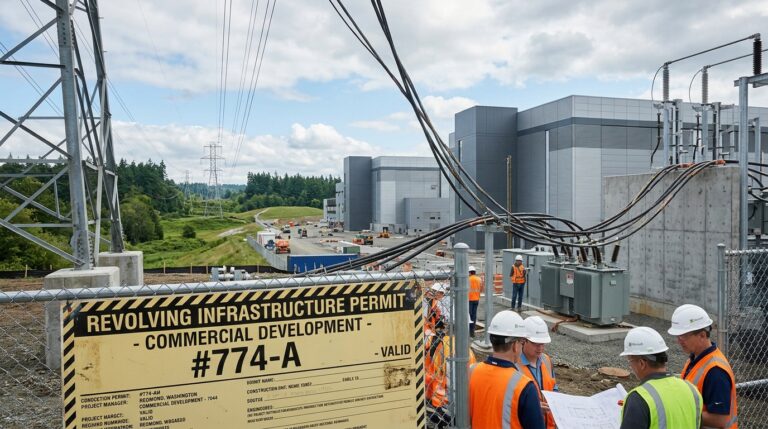
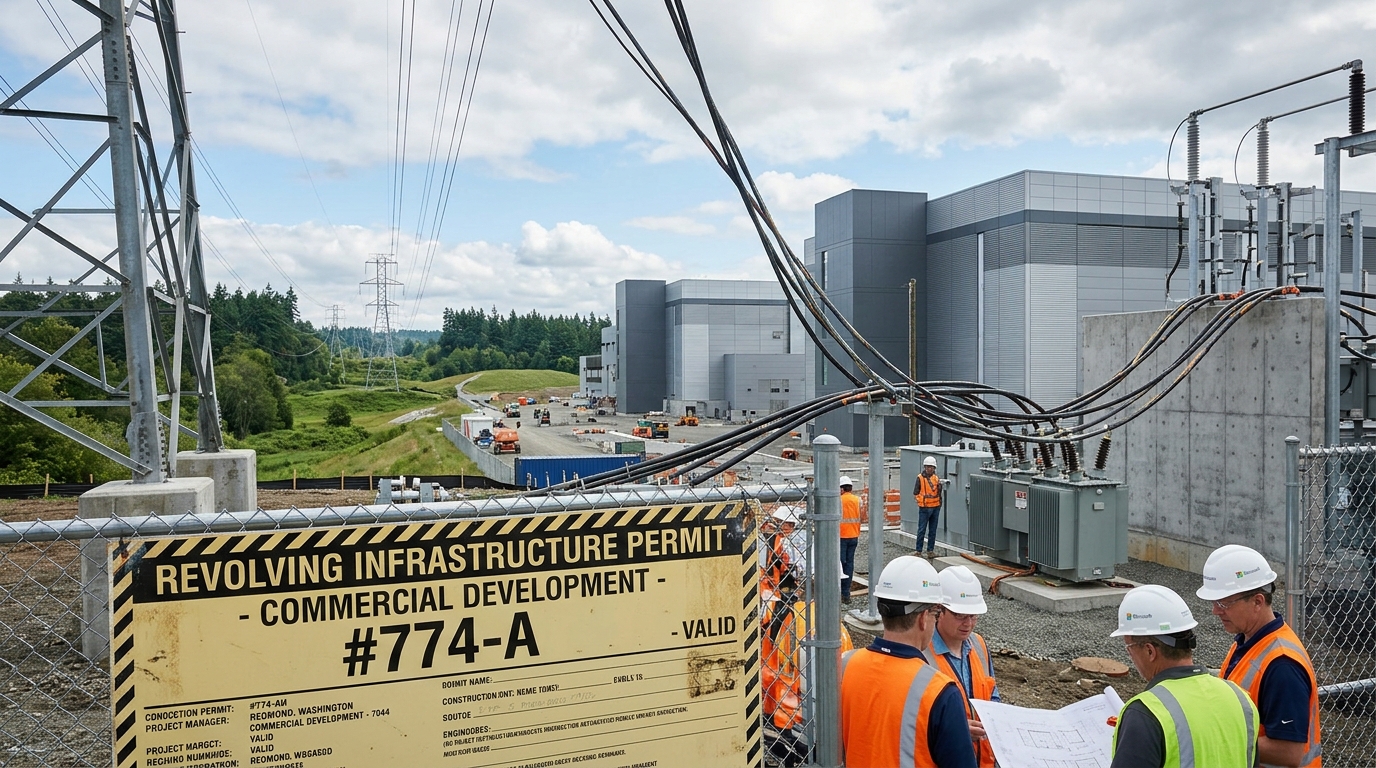
The specific project behind the commitment illustrates what self-funding actually looks like in practice. Microsoft is developing Project Kilby, a behind-the-meter power-and-data site in West Texas with Chevron and energy developer Joulent LLC, targeted to begin running by 2028 and reach full operations by 2031. Chevron is set to build a natural gas power plant with a capacity of approximately 2.67 gigawatts in phases, structured so the costs of Microsoft’s data center expansion are not passed on to other power consumers. Because the facility is supplied on-site rather than drawing power through the local utility’s metered grid, it can reduce the amount of grid expansion needed, limiting how much cost gets shifted onto other customers.
The scale of Microsoft’s power ambitions makes the pledge significant. In the Midwest, Microsoft has already contracted 7.9 gigawatts of new generation capacity in the MISO wholesale market, more than double its current regional consumption there.
The company plans to build $117 billion of computing capacity this year for artificial intelligence and cloud services, as data centers have become a central concern in U.S. politics. Microsoft’s January infrastructure plan goes further still: full payment of power and grid expansion costs, rejection of local property tax breaks, and a promise to return more water than it draws.
The financial logic behind all of this is visible in the most recent quarterly results. Azure cloud revenue jumped 48% in the fiscal first quarter, while free cash flow declined from a year ago. Free cash flow fell to $18.6 billion in Q1 FY2027 from approximately $25.7 billion in Q1 FY2026, driven largely by surging capital expenditure. CFO Amy Hood guided Azure growth of 49% to 50% at constant currency for the fiscal second quarter. Azure is accelerating faster than the investment base feared, which is precisely what makes the power pledge affordable rather than reckless.
Data centers need local approvals, power hookups and community goodwill, and all three get harder when residents suspect their bills will rise. Owning infrastructure gives Microsoft more control over cost, timing and the community relationships its team is trying to manage. Walsh’s statement to BloombergNEF is best read as an answer to regulators considering permit freezes rather than a gift to ratepayers.
The lesson for long-term investors is not that Microsoft is being generous. It is that durable competitive positions increasingly require a company to absorb costs that less-capitalized competitors cannot. Investment bank Jefferies estimates that about 13 gigawatts of announced Texas data center projects are at immediate risk from the proposed moratorium under governor-elect Gina Hinojosa. A company that can credibly promise to pay its own way is better positioned to keep building while others wait in permit queues. That is not an act of corporate citizenship. That is a moat.