
October 27, 2026
October confidence hit 91.7, blowing past every estimate. The holiday spending debate just shifted.
The October reading from the Conference Board landed Tuesday morning, and it settled nothing neatly. Consumer confidence rose for the first time in four months, driven by brighter views about the job market and business conditions, with the index climbing 7.5 points to 91.7, its highest level since June. The result came in above even the most optimistic forecast among economists surveyed. One month after the index posted its lowest reading since April 2014, the consumer has apparently found a second wind. Whether that recovery has legs heading into the most consequential spending weeks of the year is the question worth examining.
Your Free Options Book Is About to Vanish
In case you missed it… make sure you get your free “Simple Options Trading For Beginners” book before your link expires.
I eventually plan to charge money for this training, so do yourself a favor and download it now…
That way, no matter what it costs in the future, you’ll have a free copy.
Sound good?
The Bull Case: The Bounce Is Real, and the Forecasters Have Company
The Conference Board’s Consumer Confidence Index rose 7.5 points to 91.7 in October, with the Present Situation Index jumping 8.6 points to 120.4. All five components of the index improved, with both Present Situation sub-components and all three Expectations components rising. That is not a split bounce driven by one category. It is broad.
Conference Board senior economist Fergus McCormick attributed the advance primarily to improved perceptions of current and expected business conditions, with the recovery aligned to easing retail gasoline prices from September into October. Cheaper gas functions as a direct income transfer to lower and middle-income households, which explains why a fuel-driven improvement would show up quickly in the survey data.
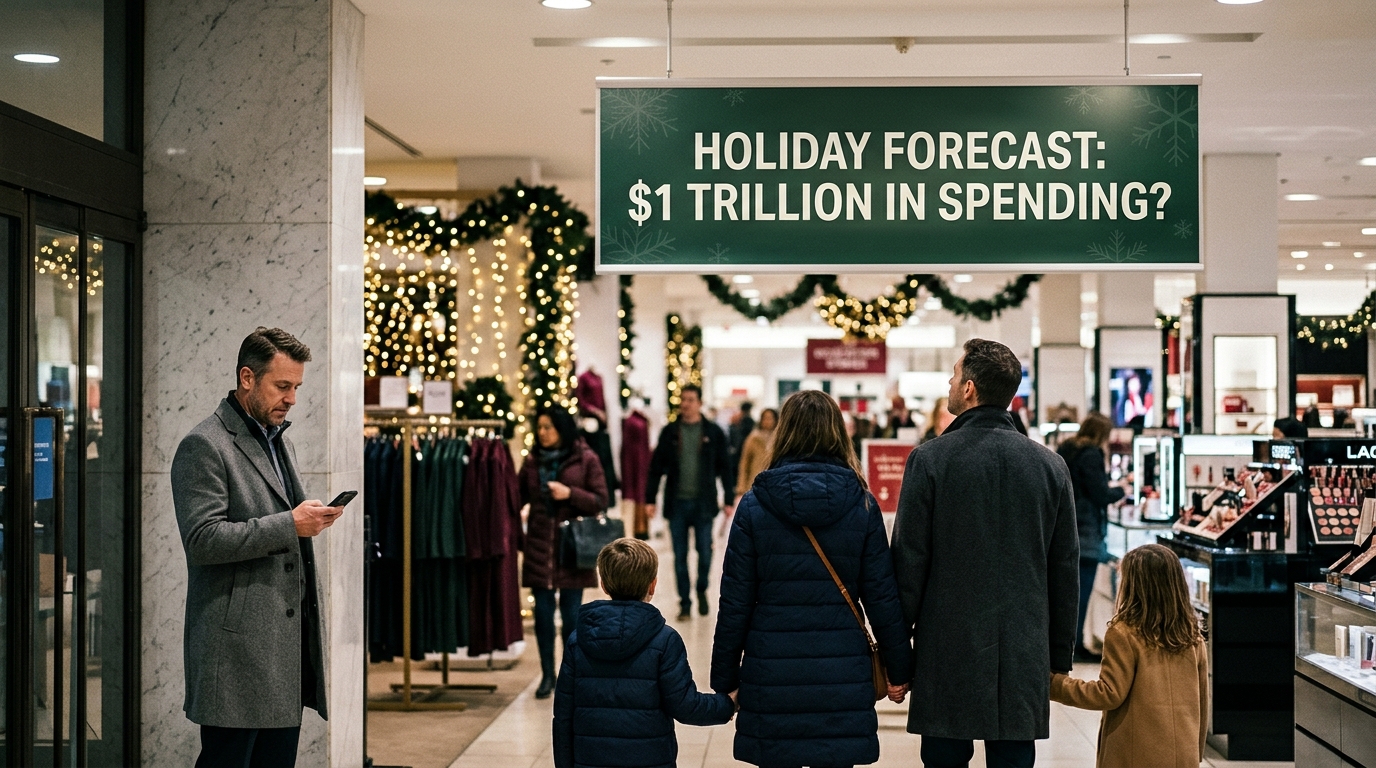
The retail forecasters already had this call leaning positive. The National Retail Federation expects holiday sales to grow 4.2% over 2025, translating to total spending of $1.013 trillion for the season. Mastercard Economics Institute expects holiday sales, measured as retail sales excluding gas and autos between November 1 and December 24, to increase 5.5% year over year. Mastercard said that would mark the strongest holiday growth since 2022. Tuesday’s number adds sentiment support to a case the spending data had already started building.
Are you prepared for… Trump’s Dollar Reset?
How Executive Order 14241 Could Unleash A Radical Repricing Of Goods And Assets Across America – And The Critical Move To Make Before December 14.
The Bear Case: One Month Does Not Fix the Structural Problem
A 7.5-point jump is impressive. It is also a single data point after three consecutive monthly declines, and it leaves the index’s most closely watched sub-component still in recession territory. The Expectations Index recovered 6.9 points to 72.6, only partially reversing three consecutive monthly declines, and it remains below the 80 threshold the Conference Board has historically associated with recession risk in the year ahead.
Consumers plan to spend less on services and durable goods over the next six months, likely reflecting higher price levels and persistent inflation, which have eroded purchasing power. That forward-looking restraint sits in direct tension with the holiday forecasts. Confidence rose, but the spending intentions embedded in the survey told a quieter story.
The income split matters. On a six-month moving average basis, only consumers under 35 and households earning at least $100,000 a year grew more confident. That is not a broad-based consumer recovery. It is a bifurcated one, where the households most likely to drive discretionary holiday spending are doing fine, while the middle of the market is still under pressure. NRF’s own chief economist acknowledged that inflation, rising gas prices, and pressure on household spending will affect consumers differently across income groups.
The debt picture behind that bifurcation has its own data trail. Credit card delinquencies above 90 days have hit their highest rate since 2011, with stress concentrated in the lower-prime borrowers most likely to finance holiday purchases.
Of Mastercard’s projected 5.5% growth, 2.8 percentage points reflects inflation, meaning nearly half of the gain can be explained by higher prices rather than more units moving through checkouts, driven this year by elevated energy costs and the AI buildout rather than tariff pressure. Strip that out and the real growth story compresses sharply. Despite the October increase, consumer confidence remained on the long-term downward trend that has persisted over the past few years.
5 Little-Known Stocks Behind Today’s Defense Tech Shift
Behind the headlines, a major transformation is underway.
Modern warfare is being driven by AI, autonomous systems, and next generation technology. A handful of lesser known companies are helping power this shift.
This report uncovers five stocks quietly playing a critical role in the future of defense.
Where the Evidence Leads
Tuesday’s number changes the near-term framing but does not resolve the underlying tension. The spending-beats-sentiment argument, which looked strained heading into October, now looks more credible for the holiday stretch. Gasoline prices easing is a tangible, repeatable mechanism: if pump prices hold lower through November, another confidence improvement is plausible. NRF’s chief economist has argued that consumer confidence is a poor predictor of actual spending, and that real disposable income, labor market health, and household wealth are the more important drivers. On those metrics, the picture remains mixed but not broken.
The logistics cost side of the holiday equation carries its own risk. UPS is absorbing diesel above $6 a gallon across a network it has been deliberately shrinking, compressing the free cash flow that backs its dividend.
Final Verdict
The October reading tips the balance modestly toward the bull case for holiday spending. A result that beat every estimate and snapped a four-month losing streak is not noise. It reflects a consumer who, at least at the aggregate level, is in better shape entering the holiday stretch than the September data suggested. The structural warnings remain: Expectations still below 80, durable goods spending intentions falling, and a K-shaped income distribution doing most of the work. But the bear case just lost its cleanest argument. Walmart and Amazon, positioned for value-conscious shoppers at scale, look better placed than they did a month ago. The next test is November’s data, due the day before Thanksgiving.