Two forces are pulling at oil simultaneously this week, and the direction Brent settles by Friday will tell investors a great deal about whether the war premium is structural or borrowed.
Brent crude fell to around $100 a barrel on Monday as traders focused on diplomatic efforts to de-escalate the U.S.-Iran conflict and signs that oil shipments through the Strait of Hormuz remain resilient. Then Treasury Secretary Scott Bessent walked onto CNBC’s “Squawk Box” and changed the tone. “On September 23 all the Iranian airlines will be shut down around the world,” Bessent told the network. The warning is aimed not just at the airlines themselves, but at the airports, fuel suppliers, ticketing companies and other businesses they rely on to operate abroad. The mechanism is blunt: if they land, you cannot provide them with fuel, you cannot provide them with landing services, you cannot sell them tickets, or you will be knocked out of the dollar system.
From there, prices bounced modestly off the $100 line, though the intraday numbers move fast in this tape. That is the bull case in miniature: Bessent’s threat to excise any complicit party from the dollar system is not a marginal sanction. It is an existential one for most global businesses, and the market moved accordingly.
The Bull Case for Brent
The airline shutdown announcement is the latest escalation in what Bessent has publicly called an “economic D-Day” campaign against Tehran. The move is part of a broader sanctioning plan under what Treasury has dubbed Operation Economic Outcast, aimed at stopping Iran’s “enablers,” Bessent said, who have funneled money into the regime. Treasury has also said it is accelerating enforcement against third parties that keep Iran connected to the global economy.
Last week, Treasury announced new sanctions on Russia’s state-controlled VTB Bank, arguing it has helped Iran expand banking coordination and trade. The cumulative pressure has real teeth. Bessent’s comments also came as the administration headed into another round of high-level diplomacy with Beijing, and China remains one of Iran’s most important economic partners and diplomatic backers. If Beijing is genuinely tightening the noose alongside Washington, the ceiling for crude climbs considerably. WTI could trade up to $120 or $130 as the war drags on, according to Ben Cook, who manages the Hennessy Midstream Fund. XLE has gained about 40% year-to-date, with refiners like VLO and MPC benefiting from elevated crack spreads tied directly to sustained supply disruption.
The Bear Case: One Meeting Could Unwind the Premium
The diplomatic counter-current is equally real. President Masoud Pezeshkian is in New York with a senior Iranian delegation for the United Nations General Assembly this week, an unusual move given the ongoing war and the lack of an agreement to reopen the Strait of Hormuz.
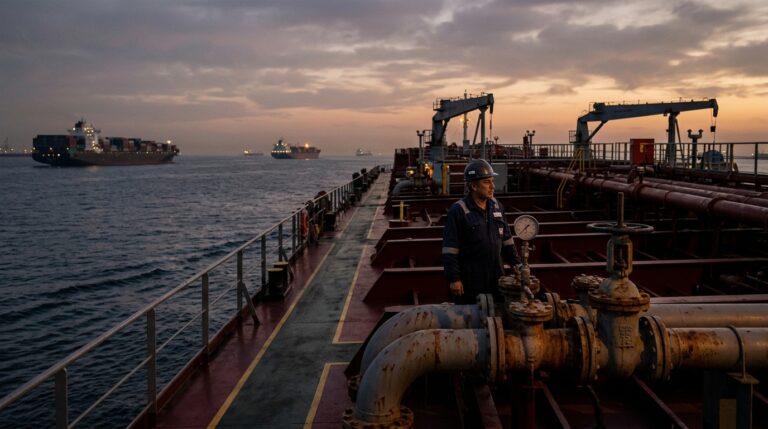
A Trump-Pezeshkian meeting is not guaranteed. The central question of whether Trump and Pezeshkian actually meet remains unresolved. Trump has described himself as probably open to an encounter. Iranian officials, however, have indicated that a direct meeting would require written American guarantees on sanctions as a precondition. That gap between a public signal of willingness and a scheduled meeting is exactly where ceasefires die. Still, U.S. Central Command chief Admiral Brad Cooper said oil and LNG flows through Hormuz have reached a six-month high, with the main transit lanes clear of mines, a data point the bear camp will cite as evidence that the disruption story is already softening at the margins. Commonwealth Bank of Australia expects Brent crude to trade between $70 and $100 a barrel in the second half of 2026, and has argued that restoring roughly 40% to 45% of pre-war flows through Hormuz could be enough to keep global oil and refined product availability broadly unchanged.
Where the Evidence Leads
The bull case rests on enforcement, not announcement. Bessent’s dollar-system threat is credible because it has worked before: earlier U.S. pressure on foreign financial intermediaries has produced real compliance. The question for VLO, MPC, and XLE holders is whether the September 23 deadline produces the same behavioral response globally, or whether Iran’s aviation sector finds workarounds through non-dollar corridors Beijing or Moscow quietly keep open.
The bear case requires a diplomatic breakthrough that neither side has technically agreed to pursue. The International Energy Agency has said normalization of trade flows is more likely in 2027 than in 2026, and it has warned that operational and political constraints can keep recovery fragile even after partial reopening.
On balance, the evidence favors a floor around $100 holding near-term. Bessent’s mechanism is specific, the secondary-sanctions architecture is already partially operational, and the diplomatic channel remains too uncertain to trade against with conviction. What to watch: whether any major airport or fuel supplier openly services an Iranian carrier after Wednesday, and whether Trump and Pezeshkian share more than a corridor glance at the UN. Either development moves Brent by several dollars, fast.