August 26, 2026
Bonus Content: Negotiation or New Normal? Canada Tariff Tiers
Three Nobel Prize Winners expose this once-in-a-generation wealth shift:
AMERICA’S NEXT 1776 MOMENT
IS COMING ON OUR 250th ANNIVERSARY
It could trigger the greatest transfer of wealth in history

Negotiation or New Normal? Canada Tariff Tiers
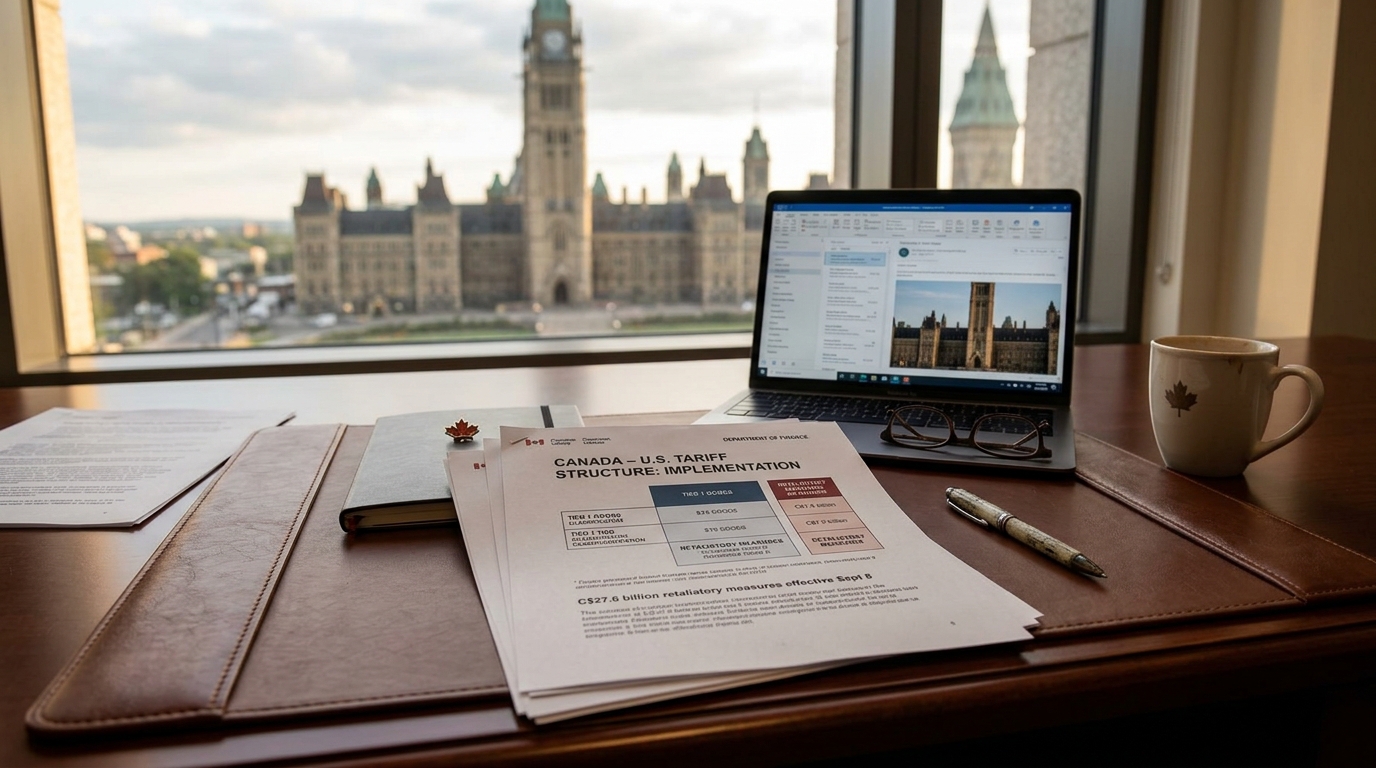
The optimistic read on this week’s Canada-U.S. tariff exchange is that both sides are simply running up the score before someone blinks. Ryan Majerus, a partner at King & Spalding and former U.S. trade official, said that while “both sides will be under immense pressure in the coming days to still find an off-ramp,” the Sept. 8 effective date gives negotiators just under two weeks to pull back from the ledge. That window is the bull case for a deal.
The bear case is in the tier list itself.
The Bull Case: Leverage, Not Lockout
Every round of this dispute has eventually produced a pause, a carve-out, or a corridor back to the table. Negotiators for both sides had been working on a deal all week before the Friday collapse, at times signaling that an agreement was near, and Trump had postponed the original Wednesday deadline just hours before it hit, citing a soon-to-be-finalized deal. That pattern, deadline extended, talks resumed, suggests both governments understand the cost of a permanent rupture.
The latest American tariffs cover about 5% of the value of the goods Canada exported to the U.S. last year, while Canada’s retaliation covers roughly $20 billion of American imports, according to reporting that cited U.S. and Canadian trade data. At those proportions, this is still a targeted squeeze rather than a broad severance. Canada’s C$7.5 billion support package for workers and businesses, including new and enhanced liquidity measures aimed at small and medium-sized businesses and worker support, is designed precisely to extend Ottawa’s endurance during that squeeze, buying time to negotiate rather than capitulate.
For U.S. steel producers, the negotiation reading has already moved prices. NUE and STLD fell sharply last week on expectations that Washington and Ottawa were close to a deal that could have reduced tariffs on Canadian steel and aluminum to 25%. The reversal of that prospect, followed by Monday’s rally, reflects how quickly this dynamic can shift on a headline.
The Bear Case: The Tier List Is Structural
Look at what Ottawa actually chose to hit at 50%: steel, aluminum, furniture, clothing. These are not symbolic selections. Canada is doubling its duties on some U.S. steel and aluminum products to 50%, matching the 50% tariffs the U.S. had already imposed on Canadian steel and aluminum. That is not a bargaining chip; it is a mirror. The symmetry signals that Canada is prepared to hold this configuration for a sustained period, not merely a few weeks of discomfort before conceding.
Carney said U.S. trade demands showed Washington wanted to “destroy our major industries,” including autos, steel and aluminum. That language describes an incompatibility of objectives, not a gap in price. Gaps in price get closed at the margin. Incompatible objectives get resolved by one side changing its goals, and there is no evidence Washington has done that.
The supply chain exposure is deep. The U.S. and Canada see roughly $780 billion in annual bilateral trade, with deeply integrated supply chains making certain sectors acutely vulnerable. When tariffs hit intra-company flows, companies don’t wait for politicians. They restructure sourcing, qualify alternative suppliers, and lock in new contracts. Those decisions compound over months.
Whirlpool is a useful proxy. On its Q2 2026 earnings call, Whirlpool said net tariff impacts were a 200 basis point headwind in Q2, driven by Section 232 tariffs, with similar levels expected in the second half of 2026. Canada’s counter-tariffs include a 25% tier that covers appliances. Management has also pointed to serious challenges from tariffs, intense North American promotions, and soft housing-driven discretionary demand. More friction in either direction is cost the company cannot absorb without further pricing action or margin compression.
Where the Evidence Leads
The bull case rests on political incentives: both sides have reasons to de-escalate before the Sept. 8 date. The bear case rests on structural behavior: Canada chose a tiered list that mirrors U.S. rates category for category, paired it with a business support package designed for durability, and, as Majerus noted, having agreed to impose tariffs makes the off-ramp harder to find.
Canada’s retaliation followed the Trump administration’s decision to impose 50% tariffs on about $20 billion of Canadian goods that took effect on August 22, 2026, after talks broke down. Each escalation since February 2025 has been followed by a partial reset, but the floor of tariff coverage has kept rising. That is the definition of structural reset, not a prolonged negotiation bluff.
What Could Change the Debate
A deal announced before Sept. 8 would instantly reverse the calculus for NUE, STLD, and WHR, all of which are pricing in sustained tariff regimes. Trump has also threatened new 50% tariffs on Canadian vehicles, auto parts and steel, and any progress or escalation on that front will be the most important signal to watch. If the vehicle tariff threat is withdrawn as part of a broader package, the negotiation thesis regains credibility. If it is confirmed for January 2027, the structural reset thesis becomes harder to argue against.
Verdict
The tier structure Ottawa chose this week is more consistent with a government preparing to absorb a prolonged dispute than one leaving an obvious door open for compromise. The Sept. 8 window is real, but the evidence on the ground, mirrored tariff rates, a multi-billion-dollar domestic support package, and public language about incompatible goals, tilts toward structural reset. Moderate confidence: a deal remains possible, but investors pricing for a clean September resolution should assign meaningful probability to a much longer standoff.