
Hey there, bargain hunter.
Q2 earnings season kicks off in six days. And the opening act is five of the six largest U.S. banks all reporting before the market opens on July 14. JPMorgan, Bank of America, Citigroup, Wells Fargo, and Goldman Sachs. Morgan Stanley follows on July 15.
That is a lot of information hitting at once. Here is what actually matters.
Why banks move the whole market right now
Banks are cyclical by nature. When they sound confident on loan demand and credit quality, it usually signals something reassuring about the broader economy. When they don’t, the market hears it across every sector.
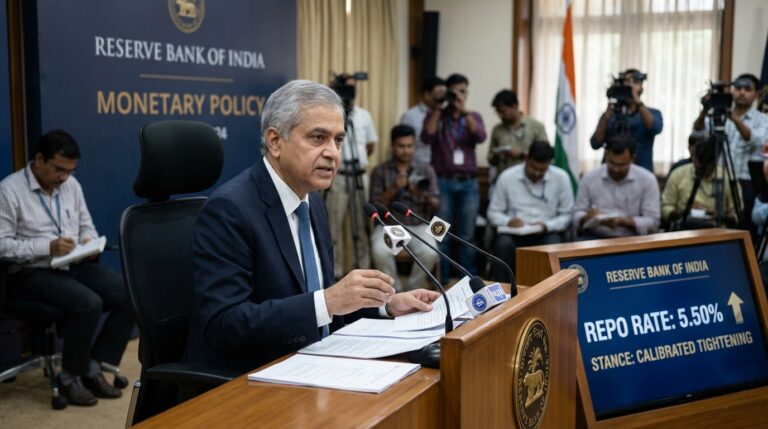
Right now the backdrop is genuinely interesting. The Dow just hit a record above 52,900. Inflation is running at 4.2% year over year. The Fed meets July 28 to 29. And the jobs market has been softening, with June private payrolls coming in at 49,000 versus expectations of 110,000. Fed Chair Kevin Warsh has said inflation risks have eased substantially, but that does not mean a rate cut is imminent.
Banks operate right in the middle of all of that tension.
The numbers to watch
Total Q2 earnings for the S&P 500 are expected to rise 23.3% on 12.2% higher revenues. For banks specifically, the Investment Banks and Managers group is expected to deliver EPS growth of 10.4% on 10.7% higher revenues.
JPMorgan is expected to earn $5.44 per share, up roughly 10% from a year ago. The company has beaten Wall Street’s estimates in each of the last four quarters. Q1 was impressive: net income of $16.5 billion, EPS of $5.94, managed revenue up 10% to $50.5 billion, investment banking fees up 28%, markets revenue up 20%.
Goldman Sachs reported $17.55 EPS in Q1 2026, up from $14.12 a year earlier, with revenues of $17.23 billion. More striking: Goldman has managed to advise on more than $1 trillion of announced mergers and acquisitions in the first half of 2026 alone, reportedly a record pace for any investment bank within a half-year period.
Bank of America is expected to earn $1.12 per share on $30.7 billion in revenue for Q2, reflecting about 25% year-over-year growth. BAC shares have been trading near $60 heading into the report.
What is actually driving the beat potential
Two things: trading and deal flow.
Global investment banking revenue hit $61.4 billion in the first half of 2026, a 24% jump from a year earlier. Trading desks look to have had a solid quarter, with mid-quarter updates pointing to market revenue growth of 10% to 15%. The SpaceX IPO, which priced in June and became the largest IPO in history, added meaningful fee and trading revenue that will show up in Q2 results. Equities is expected to be the primary growth engine across global capital markets this cycle.
Bank of America Securities recently raised EPS forecasts and price targets for JPMorgan, Citigroup, Wells Fargo, and Goldman Sachs, pointing to capital markets strength and fresh wealth management inflows as the drivers.
The questions the market will actually ask
- Net interest income guidance – JPMorgan cut its full-year net interest income guidance to about $103 billion in Q1, but that number will get scrutinized again with rates holding higher
- Credit quality – card charge-off rates, commercial real estate exposure, any signs of consumer stress in a softening jobs market
- Wealth and asset management flows – this is where the operating leverage lives
- Guidance tone on deal pipelines – M&A and IPO activity was strong, but is the second half pipeline intact?
- Capital return plans – after the Fed stress tests cleared, what does the dividend and buyback picture look like going into H2?
The risk here is not that the numbers miss. It’s what management says about the second half. The Iran conflict, sticky inflation, and a Fed that is not yet cutting are all clouds hanging over the consumer and corporate borrower alike. Banks beat on the rear-view mirror. The stock price moves on what they say about the windshield.
What’s interesting is that the financials sector has been one of the bright spots in a market where tech is pulling back. XLF gained 2.2% on the same day tech sold off hard in early July. Rotation into banks is happening right now. The question is whether earnings can sustain it, or whether one cautious comment from Jamie Dimon puts the whole thesis on pause.
That answer arrives in six days.