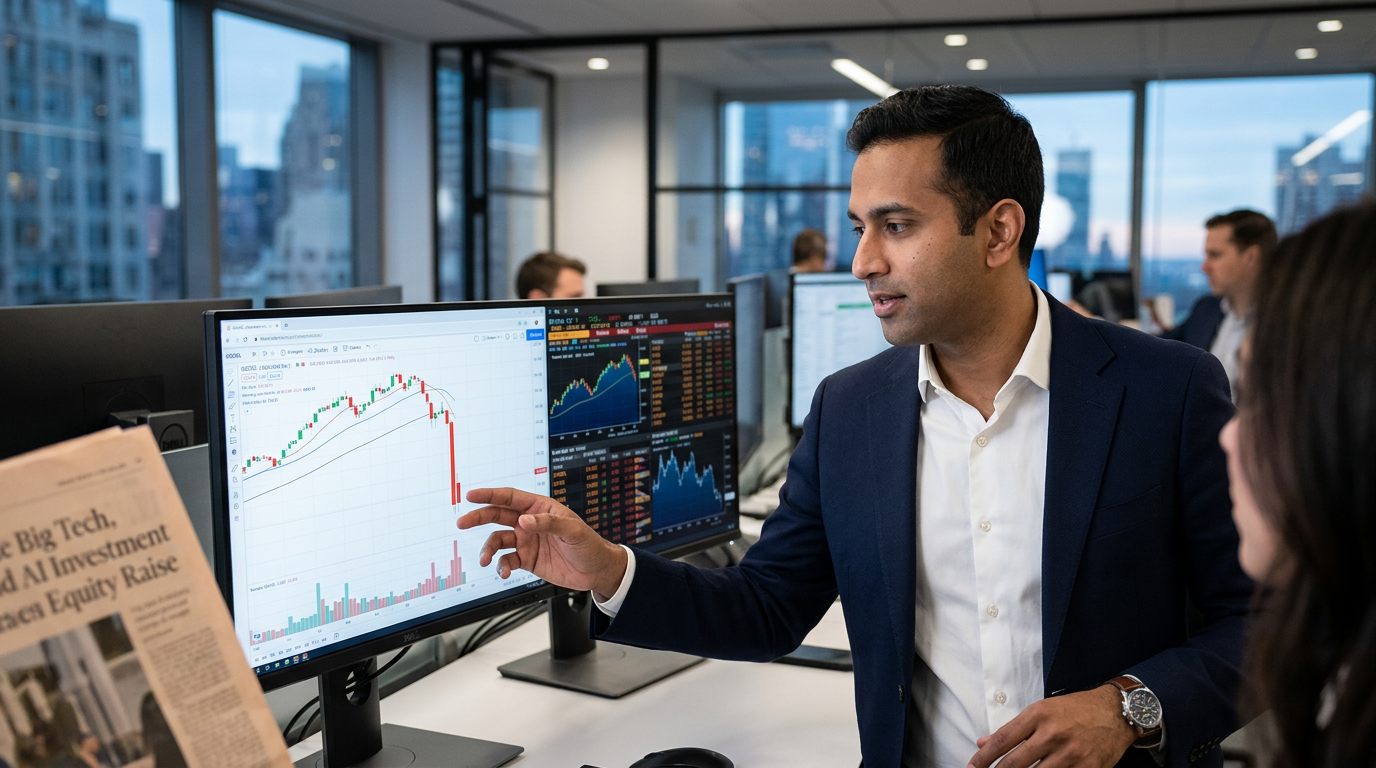
Alphabet dropped nearly 4% in a single session last week. The headline was straightforward enough — an $80 billion equity raise to fund AI infrastructure. The reaction was a gut check for a stock that had been quietly running to all-time highs.
Here’s the thing: the quarter that preceded this announcement was genuinely exceptional.
The Numbers
Q1 2026 Results vs. Expectations:
- Revenue: $109.9B vs. $107.2B expected — up 22% YoY, the fastest growth pace since 2022
- EPS (adjusted): $2.62 vs. $2.63 estimated — essentially in line
- Google Cloud: $20.03B vs. $18.05B estimated — up 63% YoY
- Cloud Backlog: $460B, nearly doubling quarter-on-quarter
- Operating Margin: 36.1%, up 2 percentage points YoY
- Search Revenue: $60.4B, up 19% — AI Overviews monetizing at traditional Search rates
Net income reached $62.6B, though that included a $36.9B gain on equity securities. Strip that out and the core business is still firing on every cylinder.
Why the Stock Moved
The equity raise is the real story. Alphabet announced plans to issue roughly $80 billion in new shares — including a $10 billion private placement with Berkshire Hathaway, a $30 billion public offering, and a $40 billion at-the-market program. The move reverses years of buybacks that had steadily reduced Alphabet’s share count by approximately 13% from its 2019 peak.
That buyback program was a quiet engine of EPS growth. Investors priced it in. Removing it — and replacing it with dilution — is a real sentiment shift, not just optics.
Capex guidance for 2026 sits at $180–$190 billion. CFO Anat Ashkenazi told analysts that 2027 capex will significantly increase from there. Free cash flow compression is no longer a tail risk — it’s the base case for the next 18 months.
What Actually Matters
The bear case on Alphabet for the past two years centered on one fear: AI chatbots eroding Google Search. Q1 pushed back hard against that narrative. Search queries are at all-time highs. AI Overviews now reaches over 1.5 billion users monthly, and search revenue grew 19% YoY — acceleration, not deceleration.
Slight tangent, but it matters — Waymo just crossed 500,000 fully autonomous rides per week, doubling in less than a year. That’s not reflected in anyone’s current model.
The antitrust overhang is real but slow-moving. The DOJ appeal filed May 25 mandates search data sharing and restricts exclusive deals, but legal timelines here stretch years, not months. The impact to Alphabet’s core business, if any, is well down the road.
Bull / Base / Bear
- Bull: Cloud sustains 55%+ growth, backlog conversion accelerates, TPU hardware sales layer in new revenue in 2027. The capex bet compounds into a moat. TIKR mid-case implies ~$609 per share by 2030.
- Base: Cloud growth moderates to 40–50% range, margin expansion continues but at a slower pace, free cash flow recovers in 2027–2028 as capex stabilizes. Stock grinds higher from current levels.
- Bear: Compute commoditizes faster than contracts pay back, DOJ remedy proves disruptive, dilution continues to weigh on sentiment. The $80B raise was the first of several, not the last.
Technical Overlay
GOOGL closed at $361.85 before the equity raise announcement, with the stock down roughly 3.86% on the session. It was trading near the top of its 52-week range prior to the move. The gap created is significant support to watch — a close back above $370 would signal the dilution concern has been digested. Analyst consensus price target has moved to $493.30 from $443, reflecting continued confidence in the AI build-out thesis despite near-term noise.
Bottom Line
The Q1 print was the strongest in years. The business is not broken. But Alphabet just told the market that it’s shifting from returning cash to spending cash — at a scale that won’t resolve quickly. The debate now isn’t whether AI is working. It’s whether the bill for AI is bigger than the payoff. That answer arrives one quarterly Cloud margin report at a time.
For informational purposes only.