October 2, 2026
Three Carriers Near Iran. Brent Is at $97. Someone Is Wrong.
Hormuz volumes are back. Tankers are still getting hit. The market is betting on pipelines, not peace.
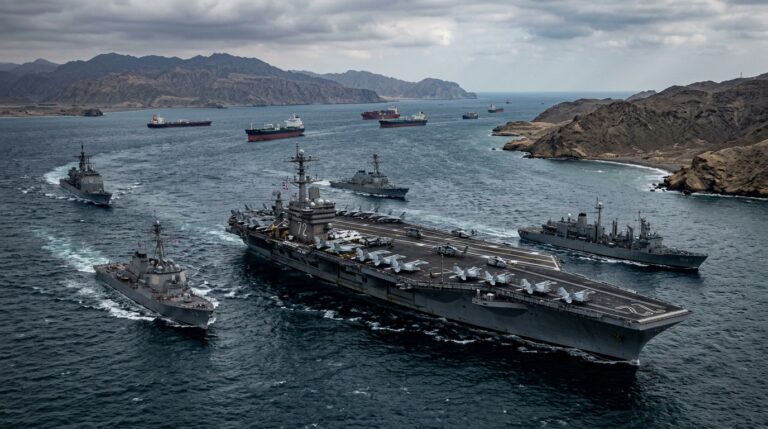
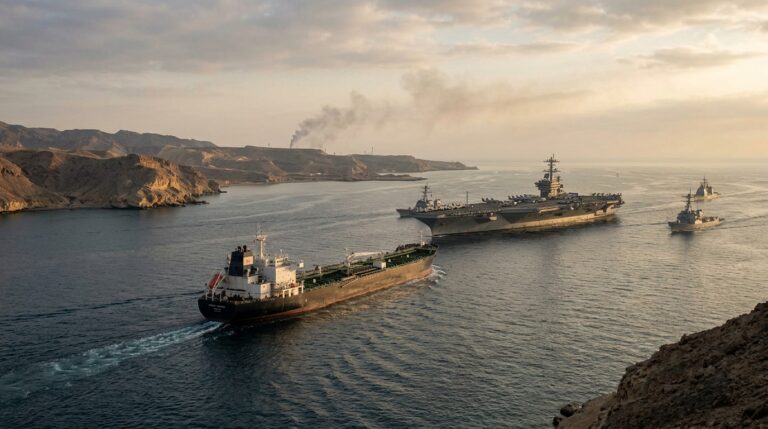
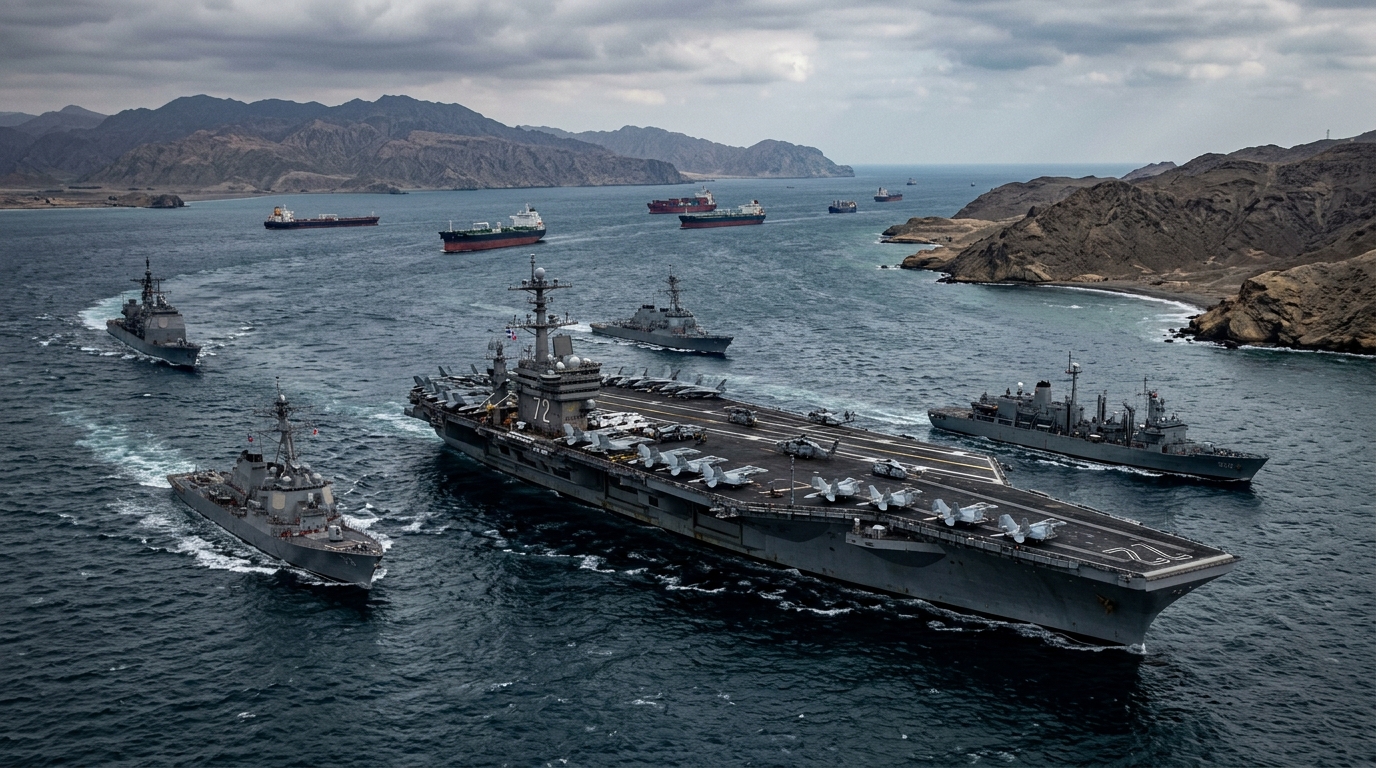
The US Navy may soon have three aircraft carrier strike groups in the region surrounding Iran. Reports say the Pentagon is deploying an additional aircraft carrier and thousands of sailors and Marines to the Persian Gulf, giving American commanders more options if President Trump chooses to escalate attacks on Iran. The USS Theodore Roosevelt departed San Diego on Sept. 27 for a scheduled deployment expected to last more than seven months. Meanwhile, ships inside the Strait are still getting hit. Three Liberian-flagged oil tankers were struck by unknown projectiles when transiting the Strait of Hormuz on Tuesday, shipping intelligence service Marisks said. UKMTO issued Attack Warning 147-26 after a further tanker was struck at about 1750 UTC on Oct. 1, resulting in a fire onboard.
A New Gold Rush at Mount Rushmore?
A small miner just uncovered a potentially massive gold discovery near Mount Rushmore – thanks to a breakthrough new technology.
The stock still trades for around $6… while BlackRock and Vanguard have already been buying shares.
Whitney Tilson traveled to Mount Rushmore to investigate firsthand.
And yet Brent crude sat near $97 on Thursday, down slightly on the day but roughly 51% above where it traded the morning before this war began. That number contains a puzzle. The standard playbook says three carriers plus burning tankers equals $110. The market is saying something different.
The Bull Case: Volume Is What Moves Price, and Volume Is Back
The strongest argument for current prices being fair, or even stretched to the downside, starts with the supply data. The 10-day average of crude exports from the Middle East has rebounded to 17.5 million barrels a day, or 98% of pre-war levels, according to JPMorgan analysts led by Natasha Kaneva. Crude transiting Hormuz reached a seven-day average of 13.5 million barrels per day as of Monday, matching the prewar baseline for shipments through the strait, according to Kpler data.
The Gulf has rewired its export infrastructure. Saudi Arabia and other major Gulf producers rerouted crude through pipelines and alternative ports that bypassed the strait. Saudi Arabia restored flows through its East-West pipeline to at least 3.5 million barrels a day, about half its capacity. Tankers running dark, with AIS transponders off, continue to exit the Gulf through Hormuz, helping ease concerns that a deal to reopen the waterway remains elusive.
Wall Street Legend: “I’ve discovered a fatal flaw built into Elon’s AI model”
60-year Wall Street legend Marc Chaikin has discovered a fatal flaw built into Elon’s AI model and every AI frontier model on earth… and says the race to fix it could send one obscure stock soaring. Right now, behind a high-security fence in rural Tennessee, the U.S. government is quickly working to solve it by building a new form of AI – what Marc calls “Sovereign AI.” He believes it could trigger a $248 trillion boom, 56x bigger than today’s AI market.
For tanker operators, this environment has been extraordinary. Frontline, one of the world’s largest publicly traded crude tanker operators, reported its strongest adjusted quarterly earnings in more than 20 years, posting first-quarter 2026 profit of $559.1 million on revenues of $714.2 million. International Seaways and other Aframax operators are riding the same wave. The bull on crude says: exports are flowing, and at $97 per barrel Brent already prices a substantial geopolitical premium over the $72 level at the start of the war.
The Bear Case: Three Carriers Signal Escalation Risk the Market Is Ignoring
The counter-argument is that the market is pricing steady-state Hormuz risk and almost completely dismissing a step-change scenario. Three carriers near Iran is not a rotation. It is a deployment that gives American commanders materially more options to escalate attacks on Iran. The delayed reporting of tanker strikes highlights the growing gap between attacks occurring in Hormuz and when they become part of the public record, with UKMTO warnings relying heavily on voluntary disclosure, meaning publicly available reports should not be treated as a complete accounting of events in the waterway.
The product side tells a harder story than crude. Refined petroleum product shipments stand at about 3 million barrels per day, equivalent to only 58% of pre-war volumes, according to JPMorgan. Diesel and gasoline are not flowing freely. Any attack on Saudi pipeline infrastructure, a scenario that has already materialized once, could erase weeks of recovery instantly. Iranian state media claims the tankers struck this week appeared on a non-compliance list, suggesting attacks are not random. If that policy logic holds, ADNOC Logistics vessels, two of which were among the ships hit according to Marisks, face ongoing targeting risk that higher crude volumes alone cannot resolve.
For defense investors, escalation is a revenue catalyst. RTX enters its Oct. 20 quarterly report with a strong defense backlog and a fresh $20.7 billion AMRAAM contract. In Q2, Lockheed Martin grew revenue 11% year over year to about $20.1 billion while RTX posted 14% revenue growth to about $24.7 billion. The combined order backlog of both companies now exceeds $500 billion. Defense earnings have been a cleaner conflict trade than crude itself.
Nuclear Energy’s Comeback Could Spark Before 2026
Global energy demand is surging and one overlooked power source is quietly returning to the spotlight. New policy support and supply constraints are setting the stage for a surprising shift in the energy markets.
Where the Evidence Leads
The oil market’s logic is not naive. Volumes are genuinely back near prewar levels, the Saudi East-West bypass works, and Brent already carries a fat geopolitical premium. Saul Kavonic, senior energy analyst at MST Marquee, has said prices have eased as Hormuz flows recovered, but volatility and renewed flare-up risk could keep prices elevated.
The bear case deserves weight for one specific reason: three carriers do not deploy to sustain a status quo. Operation Epic Fury began on Feb. 28, 2026. Since then, the US has kept major naval and air assets in the broader theater, including carrier-based strike capability. Adding a third strike group suggests Washington is either preparing for a larger operation or signaling that the diplomatic track is failing. Either outcome disrupts the supply recovery the market is currently pricing.
The balance tilts toward the bulls for crude right now, but narrowly. Volume flows are real and verified. The bull case breaks, though, if attacks escalate from tanker harassment to pipeline infrastructure or if the ceasefire negotiations collapse entirely. Watch Saudi East-West pipeline throughput and UKMTO warning frequency. If warnings accelerate past this week’s rate, the $97 floor will not hold.