August 28, 2026
SpaceX’s $100 billion Louisiana spaceport makes the bull case tempting and the bear case hard to dismiss.
When a company that went public at $135 a share ten weeks ago announces it will spend $100 billion building what Louisiana officials describe as a massive new launch site, the investment question writes itself: Is this the infrastructure foundation of the next technology S-curve, or is it a newly public company pledging a hyperscaler’s annual capital budget out of launch revenue it has not yet proven at scale?
The Bull Case
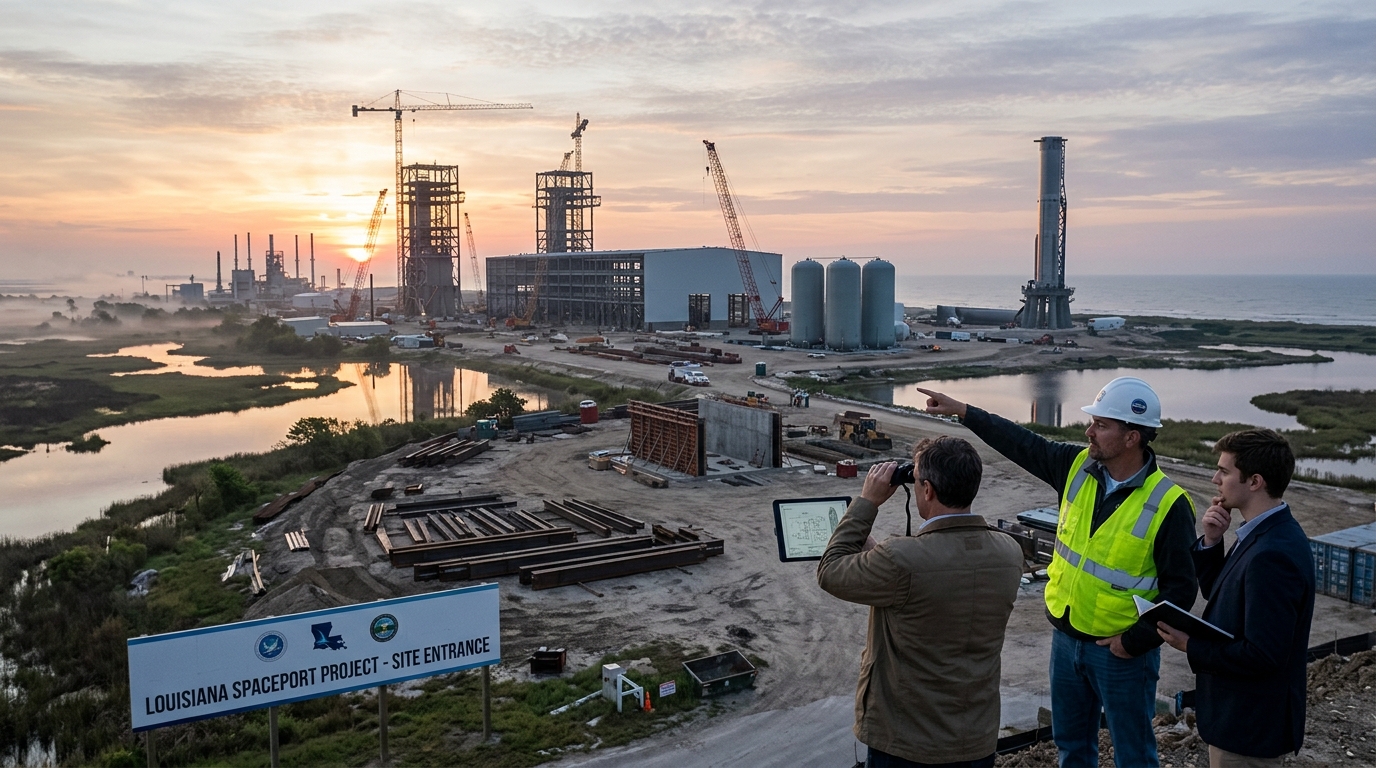
SpaceX announced plans to invest $100 billion in a Starship launch facility in Vermilion Parish, Louisiana, designed to support thousands of launches annually. Starbase Louisiana will feature ten launchpads, fuel production facilities, a power plant, a deep-water shipping port, employee housing, and an airport, making the base self-sustaining and not reliant on outside facilities for critical services. The strategic logic is vertical: own the fuel, own the pad, own the launch, own the orbit.
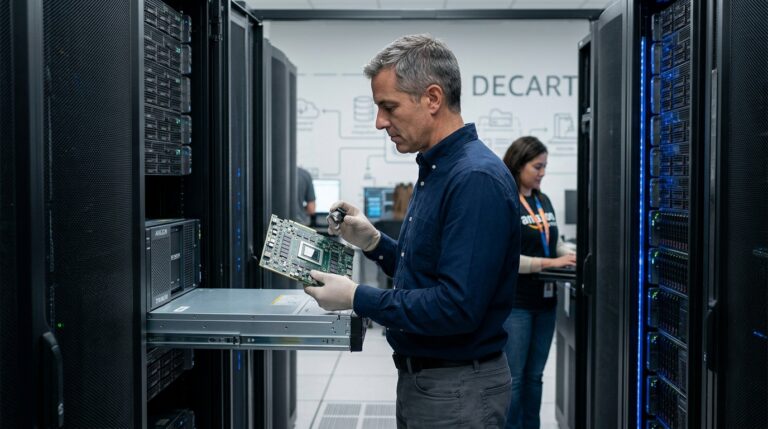
The spaceport exists, above all, to feed Starmind. Recent reporting says SpaceX and Nvidia have designed a space-optimized version of Nvidia’s Vera Rubin NVL72 AI system, with an initial orbital launch target in the fourth quarter of 2027. In its IPO materials, SpaceX described orbital AI compute as an initiative it expected to begin deploying as early as 2028; ahead of the IPO, Reuters reported that executives were aiming for initial demonstrations by late 2027. A company that compresses its own timelines is signaling confidence in engineering progress, not just marketing cadence.
The addressable market is genuinely new. Instead of transmitting every photograph, sensor reading, or scientific measurement back to Earth for processing, a satellite could analyze the information itself and send down only what matters. In a more ambitious future, constellations of satellites could host parts of the enormous computing infrastructure required to run artificial intelligence. Meta, for example, has publicly discussed and pursued energy and infrastructure partnerships tied to its AI buildout, including projects that reach into space-linked energy concepts, which suggests SpaceX would not be building a market alone.
The Tech IPO Set to Be 41X Bigger Than the Google, Microsoft, and Amazon IPOs Combined
Nvidia, Google, Amazon are all loading up on shares.
Here’s a secret backdoor in for regular investors. [Free Ticker]
SpaceX reported better-than-expected revenue in its first earnings report since its Nasdaq debut in June, generating $7.81 billion in revenue during the second quarter, up from the roughly $6.93 billion expected by analysts. The average 12-month price target for SPCX among analysts is $216.33. Around $137, the stock is only modestly above its IPO price and well below even the consensus view of fair value.
The Bear Case
The $100 billion figure deserves hard scrutiny. Construction is expected to begin in 2027, with the first launch targeted for as early as 2029. That means shareholders are pricing a multi-year capital program on the basis of an announcement and a rendering. The commitment dwarfs any single quarter of revenue SpaceX has reported, and it arrives before the company has demonstrated Starship’s commercial viability at even a fraction of the promised cadence.
The regulatory path alone could stretch timelines painfully. The project will go through applicable environmental and launch-related reviews; and while SpaceX has navigated years of FAA environmental work in Texas, the key milestones there include a 2014 Final Environmental Impact Statement for the Texas launch site and a 2022 environmental assessment and decision for the Starship/Super Heavy program. Wildlife and conservation groups have warned that a launch facility of this scale could involve extensive marsh filling, dredging, road and pad construction, water withdrawals and discharges, and high-intensity noise and light. SpaceX has also faced community backlash, lawsuits and regulatory fines tied to environmental and permitting issues around Boca Chica.
The Ticker That Gets You In – Before the IPO.
Backed by Peter Thiel. Funded by the Pentagon.
And available to you right now – starting with just $50.
The orbital compute thesis itself carries unresolved physics problems. Recent academic work and industry analysis generally frame space-based data centers as constrained by launch cost, thermal management, communications and replacement cadence, and as unlikely to match terrestrial economics for general compute in the near term. SpaceX’s own investor materials characterize orbital AI compute as an early-stage initiative that has not been proven at commercial scale. And the stock’s post-IPO history warns against assuming smooth execution: the shares have been volatile since the June listing, including a stretch where they fell into the low $100s.
Where the Evidence Leads
The bull case rests on a coherent industrial logic: high launch cadence enables cheap access to orbit, cheap access enables Starmind deployment at scale, and orbital compute disrupts terrestrial data center economics just as Starlink disrupted satellite internet. That chain is internally consistent. The bear case rests on something equally coherent: the distance between an announcement and a permit, between a factory rendering and a functioning constellation, between a Q4 2027 target and a Q4 2027 launch.
The evidence that currently carries more weight sits with the bulls on fundamentals and market positioning, and with the bears on capital discipline and execution risk. Around $137, SPCX is priced for a company that is real and profitable in revenue terms today, but also for one that will clear every regulatory and engineering hurdle on schedule. History suggests at least one of those hurdles will slow things down.
The 5-Part Formula That Makes Every Trade a SAFE TRADE
Most people who try options lose money the same way.
They don’t know the rules. They don’t know what to avoid. And they hand their account to Wall Street on a silver platter.
This free guide pulls back the curtain.
You’ll discover a simple 5-part formula that makes every trade a SAFE TRADE.
Normally $29.97. Free today.
What Could Change the Debate
Watch three things: FAA environmental review timelines for the Louisiana site, the Q4 2027 Starmind AI1 launch attempt, and whether Starship achieves sustained orbital reusability before the end of this year. Space reporting in August said SpaceX was tentatively targeting a Starship orbital attempt for early to mid-September 2026. A successful September orbital test flight would substantially reduce Starmind’s technical risk and shift the weight of evidence toward the bull case in a single afternoon.
Verdict: The orbital compute opportunity is real enough to justify a position, but the Louisiana commitment is a multi-year infrastructure pledge from a company with about ten weeks of public market history. Size accordingly. The investors who will benefit most from Starbase, Louisiana are probably not the ones who buy the announcement.