August 27, 2026
A record $35 billion defense budget may deter, but a 97% energy import dependency remains the hardest risk to hedge.
On August 20, Taiwan’s cabinet approved a defense budget that crossed a threshold no previous government had reached. Taiwan has unveiled a record NT$1.12 trillion (about $35 billion) defense budget for 2027, with sharp increases in spending on weapons, ammunition and military operations amid growing pressure from Beijing. The proposed spending, the first to cross the NT$1 trillion threshold, is NT$173 billion, or about 18.2 percent, higher than this year’s allocation. It now goes to an opposition-controlled legislature that just spent 266 days past the legal deadline blocking the 2026 budget before finally passing it on August 14. The question for investors in TSM, NVDA, AAPL, AMD, QCOM, and INTC is not whether Taiwan is preparing. It clearly is. The question is whether preparation is enough to make the risk investable.
The Bull Case: Deterrence Is Working, and Fabs Are Moving
The defense buildup is more serious than any previous cycle. Earlier this month, the island ramped up the intensity of its annual Han Kuang drills, aimed at modeling a response to a possible Chinese military invasion, incorporating reservists and more civilians into the exercises with a focus on real-world scenarios. Critically, Taiwan’s military simulated the wartime relocation of weapons production lines during the Han Kuang exercises to ensure arms manufacturing facilities remain operational after coming under enemy attack. That is a qualitative shift. Taiwan is no longer just rehearsing combat; it is rehearsing industrial survival under fire.
On the commercial side, the diversification argument has real substance. TSMC is accelerating the multibillion-dollar expansion of its Arizona semiconductor manufacturing site. Its first fab entered high-volume production in late 2024, with the second and third targeted for volume production by the second half of 2027 and the end of the decade, respectively. Revenue momentum remains exceptional. CEO C.C. Wei told analysts TSMC’s conviction in the multi-year AI megatrend remains very high, and raised full-year 2026 revenue growth guidance to slightly above 40 percent in USD terms. Demand visibility remains strong, but claims that overall capacity is sold out through 2029 go beyond what the company has stated publicly with specificity.
The AI Boom’s Most Profitable “Tollbooth” Stock?
A little-known company is quietly building what may be the closest thing to a virtual monopoly the AI era has ever seen.
Whitney Tilson – the man CNBC calls “The Prophet” – calls it the world’s most profitable tollbooth. One billionaire put more than half his $9 billion fund into it.
Right now it’s trading at a rare discount…the same kind that’s previously turned $10,000 into $55,000…in just over 12 months.
The economic interdependence created by TSMC’s role cuts both ways: a disruption would harm China’s own tech sector, giving Beijing its own reason to hesitate. That mutual assured disruption is a genuine deterrent, even if an imperfect one.
The Bear Case: Energy Is the Unhedgeable Variable
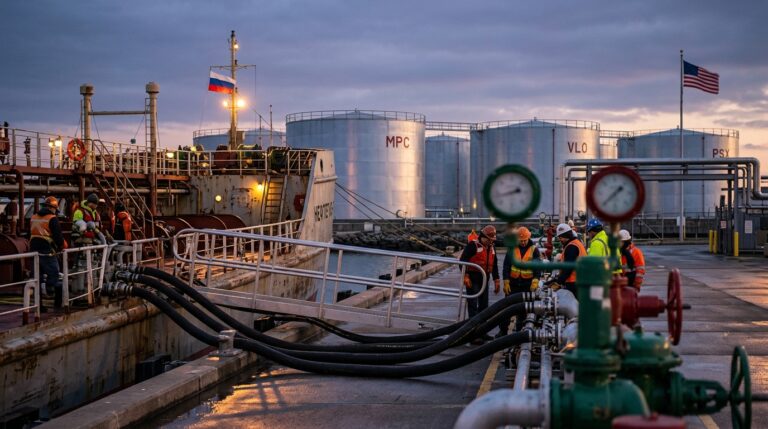
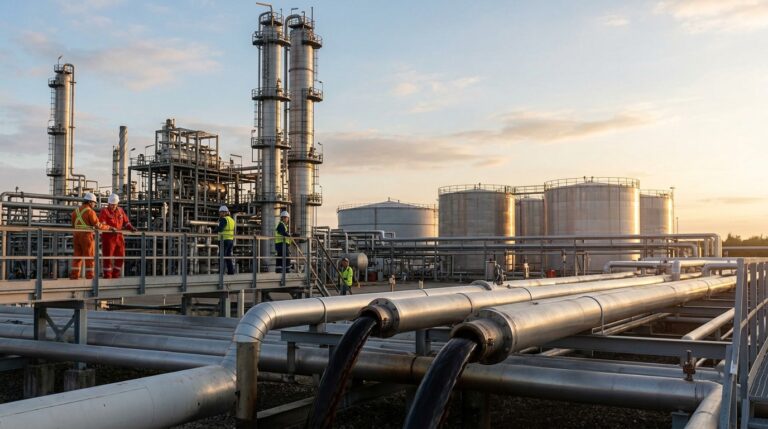
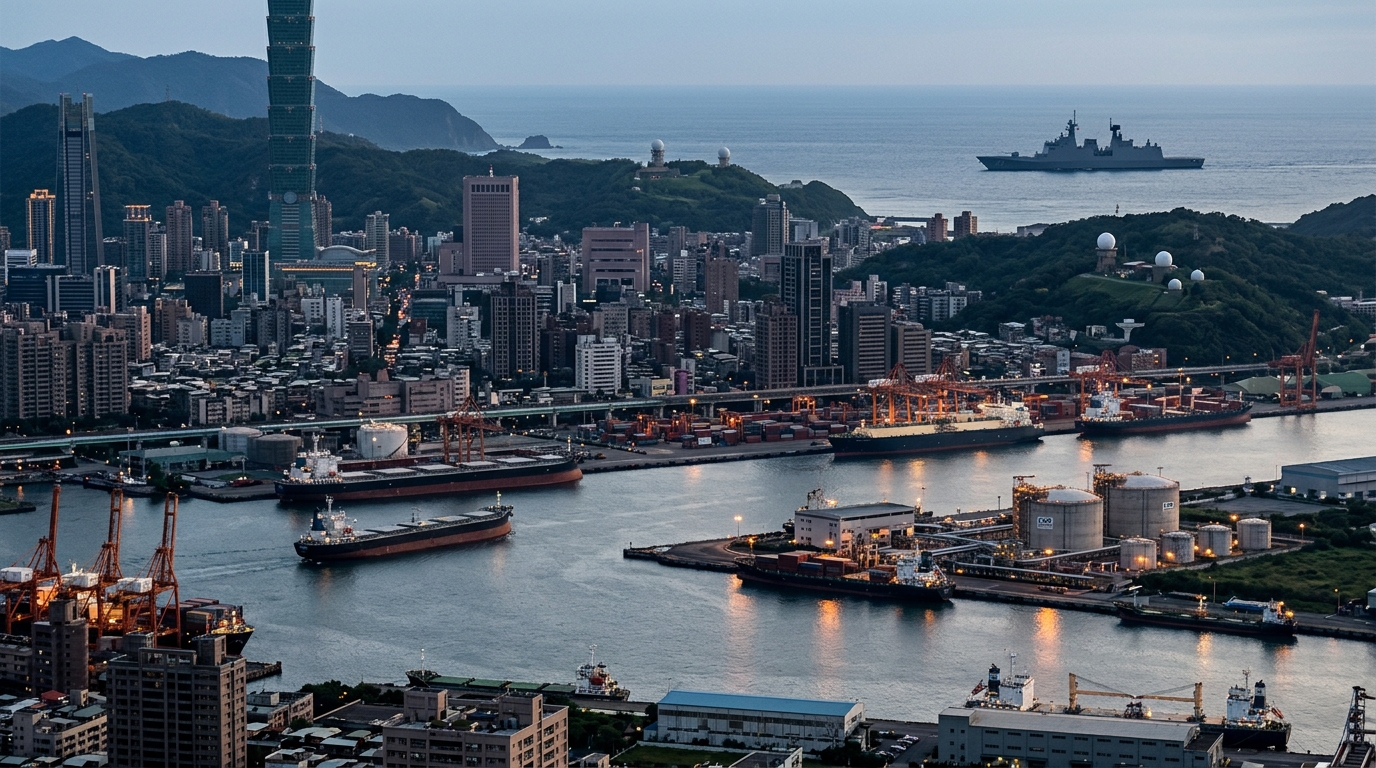
The deterrence story runs headlong into one structural fact that no defense budget resolves. Taiwan’s dependence on imported energy is among the highest in the world. According to Taiwan’s Ministry of Economic Affairs data, roughly 97 to 98 percent of the country’s energy requirement is imported, leaving the system exposed to disruptions in global supply chains. The fabs that power the entire semiconductor complex sit on an island that cannot keep its lights on for long without continuous maritime resupply.
Taiwan’s energy security weakness is its heavy dependence on imported liquefied natural gas, which supplies a large share of the island’s electricity generation. Estimates for LNG days of storage vary by methodology and point in time, so treating it as a fixed 10 days at normal usage rates is too precise to stand without a primary, current official figure. A blockade does not need to fire a single missile to force difficult choices about how to allocate electric power between military users, civilian homes, and high-end manufacturing.
The Most Guarded Building Outside of D.C.?
This is a $500 billion AI mega-project. The largest in history.
It will be surrounded by armed guards – barbed wire – 24/7 surveillance. You won’t get near it without special clearance.
But the real secret isn’t what’s going inside – it’s the $810 million river of money flowing underneath it.
Most of that will be siphoned off by Big Tech and Wall Street insiders.
BUT – there’s a backdoor way to collect your share before the first brick is laid.
Taiwan’s most valuable export, semiconductor chips, consumes nearly half of the industrial sector’s energy supply. In a blockade scenario, Taipei would be rationing electricity between its military and the very fabs the world depends on. There is no good answer to that allocation problem. While TSMC retains its most advanced processes in Taiwan, the Arizona site is expected to host advanced nodes, including N3 targeted for the second half of 2027 and N2 and A16 targeted by the end of the decade. As these overseas fabs gradually come online, the structural dependence of the United States and Japan on Taiwanese advanced chips will decline, meaning the protective power of the silicon shield is being diluted.
The legislative risk compounds everything. The dispute between the executive and legislature has formed part of a wider confrontation that has paralysed parts of Taiwan’s political system since the DPP retained the presidency but lost its parliamentary majority in 2024. The 2027 spending plans must be approved by the opposition-controlled legislature, a process that is likely to be difficult.
Where the Evidence Leads
The bull case rests on real, verifiable progress: a funded military buildup, serious war-gaming, and an Arizona production ramp that meaningfully reduces but does not eliminate concentration risk. The bear case rests on a structural vulnerability that neither $35 billion in defense spending nor a larger overseas fab pipeline can neutralize. Claims of a specific beta number (such as 1.258) should not be treated as stable: beta varies by lookback window, calculation method, and market regime, and it moves over time. It is directionally true that Taiwan Strait geopolitical risk can compress the multiple quickly, and that TSMC’s valuation has often reflected a discount tied to geopolitical concentration risk.
Elon’s Next Big Project
This opportunity could be much bigger than anything else we’ve seen in the AI megatrend. Luke Lango believes Musk is preparing to unite the capabilities of Tesla (TSLA), SpaceX (SPCX), xAI, and X around a single sweeping vision. Part of that vision includes building enormous AI data centers in space… constructing a 100-million-square-foot semiconductor complex in Texas… and deploying armies of Optimus robots to automate much of the work. Musk’s companies cannot immediately produce all the necessary components for these projects themselves. They will need suppliers.
The energy problem is the decisive weight on the bear side. It is structural, not cyclical. No procurement line item fixes it. The deterrence spending is necessary and directionally correct, but it addresses the military dimension while leaving the economic chokehold intact. Investors pricing TSM, NVDA, or AAPL on fundamentals alone are carrying tail risk that their models almost certainly underweight. The record defense budget is a signal that Taipei takes the threat seriously. It is not, by itself, evidence that the threat is contained.
What to watch: Legislative Yuan treatment of the 2027 defense budget, TSMC Arizona N2 yield progress through Q4, and any PLA exercise activity that tests blockade logistics rather than invasion rehearsal. The last category is the one that matters most and gets priced last.