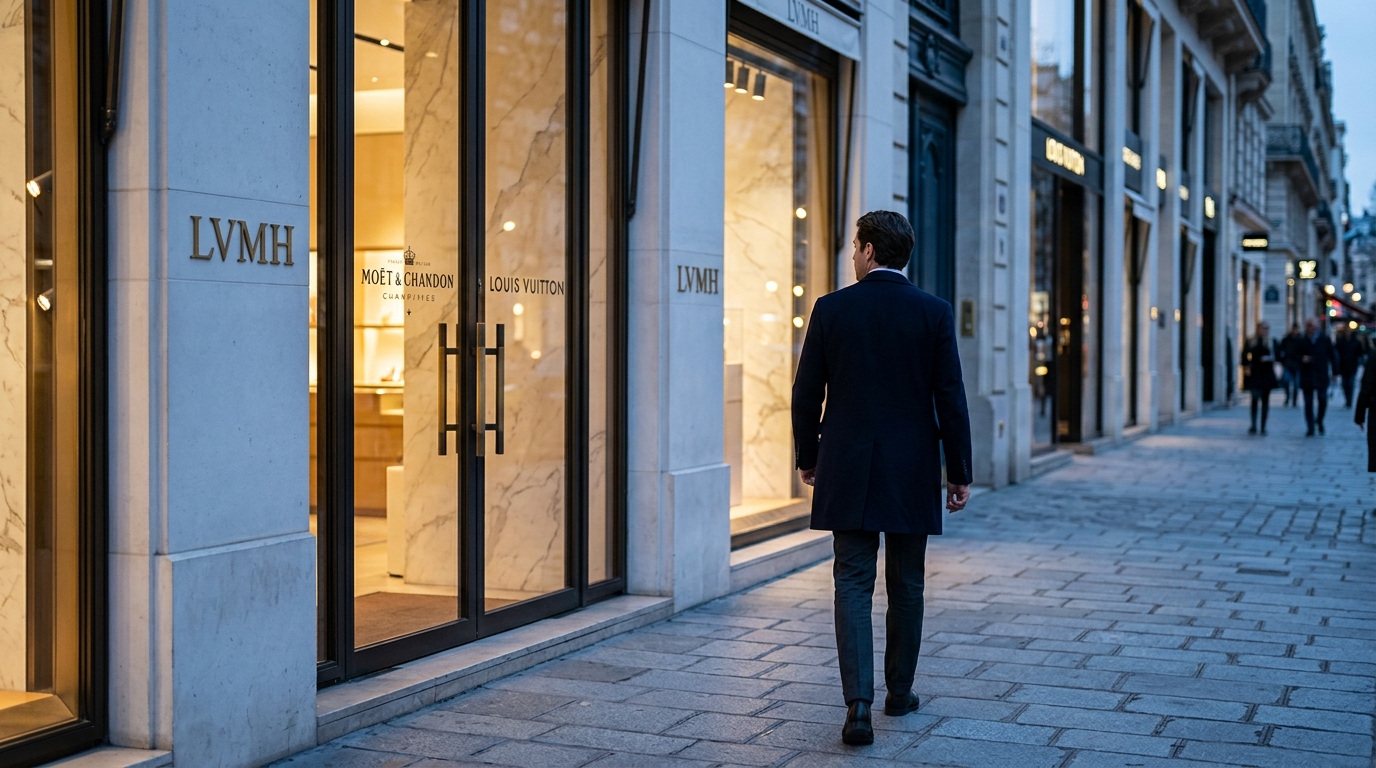
The numbers came out this morning. LVMH reported H1 2026 revenue of 38.6 billion euros, with organic growth of 2% for the half and 3% in Q2 alone. Net profit held flat at 5.7 billion euros, beating a consensus estimate of 5.22 billion euros. The operating margin stayed at 22.5%. By most measures, that is a solid result for a company navigating a Middle East conflict, a strong euro, and a luxury cycle that has been grinding lower for two years.
The stock moved about 1% higher. Still roughly 29% below its April 2023 all-time high. Still down about 25% year to date.
Here is the thing that matters more than the headline revenue figure.
Bernstein analysts recently put a number on what has happened to the luxury customer base since 2023: 70 million aspirational consumers have exited the market. Gone. Not pausing, not trading down, not waiting for a sale. Out. That cohort — the middle-class professional who bought a Louis Vuitton wallet or a Dior perfume as a status marker — has been priced out, squeezed by inflation, or simply lost interest in conspicuous consumption. Bain data tells a similar story: the global luxury customer pool shrank from roughly 400 million in 2022 to around 340 million by 2025, with further attrition likely before it stabilizes.
LVMH’s response to this structural shift is genuinely interesting and largely underreported.
The group is not trying to win back the aspirational buyer. It is moving in the opposite direction, deliberately. In May, LVMH agreed to sell Marc Jacobs to a partnership between WHP Global and G-III Apparel Group for a reported sum of around 850 million dollars. That deal took roughly two years to close, and notably, no other luxury conglomerate bid for the brand. Kering, Richemont, and every smaller player passed. The market for mid-tier luxury brands, in 2026, has effectively bifurcated into a small number of houses that can still command premium acquisition prices and a much larger group that cannot find buyers at all.
The Marc Jacobs sale was not an isolated move. Earlier divestments included streetwear label Off-White, a minority stake in Stella McCartney, and now DFS travel retail operations in Greater China, the Los Angeles and San Francisco airport concessions, and DFS Okinawa. The group is methodically shedding assets that do not fit the higher-end tier it wants to occupy.
Slight tangent, but it matters. Jonathan Anderson just launched his first designs for Christian Dior. That detail showed up in LVMH’s own commentary today as a specific driver of Fashion and Leather Goods returning to organic growth in Q2 for the first time in two years. Creative direction is not usually a financial catalyst, but at this price point, it is. When you are selling to ultra-high-net-worth clients who already own the iconic essentials, you need genuinely new and compelling product, or they do not open their wallets.
The segment breakdown from today tells you where LVMH is actually working. Watches and Jewelry grew 11% organically in Q2, led by Tiffany and Bulgari. Sephora posted 5% organic growth in the half. Wines and Spirits returned to 5% organic growth. Fashion and Leather Goods, still the company’s profit engine, posted H1 revenue of 18.1 billion euros, down 1% on an organic basis, though returning to organic growth in Q2.
The currency headwind is real and not getting better anytime soon. A strong euro cut reported revenue by roughly 3% for the half and is expected to weigh on results if it persists. That is not a business problem. It is a translation problem. The underlying demand, particularly from US consumers in Fashion and Leather Goods, is accelerating.
What the market is still debating is whether the stock’s valuation multiple is appropriately reset or still has further to compress. LVMH currently trades at roughly a mid-twenties price-to-earnings multiple on trailing earnings. That is meaningfully below the high-twenties and low-thirties multiples of the euphoric luxury cycle. But it is not cheap on an absolute basis, especially with full-year organic growth guided at a pace that management itself describes as gradual sequential improvement.
The bull case here is not a return to the glory days of 2021 to 2023, when LVMH could raise prices at will and aspirational demand filled the stores. The bull case is that LVMH is in the middle of a deliberate transformation, cutting the brands that do not earn their keep, doubling down on Tiffany, Dior, Bulgari, and Sephora, investing heavily in flagship stores and manufacturing, and betting that concentrating on a smaller, wealthier client base is more durable than chasing volume. The top 0.1% of luxury consumers now account for over 23% of global luxury expenditure. LVMH is engineering its portfolio around that cohort.
The bear case is that China flat-lines for longer than expected, that the Middle East conflict continues to drag on tourist-driven revenue, that Chanel’s new creative direction captures further market share at Louis Vuitton and Dior’s expense, and that the portfolio pruning takes longer to translate into better margins than management suggests.
Free cash flow came in at 4.1 billion euros for the half. The annual dividend stands at 13 euros per share. One analyst price target sits at 650 euros on the Buy side. The stock is trading around 466 to 481 euros today.
The gap between the underlying numbers and the stock price is the whole story right now. Whether you close it by waiting for the luxury cycle to turn, or by accepting that the old customer base is structurally smaller and the business has to be rebuilt around fewer, richer clients, is the question nobody has fully answered yet.