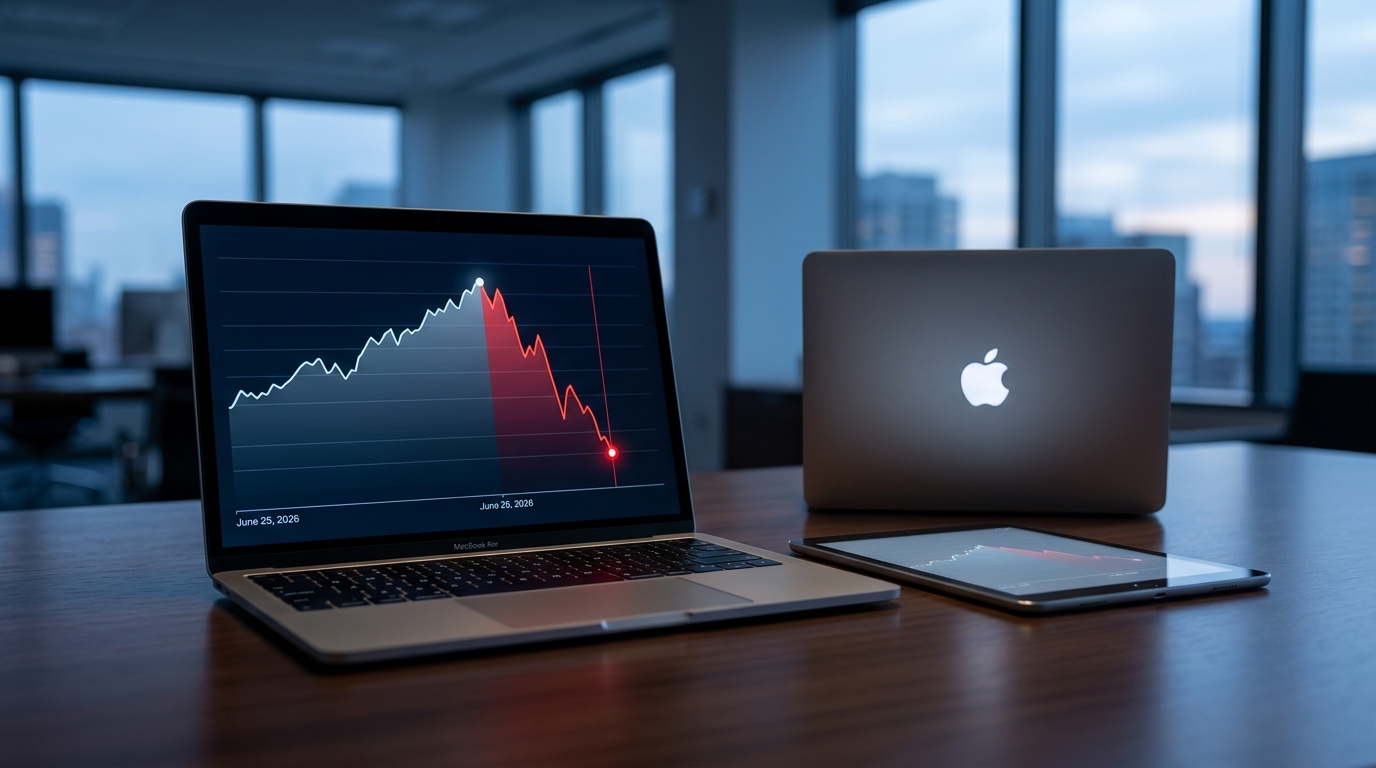
Apple raised prices on almost everything it sells — and Wall Street didn’t take it well. Shares closed down about 6% on June 25, 2026, the steepest single-day drop since April 2025. The company hiked prices across much of its Mac and iPad lineup, citing one culprit: the global memory crunch.
This is where the AI infrastructure boom stops being an abstract enterprise story and becomes something you see on a price tag.
What Changed
The increases were broad and, in several cases, larger than analysts had anticipated. MacBook Air: up from $1,099 to $1,299 (for the 512GB configuration). MacBook Pro (base): from $1,699 to $1,999 (for the 1TB configuration). iPad Air: from $599 to $749 (128GB). iPad Pro: from $999 to $1,199 (256GB Wi‑Fi). The Mac Studio M3 Ultra saw the steepest jump — from $3,999 to $5,299. The Apple TV saw roughly a 54% price increase (from $129 to $199). The iPhone was not part of this round.
The reason Apple gave: conventional DRAM contract prices were projected to rise as much as 90% to 95% quarter-over-quarter in 1Q26, according to TrendForce. AI data center construction has created extraordinary demand for memory components, and Apple has said it can no longer fully shield customers from the resulting cost surge.
Slight tangent, but it matters. For most of the past year, the AI memory story lived entirely in the data center — hyperscalers spending billions, HBM supply sold out, chip margins running wild. Thursday reframed that. When the cost of building AI infrastructure shows up in the price of a MacBook Air that a student buys for school, the crunch has crossed into everyday consumer territory in a way that is impossible to ignore.
The Market’s Read
The concern isn’t just sticker shock. The real debate is demand elasticity. Raising prices mid-cycle — on existing products rather than waiting for a new generation — was the signal that the cost pressure had exceeded what even Apple’s scale and margins could absorb.
There’s also the iPhone question hanging over all of this. Counterpoint Research has warned that the AI-driven memory squeeze could lead to meaningful smartphone price increases in 2026, with premium devices potentially seeing roughly $150–$200 in increases. More advanced on-device AI requires more memory, full stop.
Bull / Base / Bear
- Bull: Apple’s premium customer base absorbs the hikes with limited volume impact. ASP expansion more than offsets any unit softness. The next iPhone cycle arrives with strong pricing power and becomes the upgrade catalyst the market has been waiting for.
- Base: Near-term unit demand softens in Mac and iPad, particularly at the entry level. Gross margins stay roughly flat as cost increases are passed through. The stock consolidates in the $260–$285 range while the market waits for iPhone cycle visibility.
- Bear: Consumer demand falters meaningfully. A weaker global macro environment amplifies price sensitivity, and competitors close the gap on value. Technical support near $275 breaks, opening a path toward $250.
What to Watch
The iPhone pricing decision for the fall cycle is the only number that really matters now. If Apple can hold iPhone prices near current levels while competitors absorb similar memory cost pressures, the hardware franchise stays intact. If the iPhone gets a significant price bump too, the demand elasticity question gets a lot more serious very quickly.
The AI memory squeeze didn’t start with Apple. It just became visible to everyone on Thursday.
For informational purposes only.