August 25, 2026
Japan’s biggest retail bond sale funds OpenAI bets at 4.3%-4.9%. Does the coupon pay households for risk banks declined?
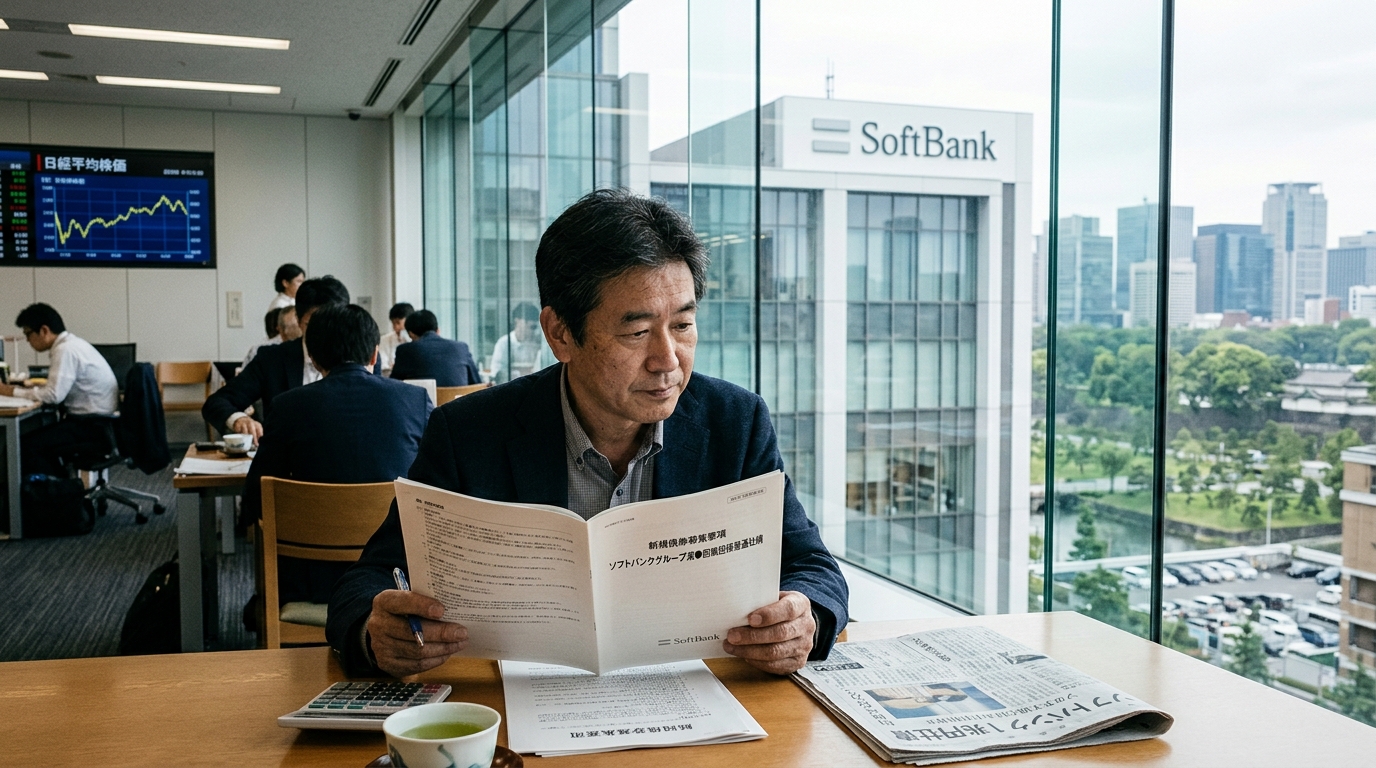
SoftBank filed a disclosure Monday that will send ¥1 trillion ($6.3 billion) of OpenAI exposure directly into the hands of Japanese retail investors. The group plans a record ¥1 trillion retail bond sale, the biggest by any issuer in Japan, to raise funds for its investment commitments to OpenAI. The seven-year bonds are expected to be priced on September 4, with an indicative coupon range of 4.3% to 4.9%. Shares of SoftBank declined 5.3% to 4,975 yen in response to the bond sale disclosure.
The deal’s scale alone is notable. This issuance will set a record as the largest retail bond offering ever by a Japanese company, nearly doubling SoftBank’s previous record of 600 billion yen from May 2025. And the timing is deliberate: proceeds from this bond sale will be allocated to AI-related investments and the repayment of previously issued bonds. Part capital raise, part refinancing.
The Bull Case: A Rational Price for the Decade’s Best Asset
SoftBank has been ramping up spending on AI-related investments and infrastructure, including commitments to OpenAI, as demand for computing capacity grows. Commitments to OpenAI now exceed $60 billion, and SoftBank has also been accelerating work around data-center capacity and related AI infrastructure.
Anthropic’s Project Glasswing: The AI “Too Dangerous” for the Public
Anthropic’s Project Glasswing gives a select group of companies early access to an advanced form of AI that has been deemed “too dangerous” for the public. With this in their arsenal, these companies could become the most powerful businesses in the world this year.
The asset backing this debt is not speculative in the conventional sense. OpenAI’s user base has expanded dramatically through 2026, and SoftBank has a stake that no public market currently prices directly. For retail investors, a 4.3% to 4.9% coupon on a seven-year yen-denominated instrument, from a company that expects an A rating from Japan Credit Rating Agency, is competitive against the domestic bond market at a moment when the Bank of Japan’s policy rate sits at 1%. The spread over sovereign is real.
The portfolio has ballast. SoftBank’s portfolio offers some balance. As of June 30, the group held roughly 87 million Intel shares valued at around $12 billion, nearly 67% of its U.S. equity portfolio. The loan-to-value ratio stands at 13%, below the 25% policy ceiling, and its cash position covers at least two years of bond redemptions.
The Bear Case: Banks Said No for a Reason
The most pointed fact about this deal is structural. Analysts say banks were reluctant to take the risk, leaving the deal dependent on retail investors. When institutional credit desks decline seven-year sub-investment-grade paper and the issuer turns to households, the question is whether the coupon offered to retail compensates for the risk that professionals passed on.
The rating divergence sharpens that concern. The seven-year bonds are expected to price with SoftBank expecting an A rating from Japan Credit Rating Agency. International raters see it differently. S&P has SoftBank at BB+, one notch below investment grade.
What gives some observers pause is the circularity. This isn’t a company refinancing organic growth; it’s one rolling over debt to cover the tab from earlier AI bets.
Trading Legend Reveals “Make America Affordable Again” Project
Man who handed hundreds of millions in profits to clients says, “I’m revealing my ‘American Affordability Project’ to help folks adjust to higher prices.
My goal is to show my strategy to 50,000 people in the next 12 months.”
The macro context is also hostile. Reuters reported in late June that the BOJ raised its policy rate to 1% in June, and expectations for additional increases have been building. Higher Japanese rates can strengthen the yen by narrowing the yield gap with the U.S., reducing the yen-translated value of dollar-denominated overseas assets. SoftBank’s OpenAI stake is dollar-denominated.
Where the Evidence Leads
The central risk is asymmetry. If OpenAI’s valuation compounds over seven years, bondholders collect their coupon and principal and nothing more. If AI capital expenditure disappoints and SoftBank needs to refinance again in 2028, retail bondholders find out why banks declined first. The 4.3% to 4.9% coupon prices the optimistic scenario. Watch the September 4 pricing: if the coupon comes out closer to 4.9% than 4.3%, it will suggest even the retail market is asking for compensation that reflects the BB+ reality rather than the JCRA’s more generous view.