By Gopal Sharma
KATHMANDU, March 5 (Reuters) – Polls in Nepal’s general election closed on Thursday evening as the Himalayan nation gets ready to elect a new parliament nearly six months after the deaths of 77 people in a crackdown on youth-led protests forced its then prime minister to quit.
Counting at most booths was likely to begin soon after polls closed at 5 pm local time (1115 GMT) and early trends are likely to emerge by Friday, election commission officials said, although complete results could take a week.
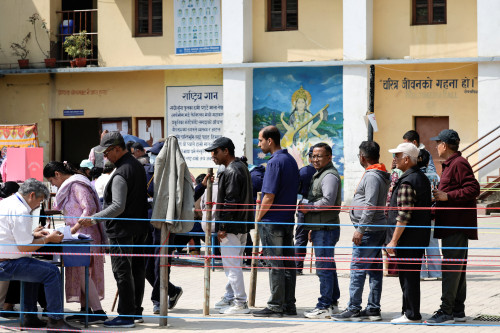
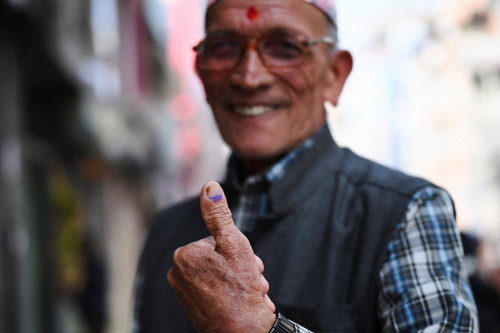
At least half of the country’s 19 million eligible voters had cast their ballot by 3 pm local time (0915 GMT), the election commission said.
“We will work out the final tally of votes cast after the voting closes. As of now in most of the districts voters’ turnout is more than 50%,” Narayan Prasad Bhattarai, election commission spokesperson said.
Voting percentage in the country’s last election in 2022 was 61%.
UNEMPLOYMENT IS MAJOR ELECTION ISSUE
Perched between China and India, the country of 30 million people has been plagued for decades by political instability, crippling a largely agrarian economy and worsening unemployment – structural issues compounded by rampant corruption.
The long-festering malaise erupted into street demonstrations last September, triggered by a social media ban, that brought thousands on the streets, leading to clashes and fatalities that forced the resignation of Prime Minister K.P. Sharma Oli.
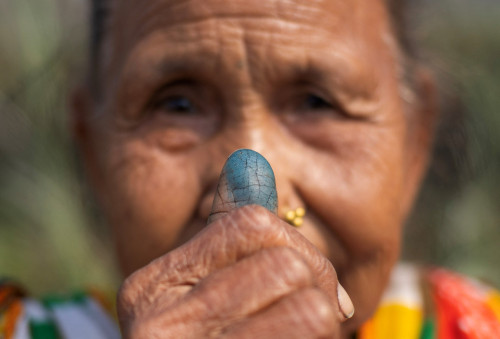
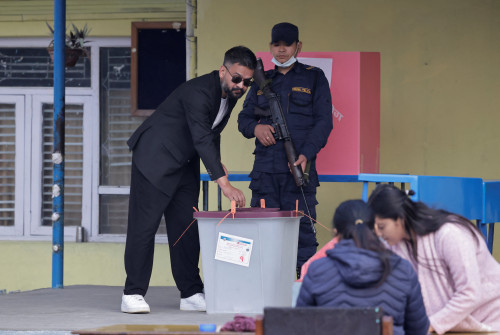
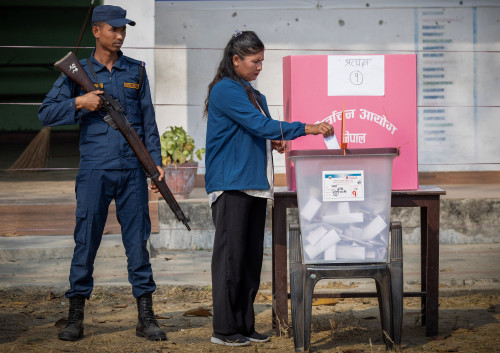
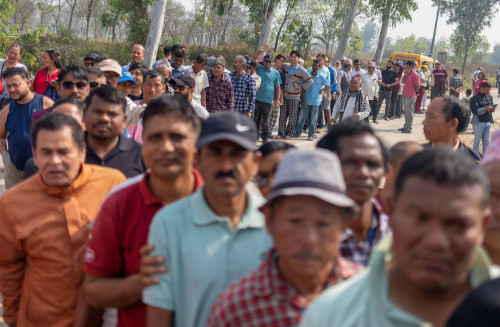
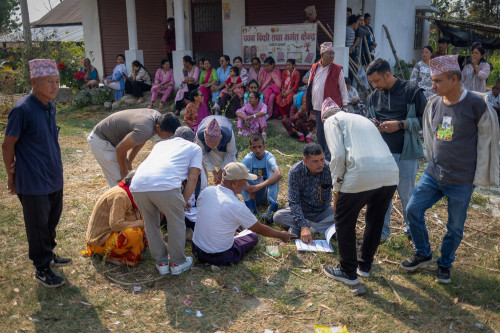
On Thursday, voters flocked to schools, temples and ancient courtyards that have been converted into polling booths across the country, with some braving the morning chill in the capital Kathmandu to vote early.
Officials said more than 300,000 security personnel, including the military, had been deployed to ensure peaceful voting in the more than 23,000 pooling booths across the country.
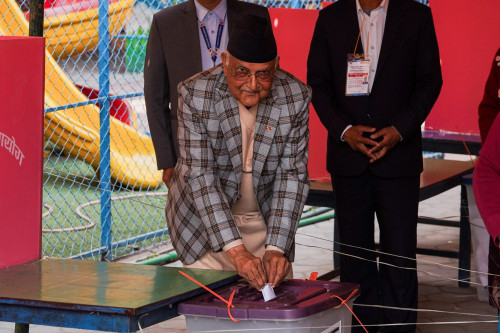
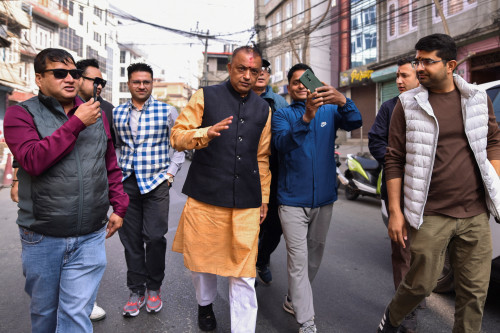
“This election has to reinstate the democracy in the country. Political anarchy, lawlessness and violence needs to be controlled and discouraged,” former Prime Minister Oli told reporters after casting his vote in Balkot, Bhaktapur.
Oli, who leads the moderate Communist Party of Nepal (Unified Marxist-Leninist, UML), is once again in the fray, along with more than 3,400 other candidates from 65 parties.
They include the country’s oldest party, the Nepali Congress led by 49-year-old Gagan Thapa, and the Nepali Communist Party (NCP) comprising former Maoist insurgents who joined mainstream politics.
Together with UML, these parties have dominated Nepali politics for the last three decades, although the country has seen 32 government changes in the past 35 years.
But the frontrunner for these polls is the three-year-old Rastriya Swatantra Party (RSP), which has fielded the charismatic rapper-turned-politician Balendra Shah as its prime ministerial candidate.
The 35-year-old former mayor of Nepal’s capital Kathmandu is drawing large crowds, connecting with legions of young voters clamouring for change on the ground and online, even as he takes on Oli, 74, on his home turf in the Jhapa constituency along the Indian border.
JOBS, CORRUPTION, MAIN ISSUES
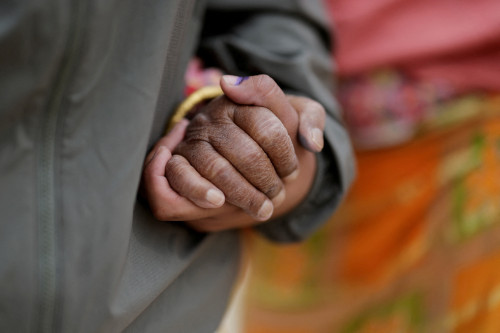
In Jhapa, Menuka Chauhan,70, standing in line for more than 40 minutes at a polling booth, said she was worried about her son who was working in Qatar as a security guard, as tensions in the Middle East escalated.
“I can’t sleep at night. I worry all the time. My son tells me bombs keep dropping there. I wish there were employment opportunities here,” she said.
Promises of jobs, reining in corruption and improving governance – all demands raised during the September protests – have dominated much of the election campaign.
“The election is critical to address the aspirations of the youths expressed during the Gen Z protests,” said political analyst Puranjan Acharya.
“If the newly elected leaders are seen as unfit to do so, there is a risk of further trouble.”
Some 19 million voters are eligible to cast their ballot for 275 members of parliament through a mixed electoral system – 165 seats in direct first-past-the-post elections and 110 through proportional representation.
(Reporting by Gopal Sharma and Sahana Bajracharya; additional reporting by Sunil Kataria Writing by Devjyot Ghoshal and Shilpa Jamkhandikar; Editing by Raju Gopalakrishnan)
About the Author